

Never Skip This Step For Perfectly Caramelized Sweet Potatoes
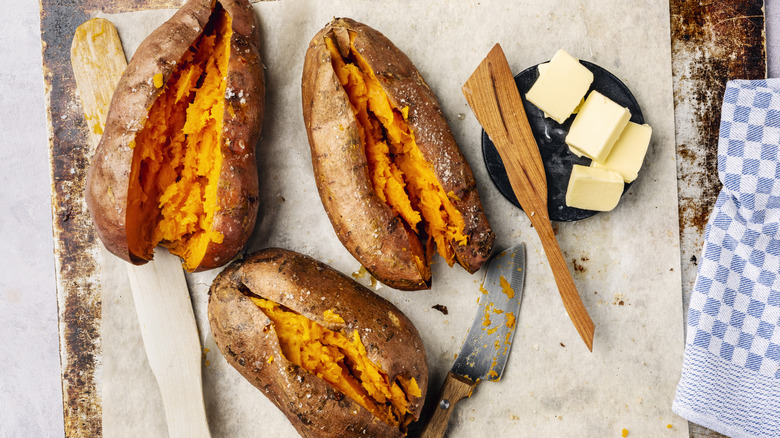
Sweet potatoes are versatile root veggies that can be roasted whole, julienned and deep fried, or mashed and turned into ochre-colored pies for the festive table. But if you want your spuds to be perfectly caramelized with a moreish, sticky surface, never skip salting them first. While this may seem like an inconsequential step, it will elevate the taste of your taters and effortlessly boost their sweetness.
Why do baked sweet potatoes have that wonderfully honeyed flavor? Because of a special amylase enzyme that turns the natural starches inside into maltose (a sugar that's made of two glucose molecules). Oven roasting sweet potatoes at a low temperature for a longer period gives the enzyme more time to break the starch down, which maximizes its sweetness. You can support this process further by starting with a cold oven — this move gives the enzyme a lengthier period to do its work. However, the super simple tip for making the best roasted sweet potatoes of your life (that have both a scrumptious caramelized surface and fluffy middle) is to split them in half lengthways, coat them in oil, and sprinkle over a dash of salt before roasting cut-side down. The salt draws out the moisture in the potatoes via osmosis, helping it to evaporate faster. This is important because a drier surface can reach higher temperatures more quickly and kickstart the caramelization process. It's this combination of heat and a reduction in moisture that produces the best results.
Maximize the surface area of your sweet potatoes and salt them
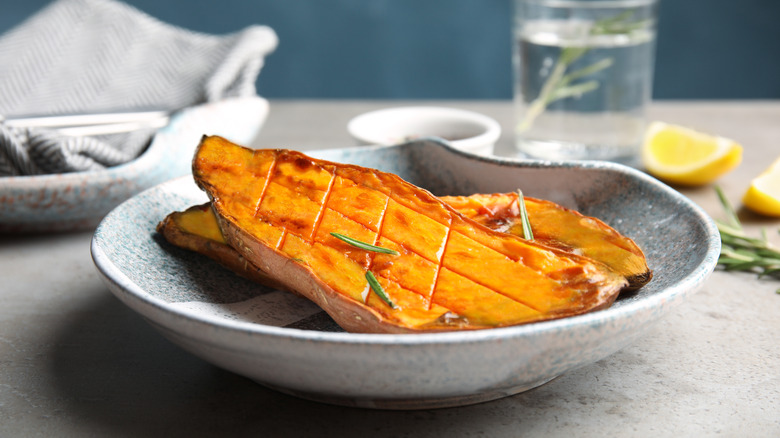
Slicing sweet potatoes in half prior to baking increases how much of their surface area is in contact with both the salt rubbed on top and the hot sheet pan, which gives rise to a product that has a candy-ish quality and bubbly, frilly edges. The symmetry of your sweet potato is important too — a spud with a uniform shape will cook more evenly, ensuring the exposed flesh can caramelize perfectly while the middle softens up and becomes incredibly creamy. When done right, the circumference of each spud will have a darker, sweeter-flavored rim and a moreish texture that counterbalances the softness of the flesh.
Once your sweet potatoes have developed some flavorful color and the interiors have turned squidgy, you can serve them as they are and savor their natural caramelized character without any additions. That said, a little more salt and a pat of butter wouldn't go amiss. This way of preparing sweet potatoes is also superb for batch cooking because you can easily roast several large potatoes on a single baking sheet and store them in the fridge for meal prep. Why not switch up your morning routine with a loaded breakfast sweet potato that's topped with a fried egg and bacon?