

How A Lemon Does Wonders For Cleaning Stainless Steel Cookware
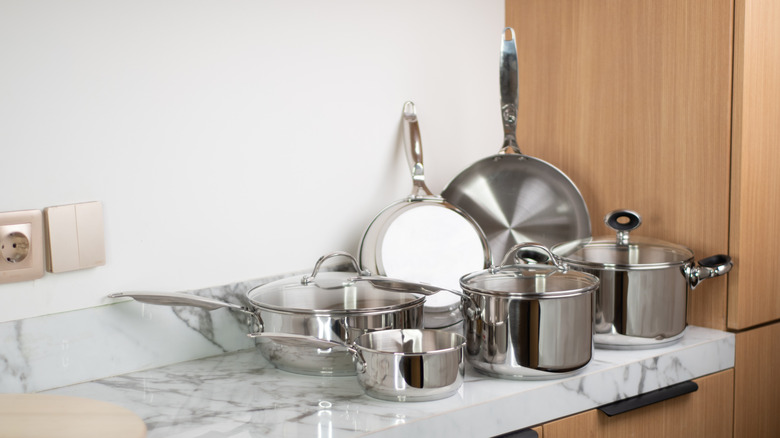
Durable and high-performing, stainless steel cookware is a kitchen staple. Perfect for doing the basics, such as frying eggs or sautéing veggies, their versatile material also makes them incredible for searing, deglazing, and simmering. That said, with regular use, even the highest-quality stainless steel cookware can become water-stained and unsightly if neglected or misused. Chemical cleaners can remove these cloudy, chalky streaks, but if you're after something that doesn't contain any synthetic nasties, then a halved lemon is your best bet. This humble citrus fruit can do wonders for cleaning stainless steel cookware when paired with a sprinkle of salt and a little elbow grease.
One of the best ways to clean stainless steel pans and save time scrubbing is to halve a lemon (or use a spent lemon you've already partially squeezed for a salad dressing, lemon water, or another recipe) and dip it into some salt so the cut surface is covered. Then use your salted lemon as a natural scrubbing brush inside your cookware to dislodge any water marks, remove grease, and lift off stubborn grime. The citric acid in the lemon will also reduce the appearance of yellow patches on the stainless steel that can occur when the oil used inside it has become too hot. If there are any sticky bits or darker areas on the cookware that haven't come away, add a squirt of dish soap to the lemon and salt, then continue to scrub.
The citric acid in lemon has antimicrobial properties
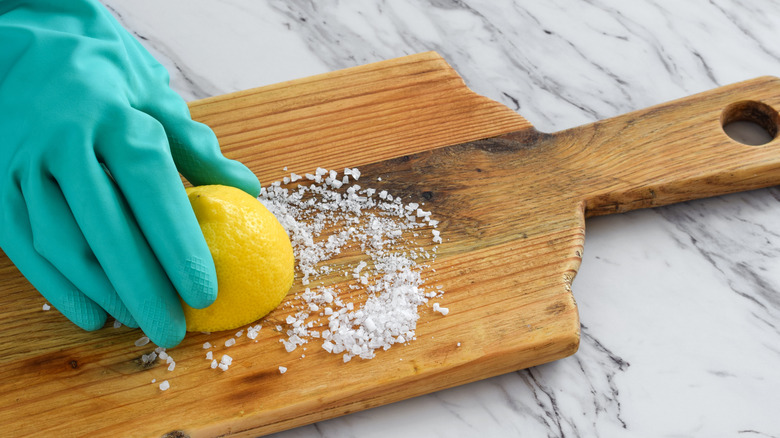
Aside from giving your stainless steel cookware a gleaming appearance, fresh lemon will also inhibit the growth of certain germs on the surface because it has natural antibacterial and antifungal properties. While you might think that all dish soaps are antibacterial, not all of them are, so a quick scrub with a halved lemon is a useful move if you've recently recovered from a bug and want to guarantee that you're cooking in sanitized pans. You can employ the same trick to clean a stainless steel sink, too. Better yet, the natural zesty aroma of the citrus fruit will lend your kitchen a clean and uplifting fragrance to boot.
Meanwhile, combining lemon and salt is useful for cleaning minor kitchen stains as well. The mild abrasive texture of the salt gently releases stuck-on residues on countertops and butcher's blocks while the acidic lemon pulls up the molecules of soaked-in spills. A similar combo of lemon and baking soda produces sparkling kitchen counters too; the mixture fizzes and lifts off grease and grime (just don't use lemon on natural stone worktops or on painted surfaces, like window sills or upcycled cabinetry) as the citric acid can damage and dull it).