

7 Most Flavorful Cuts Of Beef And How To Cook Them
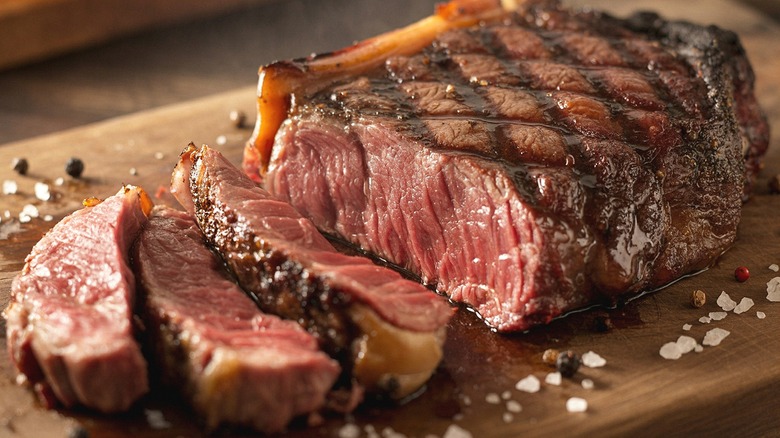
With so many different cuts of beef, even the most enthusiastic carnivores among us are likely to face confusion when trying to decide which are the most flavorful. That's why we've brought in two experts to simplify the game. We turned to butchers Katie Flannery of Flannery Beef and Evan Lobel of Lobel's Of New York, to get definitive answers to some of our most pressing questions when it comes to cooking meat.
Both butchers have their own signature approach to choosing the most flavorful cuts of beef. Lobel looks out for marbling, aging, and the cut itself. Flannery pays special attention to the muscle surrounding that cut; if it's used regularly, it'll be tougher on the chew. Of course, most of us don't have the time to ponder all these features during a typical butcher run, so we've asked our experts to make things easier. Here's their hassle-free advice on which beef cuts have the most flavor, and how to cook them.
1. Porterhouse
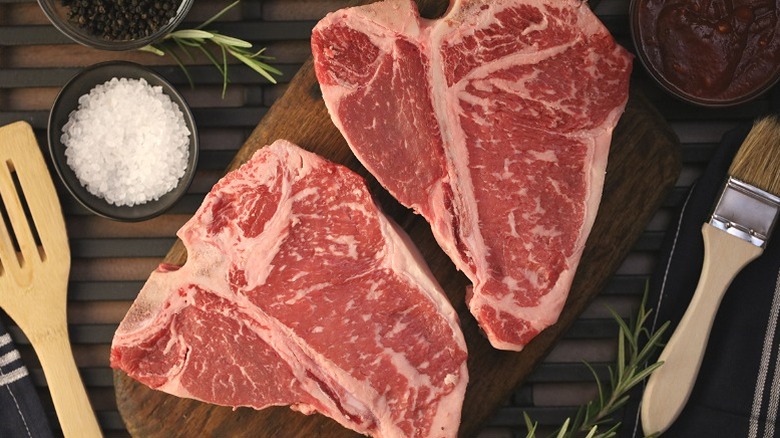
What's not to love about a hefty porterhouse cut? Typically weighing in between 20 and 25 ounces, one of these is guaranteed to satisfy the most enthusiastic of appetites, and is typically served to feed up to four. For Evan Lobel, it's the top choice when it comes to pure flavor: Rich, buttery, and deeply savory. Only a dry-aged bone-in rib steak can match it. "They have incredible marbling," notes Lobel, who suggests a very simple preparation method. A porterhouse is best cooked over high heat with just salt, pepper, and maybe a finishing butter.
So what, exactly, is a porterhouse? The meat is cut from the point where the tenderloin and the top loin meet, which is why it boasts all the flavor of the regular filet mignon and the New York strip. It also includes the t-bone, which is why the porterhouse is described as very similar to the t-bone steak. However, they're not quite the same, as the latter is a much smaller portion of the tenderloin, carved from further back.
2. Hanger steak
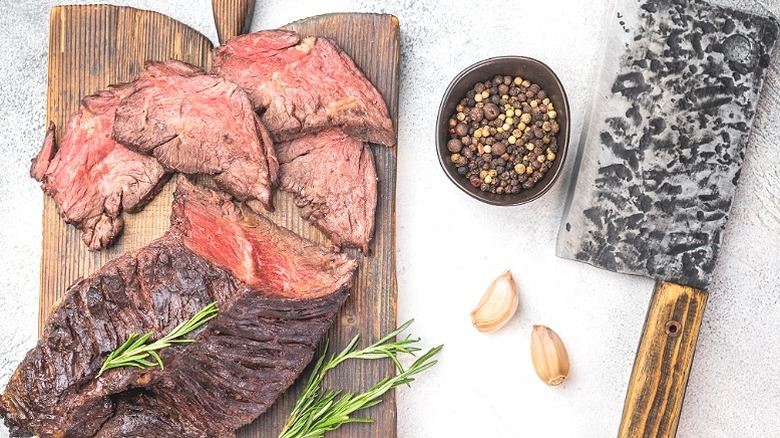
Looking for the best-kept secret in the world of flavorful beef cuts? Evan Lobel says it's the hanger steak. The taste of this cut is "super rich, almost buttery, and incredibly beef-forward," he explains. "It works great on the grill with an intense, almost mineral-rich flavor."
Lobel finds that it works best with a quick marinade, and sliced against the grain. Katie Flannery also gives her stamp of approval, telling us, "When you find a good one ... the depth of flavor is hard to beat." Giving what Flannery describes as a mineral-forward, slightly funky quality, it's probably best for those who like their beef with a serious taste. This intensity makes it an excellent match for more acidic dressings or sauces, such as chimichurri.
Flannery also throws in a word of caution, to stay away from grass-fed hanger and look for visible marbling. "The hanger muscle can sometimes pick up a livery, slightly metallic quality to it," she explains, "and you really need that intramuscular fat present to mellow that out and make it a genuinely enjoyable steak."
3. Flat iron
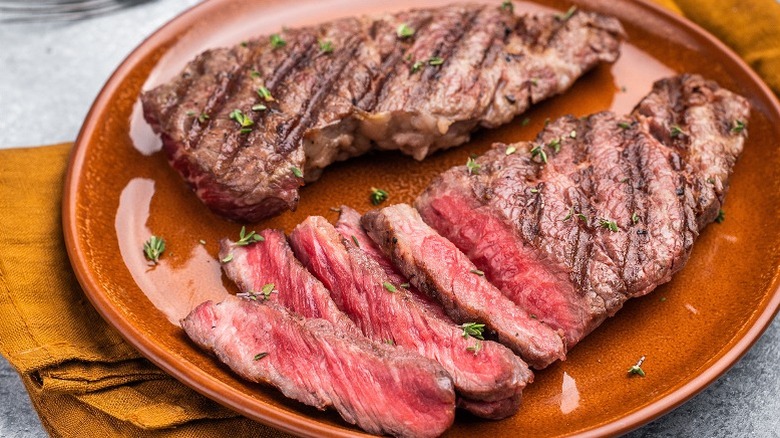
If the thought of a complex, beefy flavor isn't enticing, Katie Flannery has got just the cut for you. Flat iron steak has a more delicate, clean taste, and doesn't require much in terms of preparation, because it has a tasty flavor profile even served on its own. That said, Flannery notes that this cut can also take heavier seasoning like a beef rub, if you prefer more nuanced flavors. "I usually cook it the same way I would a hanger," she says, "hot grill or cast iron, hot and fast." Evan Lobel echoes Flannery's advice for this cut, which he describes as "tender, well-marbled, and very versatile." He also prefers to cook it on the grill or in a cast-iron pan, and sticks to simple seasoning.
While most beef cuts have been considered classics for many years, the flat iron steak was invented not too long ago. It only traces its origins back to 1998, which is when the National Cattlemen's Beef Association commissioned research into new types of steak that may have been previously overlooked. The result of this research was the flat iron, and our barbecues have been all the richer for it.
4. Minute steak
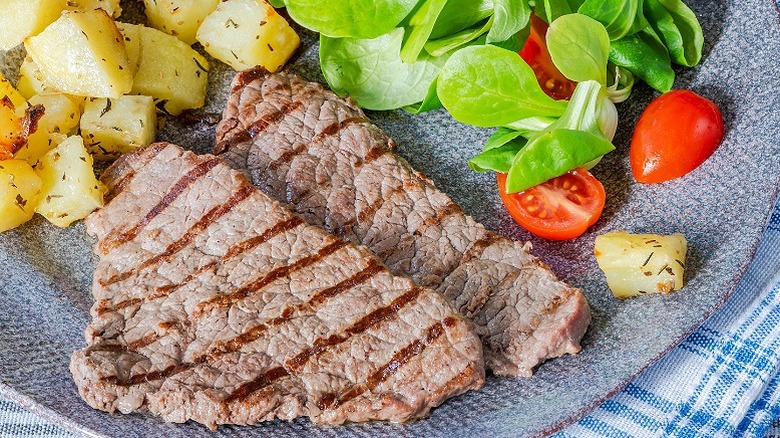
Everybody loves a good steak, but there's no denying that a tenderloin or a filet mignon steak can set you back a pretty penny, with the typical price being anything between $30 and $60 per pound for USDA Prime beef. This is not to say that you can't get a flavorful cut of beef if you're on a budget. In this case, Evan Lobel's advice is to opt for minute steaks, which he considers a hidden gem. "It's essentially a petite strip steak," he says, "so you still get that rich marbling and deep, beefy flavor, just in a smaller, more affordable portion." The added bonus is that this cut cooks very fast, as the very name suggests, making it a perfect choice for quick meals, steak sandwiches, or slicing over salads.
Back to that USDA Prime beef — put simply, USDA Prime is meat with the highest marbling score. Sounds good, right? However, Katie Flannery's tip is not to be a slave to the grade on the label. She explains that beef is graded as a whole carcass, and individual steaks can vary pretty significantly from that grade. "I've personally seen steaks from USDA Choice primals that would rival wagyu, and I've seen steaks from USDA Prime primals that were genuinely disappointing. The grade is a starting point, not a guarantee." In short, if you want to budget well, trust what you see over what the sticker says.
5. Strip steak
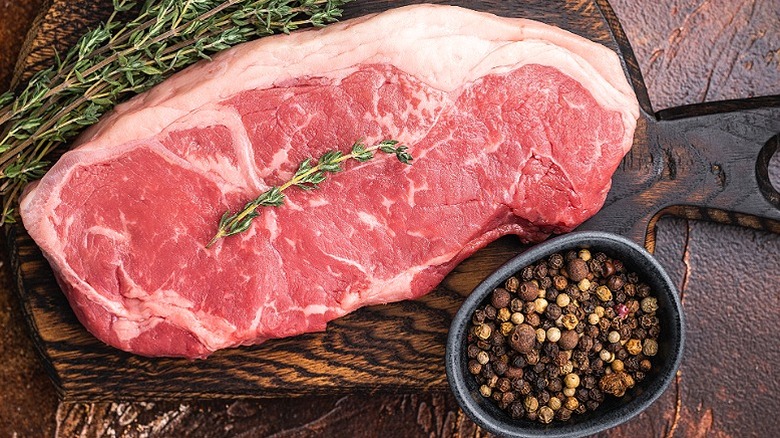
Remember how Katie Flannery explained how cuts of beef from muscles that aren't used regularly tend to be more flavorful? Meet the strip steak, or the New York strip, carved from a muscle known as longissimus dorsi, which extends from the hip bone up to the shoulder blade. This muscle is rarely used, making the cut extremely tender. In Australia and New Zealand, the strip steak is better known as sirloin. Don't let this confuse you, as sirloin means something completely different in the United States, and the cut is slightly tougher, but also cheaper.
Evan Lobel is a fan of the strip steak's bold, clean beef flavor that comes with a slightly firmer bite. He likes to keep the seasoning simple, grilling or pan-searing the meat. If you don't like your meat quite so plain, you can also add garlic and herbs to your strip steak recipe. Finish it off by reverse-searing in a heavy bottom pan, like a cast iron.
6. Ribeye
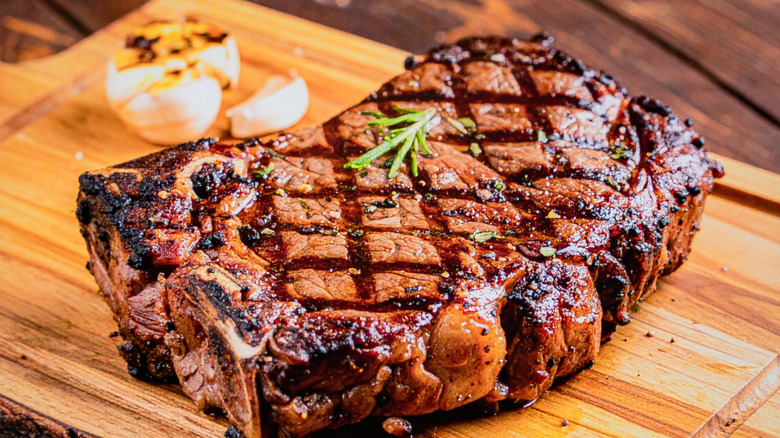
Katie Flannery calls the classic ribeye "hands down the best part of the beef," elaborating that, "Ribeye is rich and deeply beefy, with an almost melt-in-your-mouth quality that I think is unmatched anywhere on the animal." The cut is carved from the chuck end, which is the part where you get the most flavorful beef. She attributes this to the fact that there's more kernel fat on the chuck end and, although many people try to avoid it, it actually brings all the good stuff. The moral of the story is that, when shopping for ribeye, always pick the one with the most kernel fat showing. If you're not sure how to tell, Flannery has a video on Reddit that explains it very clearly, and shows the white fat ring to look for.
As for how to cook a ribeye, Flannery says this cut works beautifully hot and fast, on a grill or in a cast-iron pan. If you get your hands on a thicker cut, you can sear it first before finishing it in the oven for more even cooking throughout. The best seasoning depends on the cut. For a dry-aged ribeye, she advises limiting yourself to salt and a dash of pepper.
7. Skirt steak
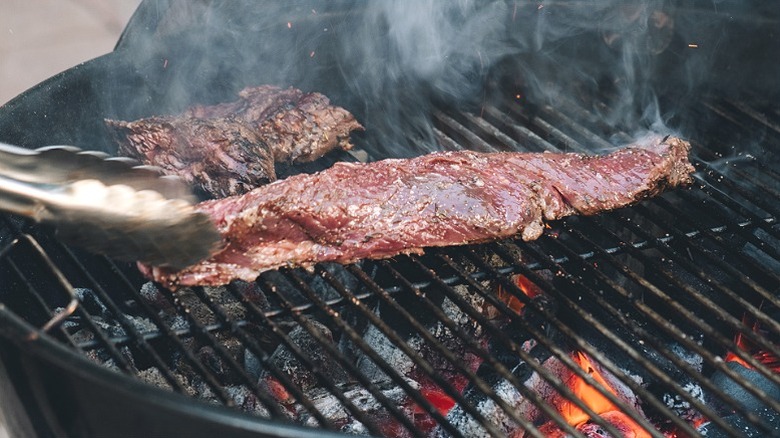
Unless you're a butcher, or you're particularly knowledgeable about meats, the words "skirt steak" can possibly lead to a raised eyebrow and several follow-up questions. All you need to know is that there are two types of skirt steak, both carved from the plate area of the cow. The first is an outside skirt, cut from the muscle on the outside of the diaphragm, and is usually more tender and more expensive. The other type is the inside skirt, which, you guessed it, comes from the inside muscle of the diaphragm, which is thinner. This is the type you're likely to find on sale by your local butcher.
What makes the skirt steak one of the tastiest cuts, irrespective of whether it's an inside or an outside skirt? Evan Lobel describes this cut of meat as having a beefy flavor and a looser grain. "It's great for marinades and quick sears, finished with a squeeze of acid like lemon or vinegar," he says.