

10 Best Ways To Use Leftover Slow Cooker Juices
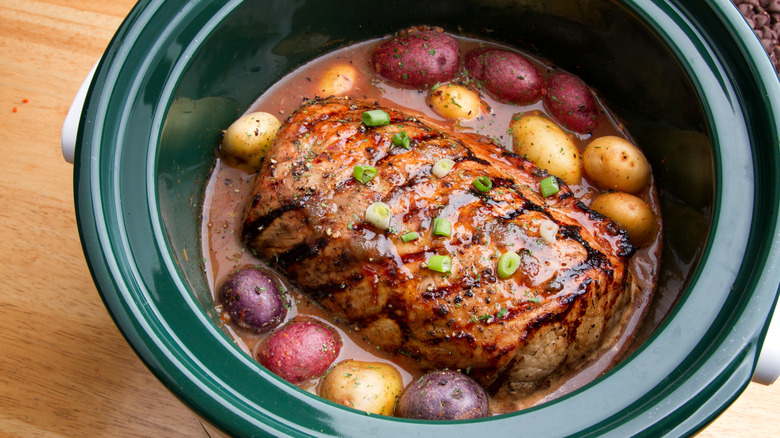
Let's all take a moment to praise the humble slow cooker. With a few ingredients and the flick of a switch, you can have a delicious meal on the table in a couple of hours, which tastes like you've spent all afternoon lovingly tending to it while hunched over the stove. However, sometimes, slow cooker recipes can be a little more wasteful than you want them to be — and that's all because of those delicious juices that collect at the bottom of the pot. Unless you're making something like a chili, stew, or something else that's saucy and moist, these flavorful juices can often end up down the sink or in the trash.
The thing is, they really shouldn't. Leftover slow cooker juices are one of the unsung heroes of your kitchen, and when you need an injection of savoriness in virtually any dish, they're there to provide. These juices can amp up everything from soups to mashed potatoes, can be used to make a roux, and are perfect for giving rice or pasta way more of a kick. You can even use them to make an au jus to dip your sandwiches in, with no work required whatsoever. Get ready to wield the power of this delectable liquor in more ways than you can count.
Use it in place of (or to amp up) a stock
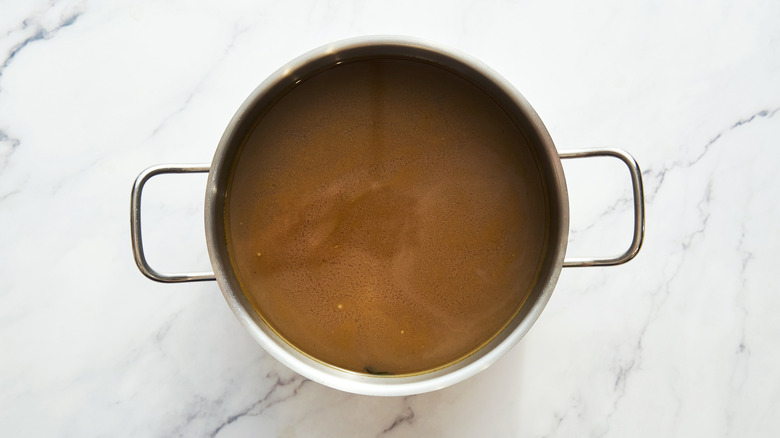
What does a good stock taste like? It's rich, it's savory, it's salty, and it's got that inimitable flavor that only comes with something cooking for hours on end. Slow cooker juices have all of these things, too. The juices that sit at the bottom of your slow cooker at the end of a meal have a concentrated quality to them that can only come from a full day of gentle cooking, and as such, they can both act as an alternative to stock and can beef up less flavorful stocks that need a bit of punch.
Although the flavor profile of slow cooker juices will naturally depend on what you're making as your primary recipe, most of the time, they'll have base notes of savoriness and saltiness, which is exactly what you want. That said, you might want to think carefully about how you use them. If you're making a light vegetable stew, for instance, you probably don't want to use slow cooker juices that have come from a beef pot roast as the sole stock, as they'll likely give it too much heaviness. That said, a little can go a long way with leftover slow cooker juices, so don't be afraid to add a tablespoon or two if you just want more fullness. You can also freeze slow cooker juices in ice trays to create your own stock cubes, which act as little flavor bombs.
Cook your rice or orzo in it

We think that cooking grains in flavorful liquid is an underrated move. Yes, the world has no shortage of rice recipes that use a stock cube or some other aromatics to amp up flavor, but these dishes can quickly become ones that take up way too much preparation and hands-on work. What you really want is to be able to add one magic ingredient to something like rice or orzo, and to have it suddenly be very, very tasty.
Enter leftover slow cooker juices, which can be used in place of stock to make rice, orzo, couscous, quinoa, pearl barley, or virtually anything that requires boiling liquid to cook it. All of these grains are small enough to easily soak up the juices' flavors, giving them a pop of savoriness and saltiness that runs all the way through. Importantly, if your slow cooker juices are especially thick, you might want to water them down a little first, so that whatever you're cooking doesn't soak up too much liquid.
Make an easy au jus for French dip sandwiches

Everyone knows that a French dip sandwich requires au jus. It's in the name of the sandwich, after all: This combo of meat and bread thrives when it's dunked into the rich, savory broth that's served alongside it, which is typically made with the beef drippings that come from the primary protein, mixed with other aromatics and often a thickening agent. However, true slow cooker aficionados know that au jus requires absolutely no work whatsoever. All you have to do is drain the juices from the bottom of your slow cooker, put them into a bowl, and serve them alongside your sandwich.
This trick is especially useful if you're making a French dip with already prepared ingredients, instead of from scratch, and can immediately make a somewhat bland beef sandwich much better. Just strain off the juices from any meat-based dish and combine them with your meat and bread. You can also freeze them to use another time. Naturally, of course, if you're making the beef for a French dip sandwich in your slow cooker, then the juices at the bottom are a ready-made dip — and you don't even have to do the annoying task of thickening them, as they will have reduced as the beef slowly simmers.
Combine the juices with a roux to make gravy
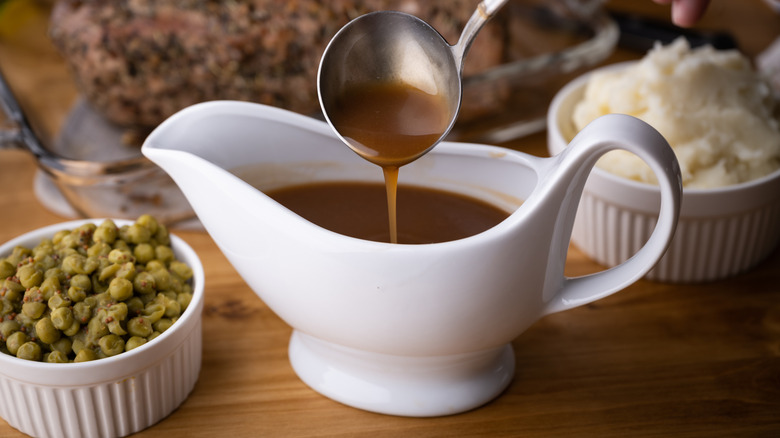
Bored with flat, tasteless gravy? We have a solution, and it comes in the form of leftover slow cooker juices. Rather than throw these out, you can simply whip them into a quick homemade gravy that requires barely any work whatsoever. To do this, create a speedy roux using flour and butter. Or you can make a dry roux as a shortcut. Then pour the juices into the roux, in the same way that you would a beef or chicken broth. The roux will thicken the juices up, and the juices will provide a big, rich flavor.
You can also reverse-engineer your gravy with slow cooker juices to make one even more quickly. To do this, just pour the juices into a pan, and then sift in a tiny bit of flour at a time, whisking thoroughly to ensure that it incorporates. You can finish it off by throwing in a pat of butter, and then pour it into your gravy boat. Just remember that slow cooker juices may already be thick after having reduced for all those hours, so you might have to thin them out slightly with some water or low-sodium stock.
Add it to your soup

We all know it: Soup can often be a little flat. This is especially true if you don't have a lot of time to make it. Sure, rustling up an easy lentil soup may only take about half an hour, but there's only so much you can do when you're simmering something quickly, instead of giving it a low, slow cooking process. Sometimes, you need to give it an injection of concentrated flavor — and that can come in the form of slow cooker juices, which can give soup an immediate boost.
The reason they can do this, of course, is that slow cooker juices have an almost wild amount of intensity, thanks to the hours spent soaking up and developing flavor. When a soup calls for a hit of savoriness, therefore, there are few better ingredients to provide it. Having said this, it won't improve every soup. If you're making one that works with flavor profiles that might clash with the typical taste you'd get from most slow cooker juices, like a spicy, floral, Thai tom yum soup, then you might want to leave them out. For autumnal broths with root vegetables, though, they're a lifesaver.
Pour it into mashed potatoes
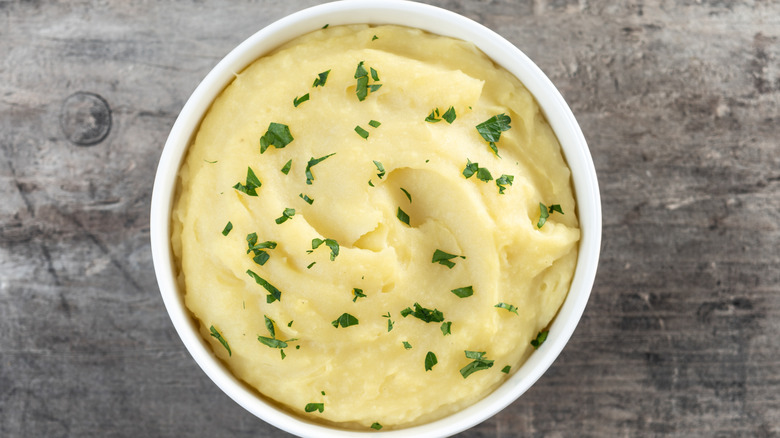
What do you do when you have tasteless mashed potatoes? A lot of people reach for salt to give them a boost — but they often need so much more than that. Mashed potatoes are frequently crying out for savoriness, and beef or chicken broth can deliver it while also seasoning them. Leftover slow cooker juices, however, can up the ante even more: They give your mashed potatoes much more umami and saltiness, while also adding in layers of flavor that have developed while whatever you're cooking is slowly simmering away. If you've been cooking vegetables or a dish with herbs, they'll give your potatoes an earthy note that reinforces their natural flavor profile very nicely.
Using leftover slow cooker juices in mashed potatoes is also an excellent move if you can't eat dairy. Additions like butter and milk can give potatoes more fullness and creaminess, but slow cooker juices can too, without any potentially allergenic milk proteins. Just remember, though, that most slow cooker juices will add a lot of color to any dish they're mixed with, so spooning too much into mashed potatoes will darken them. It'll also overtake the potatoes' flavor, so add it sparingly.
Use the juices as a sauce

A good sauce can change everything. Think about it: When was the last time you served some meat at a dinner party, without fully considering that it might need something to moisten it or add extra flavor? Or, how many times have you reached for ketchup or mayonnaise to go with fries, when what you're actually craving is a more interesting accompaniment? For all those occasions, slow cooker juices are your best friend. With virtually no work, you can turn these juices into a sauce to pour or spoon over anything that needs a bit more flavor, and they'll transform your dish.
If your slow cooker juices are thick enough, they might not need any additional work to make them into a sauce. You may well be able to simply spoon them out of the slow cooker pot and straight into your dish. However, if you want to amp these juices up even more, then get a little cheffy and pour them into a pan before adding some butter and wine. You'll give them even more flavor in mere minutes. If you don't need a sauce immediately, you can always just freeze your juices to use another time.
Add it to chili or bolognese
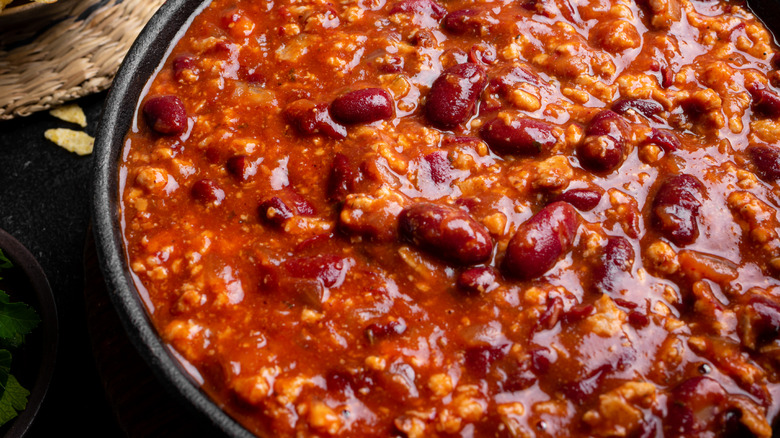
Sometimes, meat sauces can be desperately disappointing. You collect all those ingredients, you put in all that work, and somehow, your chili or bolognese ends up flat as a pancake. No intensity, no depth, nothing. What do you do in those situations? Sure, you can add an ingredient like Worcestershire sauce, which can definitely take your bolognese to new heights – but which can also threaten to completely overtake its flavor.
We prefer to use leftover slow cooker juices, which can work wonders in a chili, a bolognese, or even in pulled pork. These juices give flavor while also providing moisture, and will provide way more roundness than just adding salt or one magic ingredient to season your dish. Plus, if you don't have hours to make your meat sauce, then slow cooker juices can give it the effect of having been cooked all day. Just be aware that these juices can be quite salty, so make sure you're not adding too much in one go. Stir in a little at a time, tasting as you go.
Sauté greens with the juices
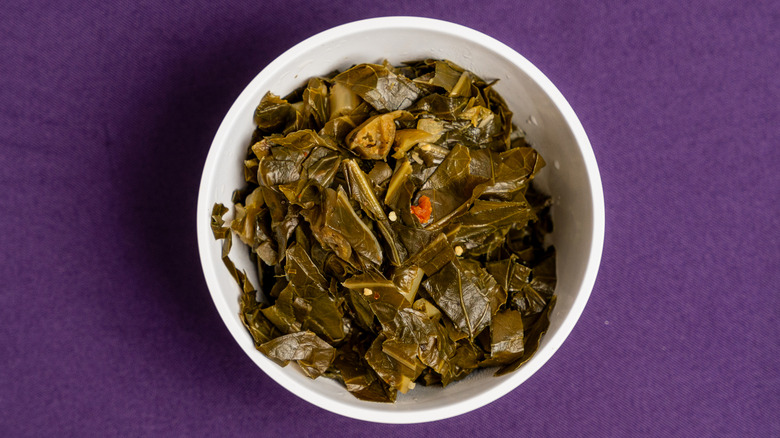
The greens you serve with your dinner can make or break it. If you've put time and care into them, they can be the best thing on the plate, bursting with flavor while also feeling nutritious. If, however, you overcook them or fail to add any additional flavor elements, they can be boring and just take up valuable space that could be used in other ways. Most of us don't have time to make a full sautéed greens dish every night from scratch, though, especially when we're trying to get everything else on the table. So what do you do?
You add leftover slow cooker juices. These juices are full of savoriness, saltiness, and depth that would otherwise have to be created from scratch, and can easily take the place of the beef broth you'd usually use to sauté collard greens or other vegetables. You really can just put the greens in a pan, add your leftover juices, and cook 'em up. Because leftover slow cooker juices have fat in them, they'll provide a fullness that you wouldn't get from just stock, and it'll only take a couple of minutes to transform your greens into something special.
Flavor your meatloaf with it
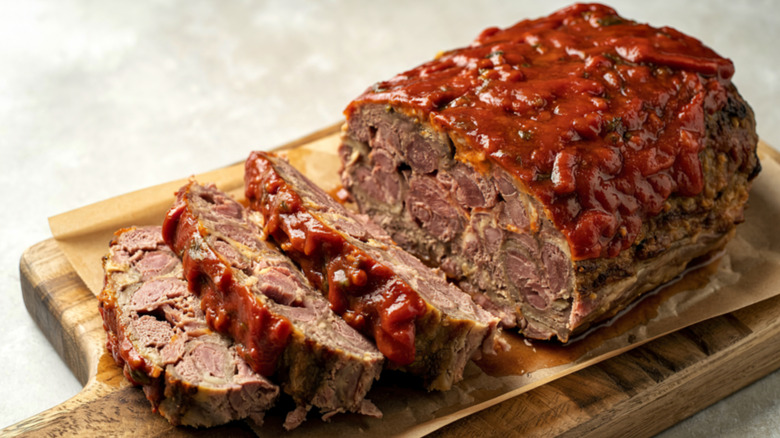
You shouldn't take any risks with the flavor of your meatloaf. When it comes to this dish, more is more: The beef and pork that make up the bulk of it can take a lot of seasoning, and extra additions like eggs and breadcrumbs can soak up much of the taste from your additions. Leftover slow cooker juices can provide the boldness that we all crave from meatloaf: They give it an undertone of meaty savoriness from the outset, amplifying the flavor of the just-cooked protein and stopping you from having to add loads of different ingredients to fill in its taste from every side. A couple of spoonfuls of this, and you're good to go.
As you might expect, leftover slow cooker juices work best with meatloaf when the dish you were making was somewhat in its flavor world. Leftover pot roast juice is ideal for meatloaf, as it has the deep umami that sets it off, and even the dregs of a beef stew will give meatloaf way more heft. You can even add some juices to your glaze, too, to give it a little boost. Just remember that oftentimes, the glaze works as a contrast, so you don't want to make it too savory and meaty.