

9 Gas Station Food Red Flags You Should Never Ignore
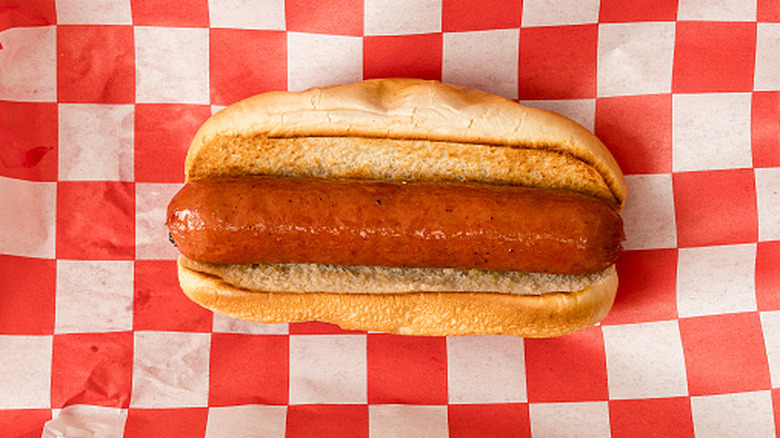
Gas station food is not without its risks. When you're midway through a long journey, and you just need something hot, quick, and cheap, then the allure of a good gas station hot dog is almost unbelievably tempting. However, places that you fill up your tank aren't usually known for their gourmet cuisine, and things like food freshness and hygiene standards can sometimes be somewhat lacking. As a result, not only can the food you buy at gas stations not be that good, but it can also sometimes be unsafe. There's a reason why it has such a bad reputation, folks.
The good news, though, is that there are certain things you can look out for with gas station food that can reveal whether it's wise to eat or not. From visual clues that reveal whether the station you're in is on top of its cleanliness, to signs that the food's been sitting under the heat lamp for too long, to indicators that other people are avoiding the establishment's cuisine entirely: All of them can tell you if it's best to skip that corn dog in front of you. We spoke with Stafford Shurden, restaurateur, farmer, and prolific reviewer of gas station food around the country, and Amy Johnston, Extension Educator in Food Safety at University of Minnesota Extension, to get their expert takes on what red flags to look out for.
Generally unsanitary conditions
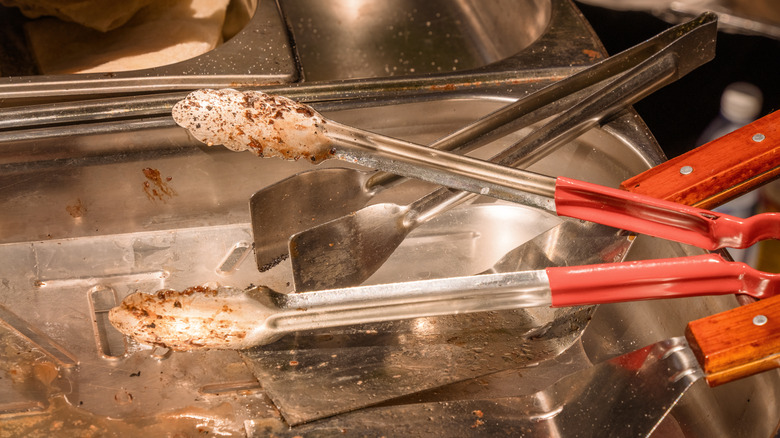
In any establishment that serves food, whether it's a high-end restaurant or a gas station, it's not just the hygiene of the food itself that counts. It's also the hygiene of everything around it, which will tell you a lot about how it maintains its general sanitation standards. As Amy Johnston says, these standards (or lack thereof) in a gas station could well give you an insight into how they're treating their food. Although it's important to look at the areas where food is displayed carefully, it's also important to check everything else out, to assess whether there are any telltale signs of poor cleanliness.
For Johnson, "dirty floors, sticky handles on cooler units, and crumbs on counters are indicators of an inadequate sanitation routine." She also points towards the restrooms as a place where you can really get a handle on a gas station's hygiene levels. "A restroom that does not have soap, paper towels, or is unclean is a red flag," she states. Johnston advises that when sanitation isn't up to scratch, the spread of bacteria and contamination can occur. This is doubly risky when the staff aren't maintaining their own personal hygiene around food, and doing simple, but routine practices like washing their hands. Stafford Shurden also advises us to "look for the health department rating and the cleanliness around the register," as well as around the hot box area that holds warm food.
Dried-out or old food
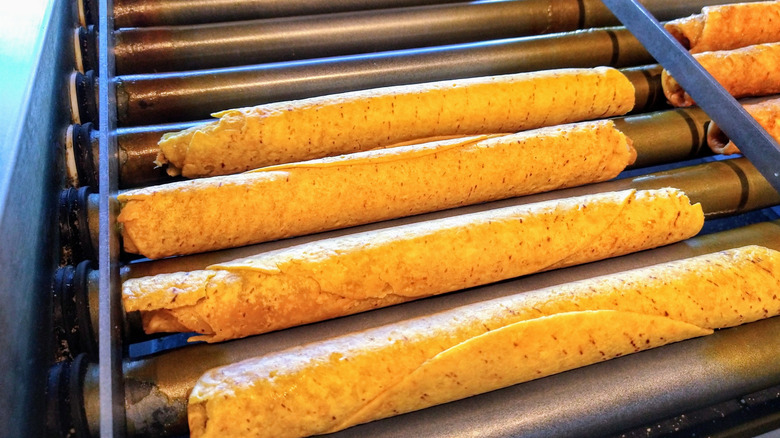
Gas station food might not be the best-quality fare in the world, but we do expect it to be at least tasty, edible, and safe. One way you can determine this before taking a bite out of your hot items is to check out how they look. According to Stafford Shurden, "food that does not look fresh in the hotbox is not fresh." Shurden warns that some stores like to cook their food first thing in the day, possibly including items that they serve later on — but this can lead to items drying out and becoming, shall we say, a little less than appetizing. "If it looks dry, it has been out a while," he says.
Assessing exactly when an item was cooked, or when it has been prepared, can be complicated by the fact that a lot of gas stations don't use sell-by or use-by dates on their food. Having said this, Amy Johnston advises that "if they are preparing and packaging the food, they need to put a prepared date," which should tell you exactly when it was put together. If they do have these dates, you might have to do a little bit of math. She offers one simple rule of thumb that "food prepared by the gas station (or in the commissary kitchen) should be used within 7 days," elaborating that, "Day 1 is the date the food was prepared." Check that calendar, and work backward.
Strange smells
When it comes to food, it's important to trust your nose. Unfortunately, in gas stations, this can be a bit tricky to do. "Unsafe food may not have an odor," says Amy Johnston, highlighting the fact that bacteria that cause illness generally don't have any specific scent. However, what your sense of smell can alert you to is how your gas station is treating both its general hygiene and how it's cooking its food, both of which can give you a clue into roughly how safe (and how pleasant) the item you're about to eat is.
Of all the smells you should look out for, Stafford Shurden says that scorched grease is number one. "Grease that is burned smells," he says. "You can smell that as soon as the door opens." This is a dead giveaway that the food in the gas station you're in will taste awful, and that you're not going to get your money's worth. Any funky or rotten odors emanating from the kitchen, or indeed from any other part of the gas station (including the bathroom) should make you run a mile; you want everything to smell clean and fresh. That said, you should also be suspicious if everything smells a little too clean. Harsh chemical or cleaning solution smells could flag that the gas station is trying to mask other odors.
Poor temperature control
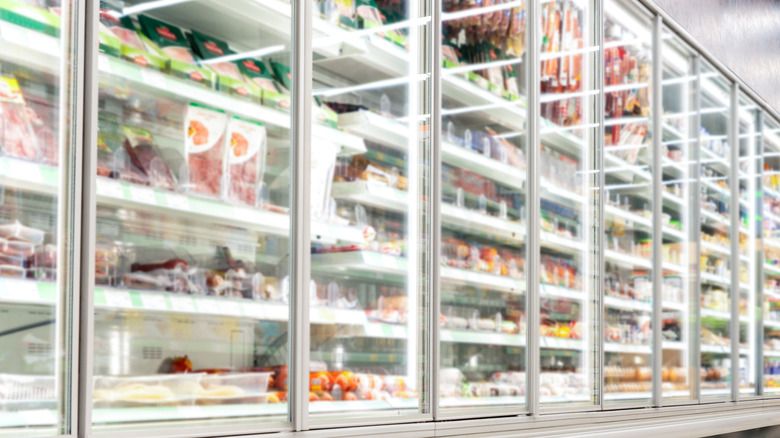
Some of the best gas station food finds are located in the hotbox, but that can also be a risky place to eat from. As Amy Johnston advises, "Foods that require temperature control for safety are also at an increased risk." She notes that food must be kept out of the "Danger Zone," in which bacteria can multiply and contaminate food, which sits roughly between 41 and 135 degrees Fahrenheit. As such, gas stations have to keep their hot foods, like pizza slices or hot dogs, warmer than this, or else they could become (if you'll excuse the pun) a hotspot for illness.
It's not just hot food that you need to keep an eye on, either. Cold foods, like cut fruit, refrigerated sandwiches, or salads, also need to be held at a low enough temperature. Because of this, you need to look carefully at any temperature controls on the gas station's refrigerators or heat racks. If they don't have any visible controls, ask a member of staff what temperature they store their food at. If they can't tell you (or even worse, won't tell you), you might not want to risk grabbing your grub from that specific gas station.
Employees who don't respect hygiene rules
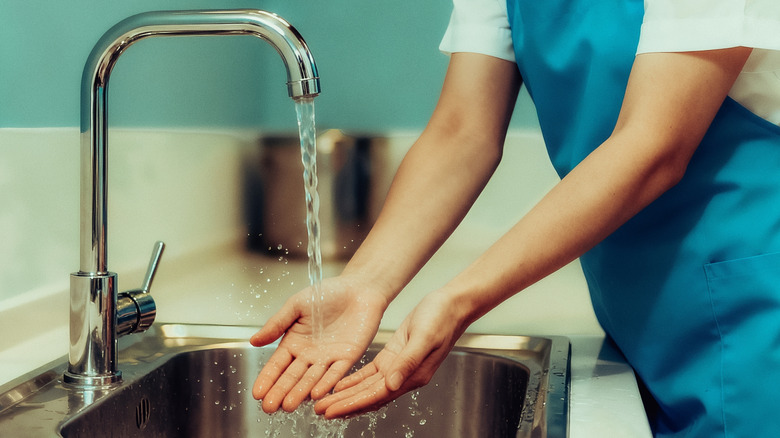
From a hygiene perspective, one issue with gas station food is that it's easy to prepare. Why is that an issue? Because that means that it may not require a huge amount of training to get it ready for customers, and the training that restaurant staff and chefs undergo may well be a lot more comprehensive in terms of food safety. It is their primary focus, after all. Meanwhile, gas station employees might be having to cover a lot of things at once, so hygiene around food could potentially take a back seat.
That's not necessarily a given, of course, but it's important to just keep an eye on how employees are preparing your food. Are they washing their hands and wearing gloves? Do they have a hairnet on? Are they sanitizing surfaces? All of this is essential for your gas station food to be safe. Amy Johnston says that this is particularly important to watch out for if the place you're in is busy. "Whenever a food service establishment experiences a rush in customers, food handlers (employees) need to remember the basics of handwashing, not touching [ready-to-eat] food with their bare hands, and keeping food at the safe temperature," she advises. Johnston explains that when food service businesses really have a handle on food safety, they'll help their employees do all of these things and not cut corners.
Fruit flies and other pests
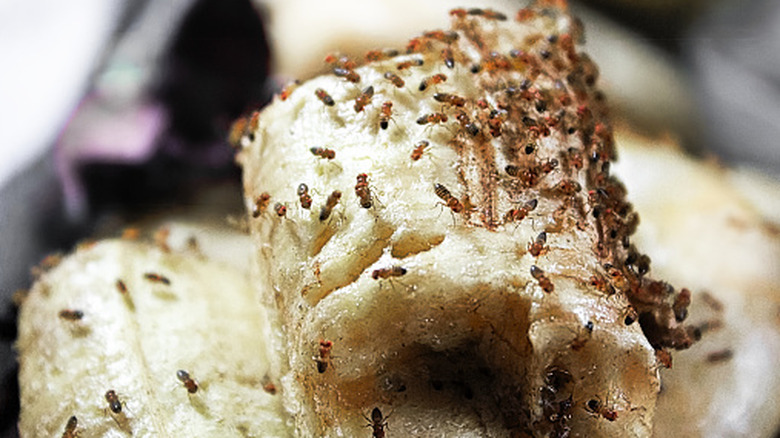
You know what no one wants near their food? Bugs. You know what some bugs love? Food. It's a bit of a catch-22, right? However, just because pests like fruit flies or cockroaches might like the kind of food that places like Wawa's or Buc-ee's put out, it doesn't mean you should give them a pass. Beyond being gross, both fruit flies and cockroaches can carry and spread bacteria that could produce illness in humans, and their presence could increase your risk of getting sick from the food you're eating.
More to the point, pests are a sign that the hygiene standards in your gas station aren't up to scratch. "Fresh produce that is past its prime or beverage stations that are not routinely cleaned can attract pests," says Amy Johnston. "The presence of fruit flies or other pests can be a sign to avoid that food." Even if you can't spot any pests, you should still keep an eye out for signs of them: Look for droppings in the corners of the gas station, or tracks or brown smear marks. Any visible pest control products could also flag that the establishment has some trouble keeping on top of them.
An absence of other people
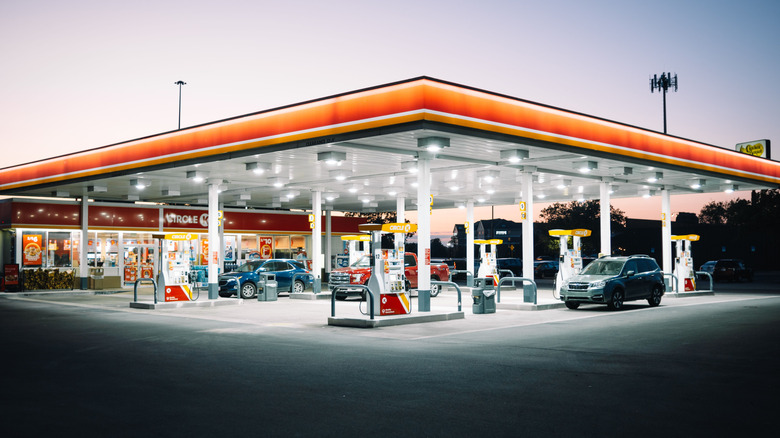
Gas stations aren't really food destinations, right? Wrong. A lot of people may just stumble upon the nearest one when they need something hot and quick, but there are plenty of folks out there who are well aware of which gas stations make the best pizza or have excellent fried chicken. If you're driving down the same road a couple of times a week, you may start to make it a habit to stop at these places, and this leads to some gas stations getting crowded. That's not what to look out for, though — the red flag is when there's absolutely nobody there.
An abandoned gas station with a suspiciously well-stocked food section is not just creepy, but also a risky proposition, as it could indicate that people are actively avoiding its items. Whether that's for hygiene and safety reasons, or because its food just isn't that good, may not be immediately apparent, but it's best to give these places a wide berth.
Want Stafford Shurden's top tip? "Look for trucks in the parking lot," he says. "Working guys like me know where the fresh, good food is. Ladders and tool boxes are a plus!" That's advice we're definitely gonna follow.
Unclean dispensing machines
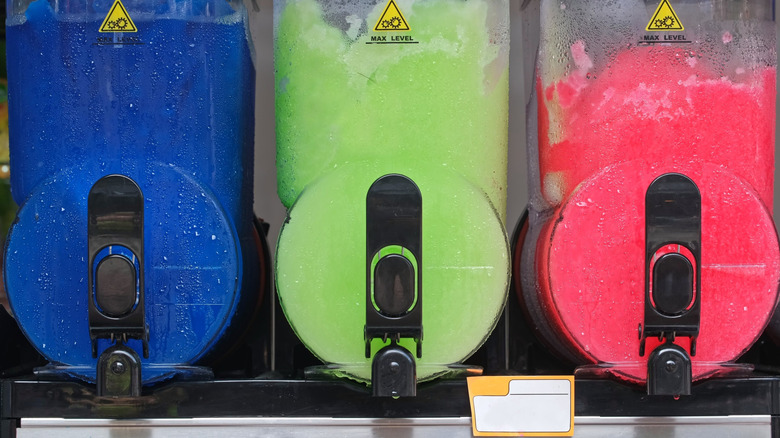
If your must-visit gas station snack stop has Slurpees, soft serves, and unusual sodas, then you're likely making a beeline for them the moment those sliding doors open. Before you place your order, though, just take a look at the outside of the machines they come from. How are they looking? Have they been cleaned recently? You might find, upon closer inspection, that they haven't — and apparently, that's not uncommon.
"The dirtiest thing in any foodservice is the fountain drink machine," says Stafford Shurden. Unfortunately, this can be a real issue, even if it just seems as though it's a bit of exterior splatter or grime. "If the outside of the dispensing machine is unclean, it is likely the inside of the machine is unclean," warns Amy Johnston. Somewhat worryingly, soda fountains can be a hotspot for bacteria like E. coli, and drinking products from unclean ones or consuming products from other unclean machines can be dangerous.
Don't be scared to ask questions if you need to. "If a customer has concerns, ask the employee when the machine was disassembled and cleaned — this should be documented on a cleaning log," advises Johnston. If they can't readily supply this information, you might want to grab a bottled drink instead.
A lack of food information
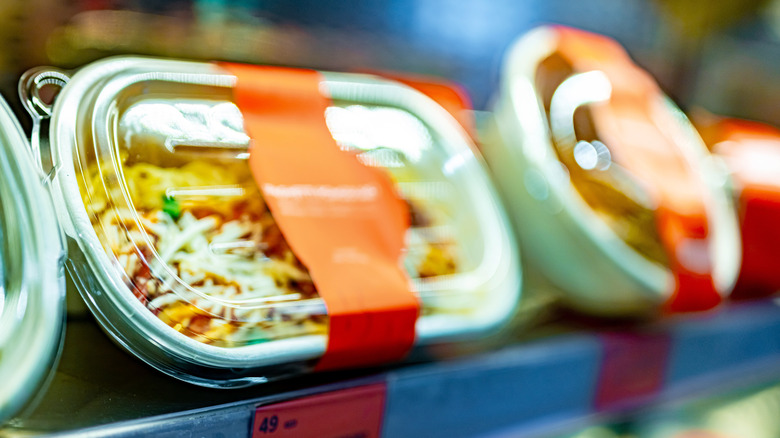
Gas stations can sometimes be a little elusive about what's in their food, and it'd be really great if they weren't. Food information can not only be useful from a general dietary perspective, but also from a safety one, so that people can avoid inadvertently consuming things that could prompt an allergic response. If the gas station you're in can't provide any information at all, then it's worth asking why.
According to Amy Johnston, the amount of information available can depend on what you're buying. "Foods pre-packaged by the gas station should have an ingredient list that includes allergens on the label. Food prepared to order may not have this type of labeling," she says. Stafford Shurden also says that the bigger chains, like Wawa and Parker's Kitchen, have ingredient lists that they can provide. If you have any concerns, though, both experts advise talking to the person who's serving you and asking whether they have any information on the food you're buying. "Often in the mom and pop places, the person checking you out probably cooked the food ... and with love," Shurden reminds us.