

10 Aldi Products That Are Surprisingly Overpriced
If you know some tricks for shopping at Aldi on a budget, the discount grocer can be a great place to shave a few bucks off your food bill. Aldi is built on a savings-minded model, focused on cutting costs by offering a wide assortment of store-brand products that deliver about the same quality as name brands but cost considerably less. There are plenty of bargains to be found.
However, on certain items, Aldi actually tends to be overpriced; not glaringly, but once you notice, it's something you can't unsee. Be aware: Prices fluctuate over time, and they can also vary depending on where you live, seasonality, and which store is having a big sale this week. So none of this is written in stone.
That said, knowing which pantry staples can usually be found for a better price elsewhere helps avoid making poor shopping decisions in the moment. Since Aldi markets and positions itself as a discount grocer, it would be easy to make the assumption that it's always the less expensive option — sadly, it's never that easy. In fact, these 10 items in particular are surprisingly overpriced at Aldi.
1. Bacon
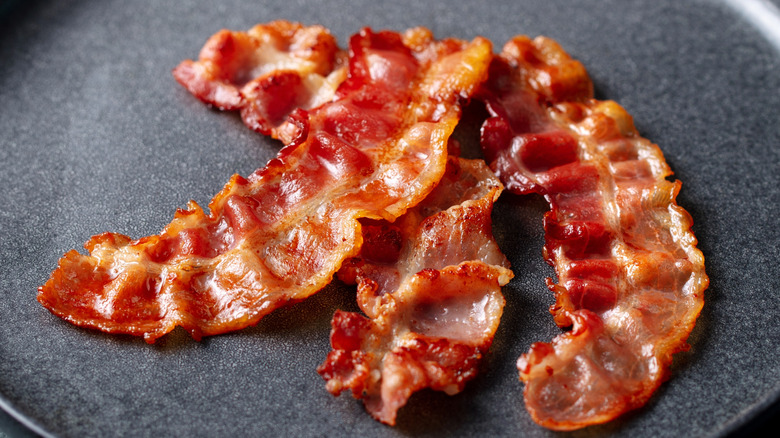
We're not discussing bacon that's a special cut, has added flavors like maple or brown sugar, or some fancy bacon that tells you what kind of wood it was smoked with. There's a time and a place to splurge on the stuff you find on a list of top-ranked thick cut bacon, but this list is about saving money on basic everyday staples. Aldi's basic bacon, Appleton Farms Premium Sliced Bacon, sells for $4.39 per pound, but quite a few customers have noted that Walmart's bacon is cheaper. Indeed, the same size pack of Great Value Naturally Hickory Smoked Sliced Bacon rings up for only $4.12. That's about 7% less than Aldi — and that's before you start looking at bulk packs (which Aldi doesn't offer).
Another thing about bacon is that the quality can drastically impact the quantity. Think about it: If your bacon is nearly all fat, you'll actually be getting less food once it's cooked, since more of it will render out and stay behind in the pan or go down the drain. Aldi's bacon gets a lot of complaints online about being fattier than expected, so this is definitely a consideration that should be factored into the equation. Even if the price wasn't lower at Walmart, if the yield is less, that means you're getting less food for the money.
2. Name-brand products
You're at Aldi for one reason — to save money. So buy the Aldi dupes that are better (and cheaper) than the name brands, save a few bucks, retrieve your quarter from the shopping cart, and then head to the big box stores to save on the specific brands that have no cheaper equal.
The few name-brand items that Aldi consistently stocks, like Coke products, cereal, candy, and Kraft American cheese, are usually overpriced. At first glance, prices may seem comparable to what you can find at retailers like Target and Walmart or at local grocery stores. You'll need to dig deeper into your wallet (and deeper into that bulk sized container), to realize the savings, but analysis shows you'll pay nearly half the price for an ounce of M&M's at Costco compared to Aldi — you just have to buy three times more.
Once you take into account these bulk warehouse prices, frequent sales, and the option to use manufacturer coupons (Aldi doesn't accept them), it becomes clear it's ultimately better to buy your name-brand items elsewhere. Comments on Aldi's subreddit agree that name-brand products aren't a good deal at Aldi, with comments citing better prices at Costco, Walmart, and local grocers.
3. White granulated sugar
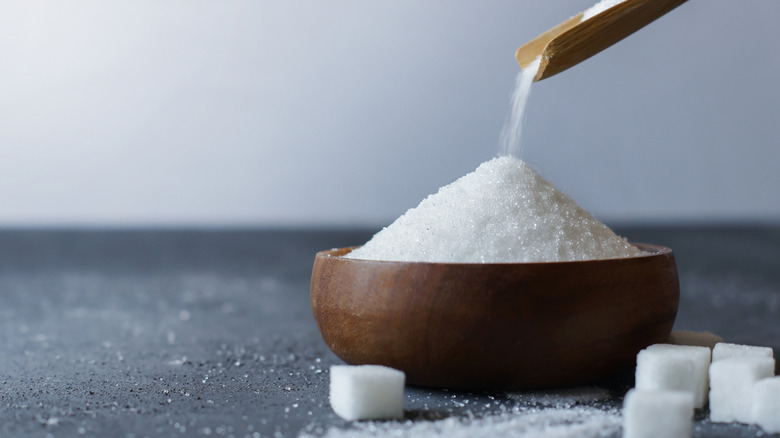
Bulk-buying pantry staples that keep well, like sugar, is a great way to avoid spending more at the grocery store. If you bake a lot or you've got ample storage space, buying a larger quantity will almost always yield better savings. Truthfully, Aldi does manage to compete pretty well despite not offering large bulk sizes. But when the goal is stretching your food budget as far as possible, even an extra few cents makes a difference. Breaking it down to a per-ounce price, the larger packs you can get at warehouse clubs and big box stores are going to end up being cheaper.
Aldi's Baker's Corner granulated sugar comes in a 4-pound pack priced at $3.19, which works out to $0.79 per pound. Walmart offers the same size pack of its Great Value granulated sugar for $2.97 ($0.74 per pound), which is already a bit less without even having to commit to the bulk package. Including Costco's larger sized options into the mix can bring the per-pound price as low as $0.65 when buying 10 pounds, or even as low as $0.60 if you commit to a 25-pound sack.
4. Ice cream
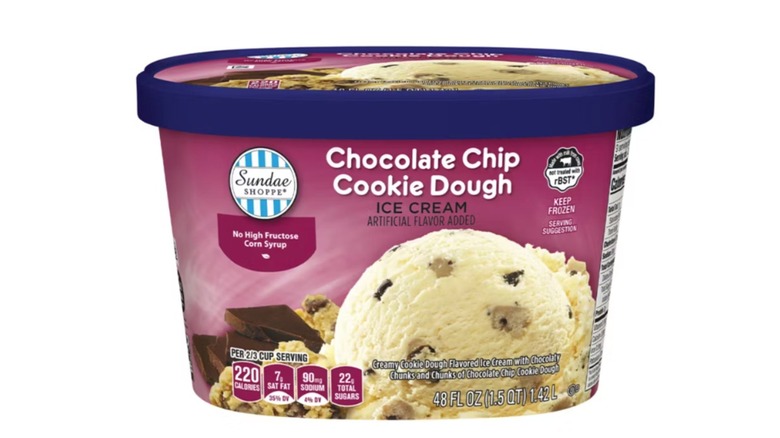
Ice cream is one of those treats that comes with a catch — if the quality isn't good enough it won't give you that creamy, dreamy experience you were looking for. Cheap ice cream can leave you feeling unsatisfied, like you just wasted all those calories and didn't even scratch your itch for indulgence.
Aldi's Sundae Shoppe ice cream comes in 48-ounce tubs and includes standard flavors like vanilla, chocolate, strawberry, and cookies-and-cream. Most big retailers have their own similar private label store brands. Walmart's Great Value version retails for $2.97, whereas the Aldi version costs $3.25. That's a 9% difference, so for every 10 tubs your household goes through, you get about one for free if you opt for Walmart over Aldi.
Another thing to know when shopping for these standard-sized store brand ice cream tubs (manufacturers actually refer to the rounded rectangular containers as "squrounds") is that the price is the same regardless of which flavor you choose. Aldi offers around eight basic flavors under its Sundae Shoppe brand, but most grocery stores and big boxes like Walmart stock more than a dozen different vanities of their house-brand ice cream, including more on-trend flavors like sea salt caramel or peanut butter cup. So not only will you pay a bit less, you'll get more interesting choices and better variety as well. This makes the ice cream tubs at Aldi an easy skip.
5. Bagged salad kits
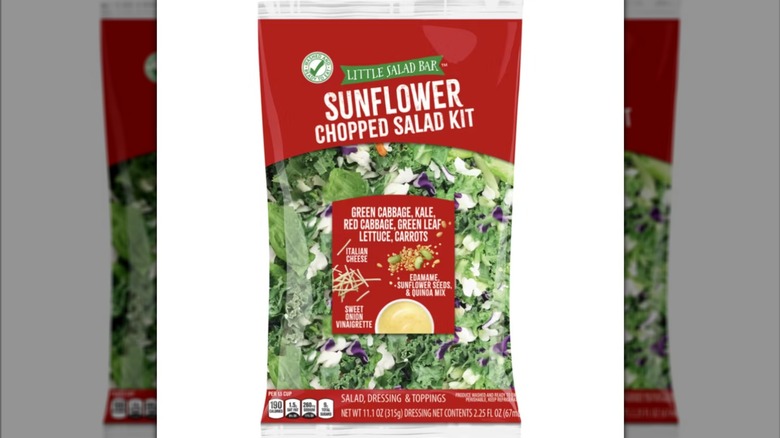
Nearly every store with a produce section now carries salad kits. Sitting alongside the bagged salad greens, the kits come in smaller, more slender bags and include everything needed to toss up a bowl's worth of a familiar salad variety. Aldi's Little Salad Bar line of chopped salad kits sell for $3.65 each, and the bags contain between 10.8 and 12 ounces (different flavors vary slightly in net weight). Flavors include Southwest, Mediterranean, Sweet Kale, Farmhouse Ranch, Caesar, Sunflower, and Asian.
Comparing Aldi's salad kits to Walmart's line of Marketside chopped salad kits at $3.47 each, the $0.18 price difference might seem fairly minor. But a deeper dive reveals that kits from Walmart usually contain a couple ounces more product (most weigh somewhere between 12 and 14.5 ounces) and offer a slightly wider variety of flavor options. In addition, the Walmart salad kits contain heartier, more on-trend ingredients. For example, Walmart's Marketside chopped ranch includes an avocado ranch dressing, blue corn tortilla strips, and shredded cheese while the Aldi version has just a basic ranch dressing and no cheese. Aldi's Sunflower crunch includes edamame, but Walmart's sunflower chopped kit raises the salad bar by adding bacon crumbles. Bacon always wins, but also getting more in the bag and still charging less than Aldi? That's almost unfair. Avoid the salad kits from Aldi.
6. Organic extra virgin olive oil
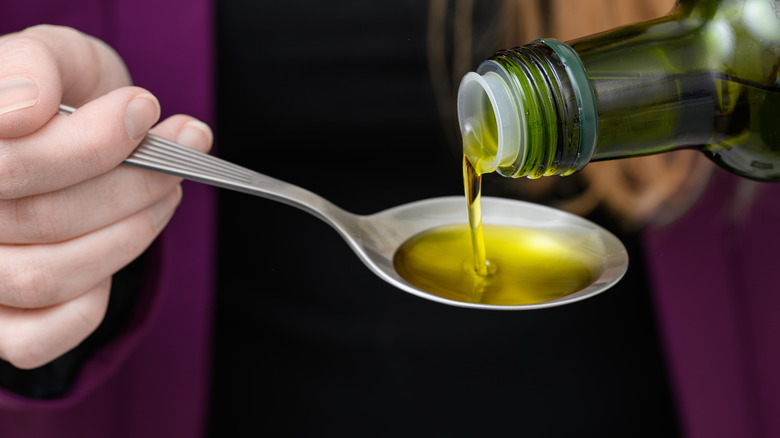
Trying to find the best olive oil can feel overwhelming, especially if you're on a tight budget. Comparing organic extra-virgin olive oil from various major retailers shows that, while Aldi's EVOO gets good reviews online, it's overpriced – especially when the price per ounce is compared to that of larger bottles from warehouse clubs and big box stores.
When doing the math on Aldi's Simply Nature organic extra-virgin olive oil, we found that a 17-ounce bottle for $7.99 comes to $0.47 per ounce. Costco's Kirkland Signature two-liter jug of organic extra-virgin oil sells for $20.99, which yields a per-ounce price of only $0.31. That's a big difference. In fact, Costco's oil costs about 30% less. Meanwhile, Walmart's Great Value organic extra-virgin olive oil (51 ounces for $21.68) is about a nickel less per-ounce than Aldi can manage.
However, smaller pack sizes can be convenient, since shelling out more than $20 all at once isn't necessarily something everyone can afford to do. Also, be aware that if you don't use it regularly, olive oil can go bad quicker than you might expect. But if it's an ingredient that you cook with nearly every day, the smaller bottles of extra virgin olive oil at Aldi's are not going to represent the best value.
7. All-purpose flour
Pantry staples are something you'd assume Aldi would always have the best price on. However, that's simply not the case with all-purpose flour, an item that nearly everyone keeps on hand for cooking and baking. Comparing similar products and pack sizes shows that Aldi is consistently a few cents more expensive per pound on flour. It all adds up. That $0.04 per pound works out to about a 10% difference.
Baker's Corner All-Purpose flour offered by Aldi comes in 5-pound paper packs for $2.19, which works out to $0.44 per pound. A comparable Walmart Great Value 5-pound bag is priced at $1.97 ($0.39 per pound). A bag of A.P. flour from Target's Market Pantry is even less, scanning out at $1.89, or $0.37 per pound. While it's tempting to employ the mental shorthand of assuming that Aldi is the place to stock up on long-keeping pantry staples like flour and sugar, you'll usually end up spending less and getting a better value elsewhere.
8. Rice
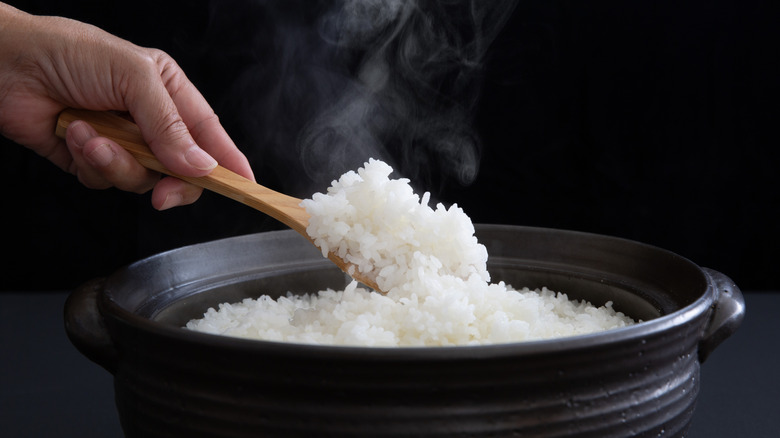
Aldi offers lots of staples for less and there's no membership fee to shop. But with items you use a lot of, you're likely to pay more per ounce at Aldi than at warehouse stores like Costco or Sam's Club. Quality and selection tend to be better at the warehouse clubs as well. Bulk purchasing generally yields lower prices per portion, and this is especially true when it comes to rice. Aldi doesn't offer large bags of rice the way warehouse club stores do. Local Asian and Latin American grocery stores tend to offer better prices, larger pack sizes, and a broader selection of brands and varieties of rice as well.
Aldi's Earthly Grains long-grain white rice is offered in a 3-pound package for $2.85. That works out to $0.95 per pound. By contrast, Costco's supreme long-rain white rice is sold in a 25-pound bag for $15.99, so you'll have to shell out five times as much all at once as well as having a plan for where to store all that rice. But at $0.64 a pound, that's a full 30% savings compared to Aldi.
For those without the storage space to commit to 25 pounds of rice, Walmart is a viable option. The big box retailer offers a five-pound bag of its Great Value long-grain white rice for $3.37. This works out to $0.67 a pound, so still nearly 30% less than the Aldi price and you're only buying a little bit more at a time.
9. Baby Food

Baby food isn't something most folks buy on a regular basis — you only really purchase it during a short period of your life. But during that time, you're buying a lot of it. Those little glass jars of fruit and vegetable purées also keep well, so it really pays to do a bit of research and then stock up when you can get a good price.
Aldi's baby food has been reported as costing as much as double that of similar products at Walmart. Once you factor in manufacturer coupons (which are in no short supply when it comes to baby food), popular name brands like Beech Nut end up costing less than the Aldi house brand, even when Aldi's baby food is on sale. Frugal parents working to really stretch their budgets report that surfing sales, clipping coupons and loading up on bulk packs at big-box stores are the best tactics to employ to keep your new little bundle of joy from eating you out of house and home.
10. Yogurt
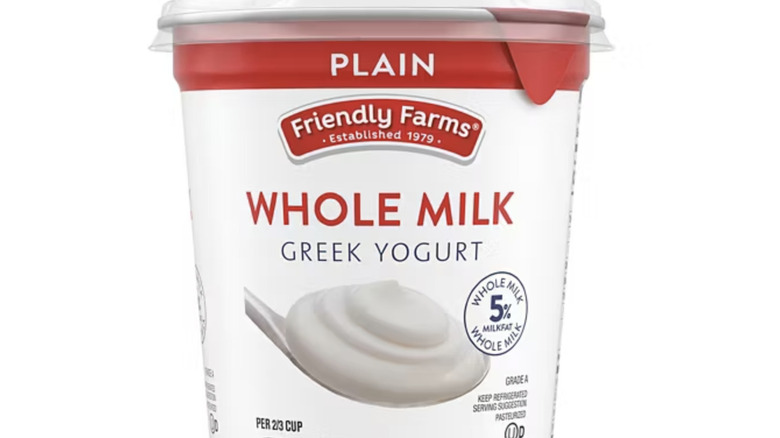
In a straight-up comparison between Aldi's Friendly Farms plain whole milk Greek yogurt and Walmart's bettergoods or Great Value versions, Aldi appears to offer roughly the same price. However, Walmart regularly offers its yogurt at a sale price which, when in play, results in Aldi's yogurt being the costlier choice.
Once that sale price (often $0.30 to $0.40 off) is factored in, Walmart's yogurt costs about 8% less — so, nothing to scoff at. Saving close to 10% on a product that's purchased every week is the kind of frugal shopping that adds up over the course of a year. Even if you don't get the sale price every single week, you're still saving in the long term.
Adding satisfaction to savings, many reviews also mention that the quality of the Aldi Friendly Farms yogurt is a noticeable drop off from comparable house brand products at warehouse clubs, big-box stores, and grocery stores. Basically, that's an Aldi fail-fail. Tastier, creamier whole milk Greek yogurt can definitely be found for a better price elsewhere.