

5 Tips For The Ultimate Melt-In-Your-Mouth Carrots
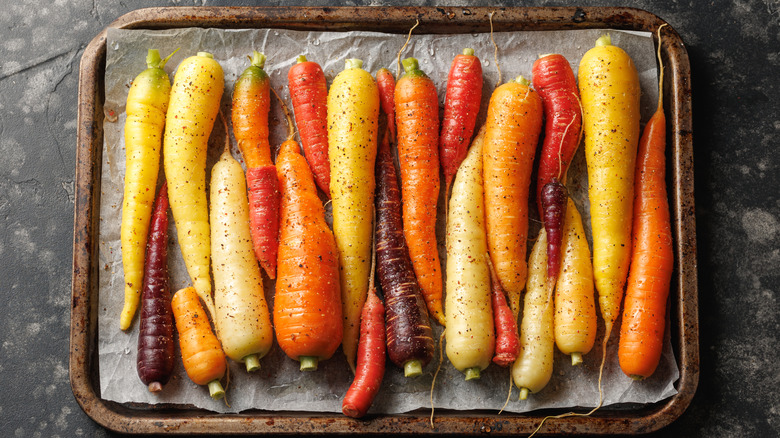
For a vegetable that can be the unexpected star of almost any plate, don't look past the humble carrot. Their vitamins and minerals can help regulate cholesterol, insulin levels, and blood pressure, and their high fiber content is beneficial for digestion. The rich world of flavor and texture possibilities has made them a trendy side dish, often with an ultra-soft mouthfeel. To get that almost melted texture, there are a few simple tips to follow that should be a good base for success. The key to the desired consistency is consistency.
To make a restaurant-quality melt-in-your-mouth carrot dish, the carrots must be consistent in size and spacing on the cooking surface. Temperatures must be maintained both before and during cooking, so choosing a method that can deliver unchanged high heat is essential. And like a lot of simple ingredients, the carrots need a little flavoring help to reach their full potential: some sort of liquid, either a glaze or a good braising liquid, will seal the deal.
Cook them with high (or lower) heat
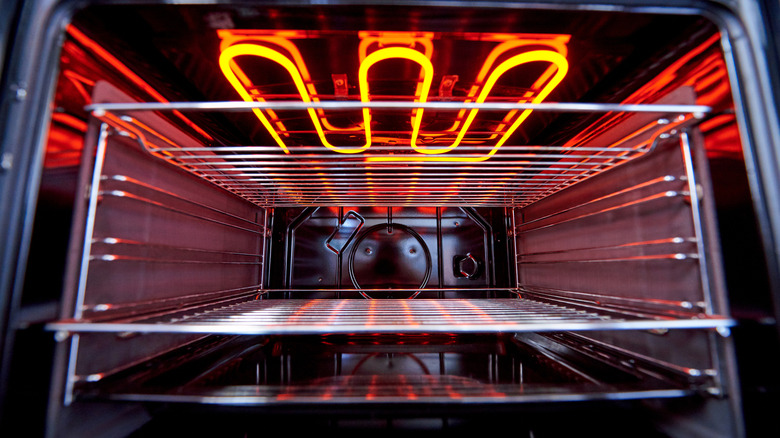
There's more than one way to make a plate of tender carrots, and depending on the method chosen, either high heat or significantly lower heat is essential. And one of the most common carrot cooking blunders is thinking that boiling is the only option. There's also roasting and braising.
Roasting at high heat is a reliable way to get tender, creamy, melt-in-your-mouth carrots. The outside of the carrots should be significantly browned, even approaching charred, with a warm and soft inside. This method takes longer, up to an hour or more, but it's hard to beat the convenience of just putting it in the oven.
Braising is another excellent choice for ultra-tender carrots, though it uses medium to low heat and requires more attentive cooking. Unlike roasting carrots, you will have to return to the pot several times to stir and add ingredients, and be more mindful of when they're done than just setting a timer. Though braised carrots can be done in half the time, so it's something to consider.
Bring them to room temperature first
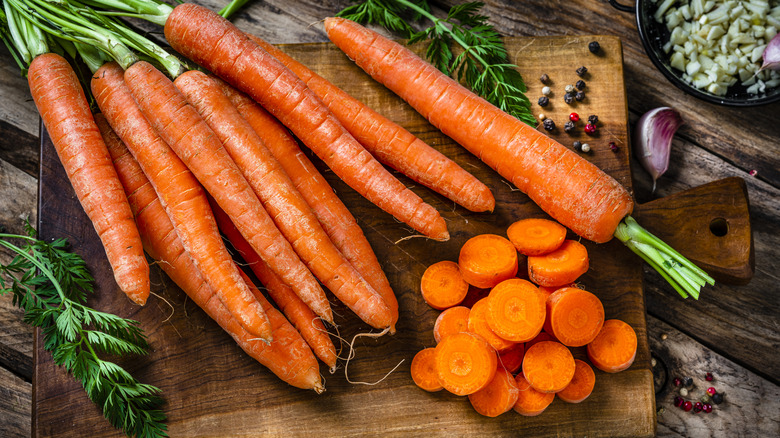
It's generally true in cooking that room temperature ingredients cook faster and more evenly than those that just came out of the refrigerator or freezer. This is also true of carrots, regardless of how you cook them. Allowing the carrots to reach room temperature first reduces the risk of the outside overcooking while the inside remains cold or even raw.
To do this, you can simply place them on a plate or cutting board on the counter. If the recipe calls for sliced carrots, doing so can speed the warming process by increasing the veggies' surface area exposure to warmer air.
If you're uneasy about leaving vegetables out on the counter for so long, don't worry, they shouldn't take more than an hour to reach the correct temperature. But for food safety reasons, be sure this waiting period doesn't exceed 2 hours, at which point bacteria may begin rapidly multiplying. Nobody will care how tender the carrots were if they also get sick from eating them.
Don't crowd the pan
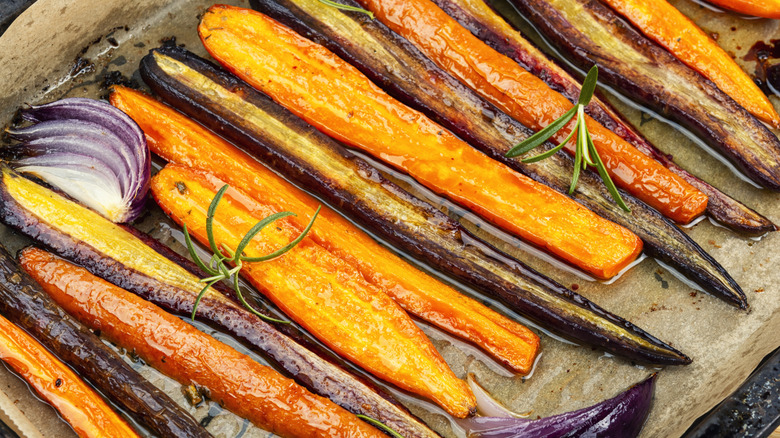
However you cook your carrots, be sure that they have enough room in the pan. Keeping a bit of space between the vegetables will allow for more even cooking and better caramelization, part of getting the desired tenderness. Make sure the pan is large enough for your veggie volume, and that each one is laying flat without overlapping other carrots.
If the cooking surface is crowded with carrots piled on top of each other, it can disturb the air flow around them — particularly if roasting — and result in uneven cooking. Crowding the roasting pan will trap pockets of heat and moisture, meaning carrots that are part steamed, part roasted.
Crowding the pan can also be a problem while braising. Here, too, the carrots need adequate room to properly caramelize during the first part of the braise. Steam is critical once the pan is covered for the final part of the cook, but it can disrupt everything if it's too much too early.
Use similarly-sized carrots
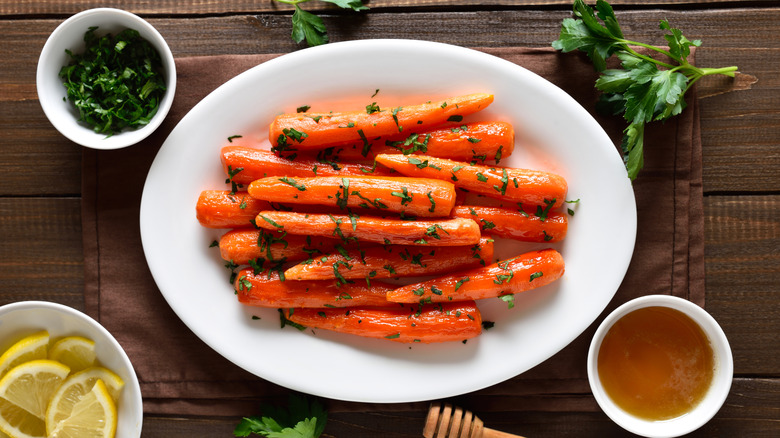
To ensure that every carrot is just as melt-in-your-mouth as the last, it helps to make sure that each one is the same size. Depending on your recipe, either use whole carrots that are roughly similar, or use a knife to cut irregularly-sized ones into same-sized pieces. The reason this works is also why sheet pan dinner ingredients should all be the same size. Keeping the carrots or carrot pieces proportional means they will all have similar cook times and braise or roast evenly. If the carrots are being roasted, you might even be using a sheet pan.
If the carrots are being sliced, it may be helpful to know that they're one of the vegetables you've been cutting wrong for years. A Santoku knife (similar to a chef's knife) has an ideal weight distribution for slicing through this dense root vegetable, slices which should be angled to maximize exposed surface area and thus caramelization potential.
Add a liquid
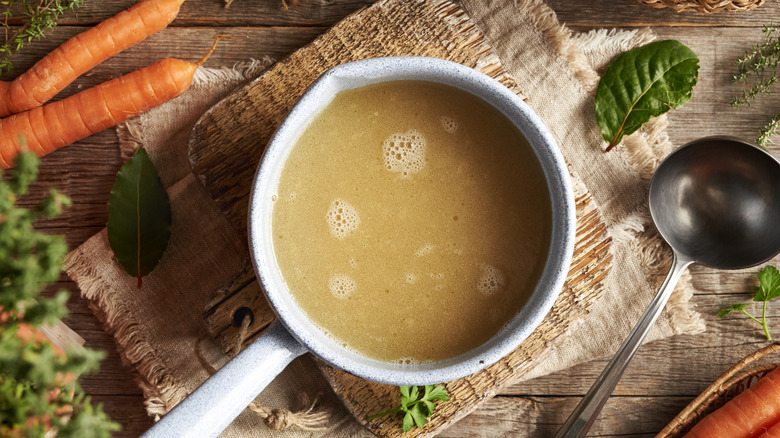
Whether roasting or braising carrots, some kind of liquid is needed to allow them to reach their full, deliciously soft potential. In either case, the added moisture helps protect the carrots from scorching and is a major vehicle for the flavor and texture of the final dish.
Good roasted carrot recipes incorporate some kind of glaze into the cooking process. These glazes are typically a mix of butter and/or cooking oil, plus a sweetener like honey or brown sugar, and seasonings, including salt. In terms of softness, fat and a natural sweetener both enhance caramelization, while salt concentrates the carrots' natural sugars by drawing moisture out, resulting in a mushier texture.
Braised carrots do not use a glaze. However, a good braising liquid is always key to this cooking method. After the carrots are sautéed for a bit, some kind of liquid is added to the pot, then covered and simmered off until mostly gone. Chicken and vegetable broth are common choices, sometimes with added butter, where their salt content helps add to the tenderization of simmering. Other recipes call for the natural acidity of orange juice to tenderize the carrots further. It's a good place to get creative.