

How To Choose The Best Shrimp Size For Your Seafood Dish
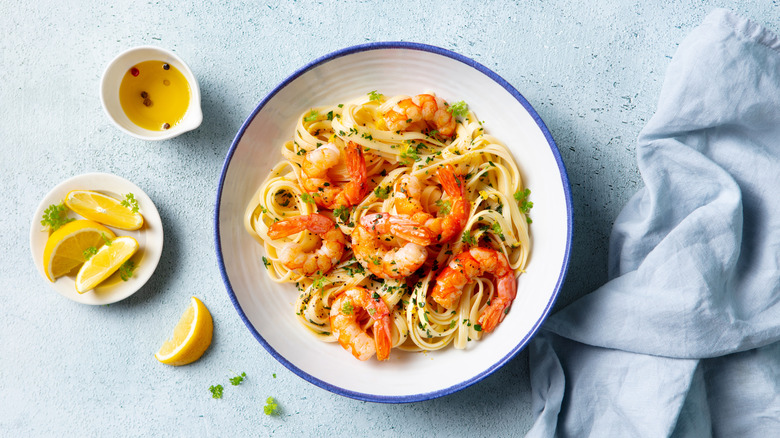
Shrimp are a favorite shellfish option for many different dishes, but true to their name, they can be much smaller than other proteins. People who enjoy the flavor of shrimp but not their small size may be inclined to think that bigger is always better. But depending on the dish in question, larger shrimp can actually be the wrong choice. To understand this best, it's worth first learning the numbering system by which shrimp are often sold.
Bags of frozen shrimp have two numbers separated by a forward slash, signifying the range of shrimp of their size found in one pound. Larger numbers mean smaller shrimp. A bag that says 61/70 has 61 to 70 tiny shrimp per pound. On the other end of the spectrum, a bag labeled U/15 means under 15 shrimp per pound, indicating huge, some might say colossal, shrimp.
It's up for debate, however commonly thought, that larger shrimp have sweeter flavors. Whether or not that's true, large shrimp are a more substantial mouthful and more likely to retain their natural juices while cooking. But smaller shrimp are often ideal for dishes where the protein should absorb a marinade or be cooked in sauce. Thinking carefully about use cases can help reveal the perfect shrimp size for any seafood dish.
Choosing the perfect shrimp size matters
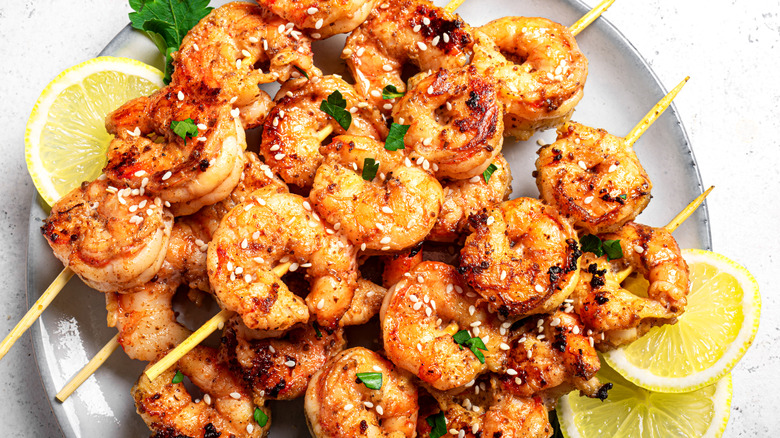
The different culinary purposes of different-sized shrimp are some of the basic things to know about cooking shrimp. The tiniest shrimp do well in things like pasta sauces, spring rolls, dumplings, and seafood dips and spreads, to name a few. Small and medium shrimp are good for rice dishes like stir fry and paella, or more assertive seafood pastas, having enough oomph to stand out on their own amid the potent flavors.
As shrimp get larger, they tend to become the star of the plate. Big shrimp are often a prime choice for appetizers, especially shrimp cocktails. Even larger jumbo shrimp are common for all sorts of grilling purposes, as their bigger size can better withstand the heat. Colossal shrimp are similar but even larger, approaching lobster tails in size. And finally, the biggest shrimp you can buy are super colossal shrimp, for the most luxurious and filling dishes.
No matter the size or dish, don't overcook your crustaceans. It's one of the worst mistakes people make with cooking shrimp. Like other ingredients, smaller ones cook faster than bigger ones, but all shrimp run the risk of becoming rubbery and bland if they're on the heat for too long.