

Why Does Trader Joe's Face So Many Product Recalls?
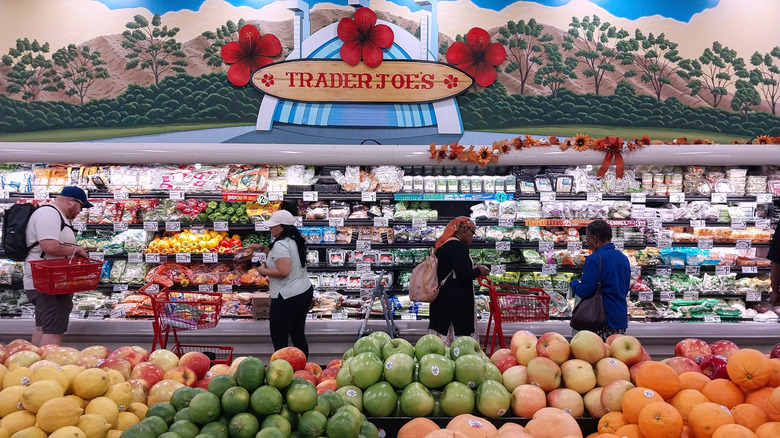
Late last month, Trader Joe's issued yet another recall, this time for potential glass in its frozen chicken fried rice. In 2025, the Tiki-themed grocery chain recalled 10 products for reasons ranging from defective packaging to unlabeled allergens to potential listeria contamination. One of the recalls involved listeria found in pre-cooked pasta noodles from Nate's Fine Foods — used in dishes from other markets like Kroger and Walmart — that resulted in the death of six people. All of these recalls were just one of many Trader Joe's scandals you should know about before shopping. Why does this keep happening to the grocery store? Are the people in charge of food safety as chill as the employees checking you out?
The answer, as usual, is complicated. In 2025, Whole Foods had 16 recalls but carried over 30,000 individual items, compared to Trader Joe's approximately 4,000. This ratio has led to some people in the food safety industry calling the company "Recall Joe." The store states on its website that it keeps higher standards than the regulatory requirements and that it takes action quickly and errs on the side of caution. The implication is that the high amount of recalls is more out of an abundance of caution than actual danger. Still, the number of recalls due to foreign material in the products seems high. This could be due to a drive to keep costs low. Safety is often an easy corner to cut.
How Trader Joe's makes it difficult to know why
The total number of recalls in 2025 saw a slight increase industry-wide over 2024, from 296 to 320, according to Food Safety Magazine. In the same timeframe, foodborne illness outbreaks stayed the same at 28, while foodborne illness cases dropped from 1,804 to 1,003. These numbers seem to also suggest that the increase in recalls is more preemptive than reactive. The problem is that Trader Joe's is notoriously secretive about what goes on behind the scenes. This lack of transparency about its quality-control systems can lead to speculation from consumers.
The secrecy doesn't end at quality control. Recalls are often how we have found out who made the company's private label products, as it does not disclose its providers. For example, it took a recall of canned tuna made by Tri-Union Seafoods to learn it was the supplier of Trader Joe's. This revealed the tuna sold at T.J.'s was from the same company that made the product for H-E-B, Van Camp, and Genova. This may be why it's kept a secret, as this info could take the luster off the product for some consumers. The products that remain a secret, however, will still be subject to scrutiny from fans as they try to figure out who makes what for the brand.