

Why So Much Aldi Produce Is Wrapped In Plastic
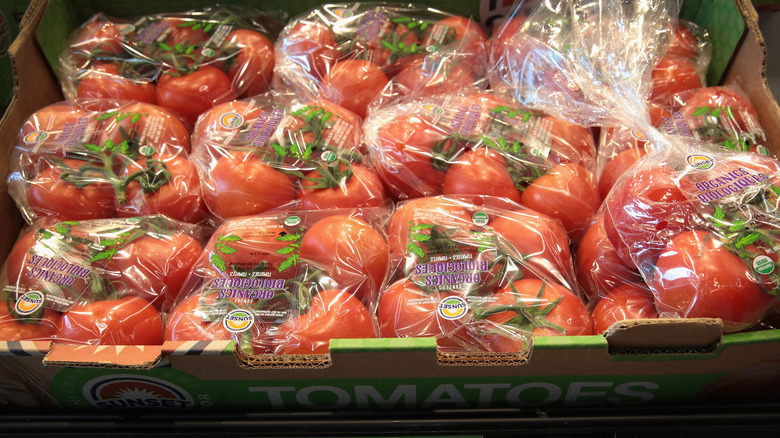
Aldi shoppers are probably familiar with seeing plastic in the produce section — not necessarily the long spooled bags you see at other grocery stores, but some kind of plastic wrap, bag, or net covering many different goods. It is not a universal sight, and Aldi produce departments vary from region to region, but plastic is hard to avoid. Plastic-wrapped produce sold by Aldi has included, but is not limited to, English cucumbers, lettuce, blueberries, potatoes, bell peppers, tomatoes, apples, mandarins, zucchini, husked corn, kiwi, fresh herbs, and even jalapeños. But why is Aldi like this, when other grocery stores seem to feature much less packaging?
An Aldi spokesperson once told news.com.au that "the packaging of our fresh produce helps with the product quality and preservation as well as the efficiency of our operations." But it is not quite as straightforward as that sound bite suggests. It does streamline sales, but plastic-wrapped produce can actually sacrifice product quality. This contributes to one of the most common Aldi customer complaints out there: its reputation for poor quality produce.
Packaged produce supports Aldi's business model
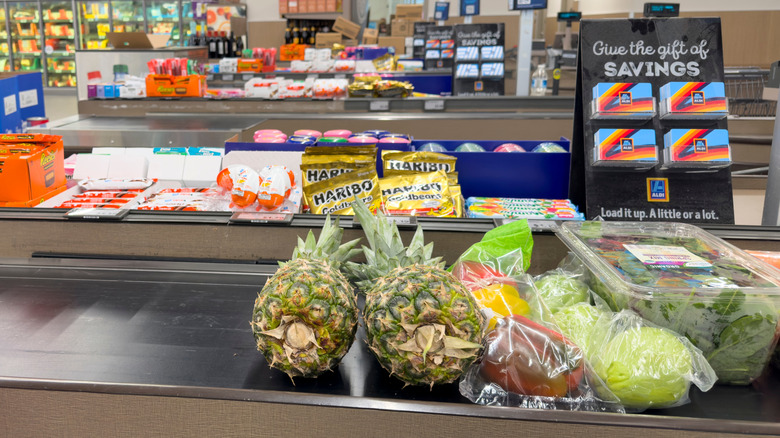
Wrapping produce in plastic improves Aldi's efficiency in several big ways. From a customer's perspective, there is no need to weigh anything yourself and guess how much you will be spending. Cashiers avoid the need for scales as well and only have to scan a barcode. This makes both shopping and leaving the store faster, which is essential for a chain that suffers frequent complaints of long checkout lines.
Another efficiency benefit is best understood looking at the competition. Employees at other grocery stores can spend as much as 35 work hours a day unboxing, stocking, and arranging produce sections. But plastic-wrapped produce makes this process faster and easier at Aldi, requiring far fewer employees and work hours to sustain.
Lowering these overhead costs ultimately helps keep all of Aldi's prices down, despite the conventional wisdom that companies up-charge customers for packaging. This practice helps Aldi move produce out the door faster as well, which is key considering some of the quality control complaints customers have.
Is plastic-wrapped produce better for consumers?
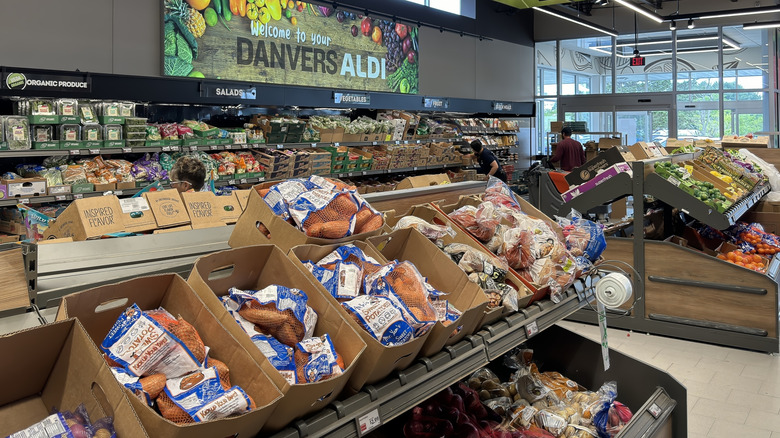
Aldi maintains that wrapping produce in plastic is partly meant to preserve product quality, which is true to a certain extent. Plastic helps protect produce from damage during shipping, exposure to oxygen and outside moisture, and whatever might be on hundreds of unsupervised customers' hands. But it can also consign such foods to early composting.
Plastic-wrapped produce traps heat and moisture from the plants' natural respiration processes — two essential preconditions for rotting food. The longer produce sits in plastic, the more this heat and moisture builds up, resulting in food that can go bad before you know it. Aldi attempts to compensate for this by restocking produce daily, but it does not stop customers from noticing rapid spoilage, part of why people complain that Aldi has the worst produce section.
Aldi has made public commitments to reduce and improve its overall packaging by 2025. While progress is unclear, there is no doubt the company is aware of these issues. And judging from the continued presence of plastic-wrapped produce, it is likely that this is still the best financial move for Aldi's business model, food waste and all.