

9 Discontinued Liqueurs You Might Have Forgotten About
If you've got a taste for something, there's likely a liqueur for it. The liqueur world is diverse, exciting, and ever-expanding, and there are some wild, wacky, and decidedly disturbing options out there, with drinks flavored with everything from celery root to tamarind to deer blood and bones (yes, really). In the never-ending desire of alcohol companies and producers to come up with the next big thing, it can feel like there's a new liqueur arriving on the market every single day — and so it's probably no great surprise that a fair few of them have either flopped or fallen out of fashion after a spell of success.
As a result, there's a huge amount of discontinued liqueurs scattered throughout booze history, including some that are so obscure nowadays that you may never even have heard of them. Long-forgotten liqueurs like Carypton or Amaro Zara are now either almost impossible to find or else have disappeared off the face of the earth. Others, like Patrón Citrónge Lime or Aftershock, may still be available, but in dwindling quantities. These discontinued liqueurs are exactly what's missing from your home bar, and we're praying that someone from Big Booze takes notice and brings them back.
Aftershock
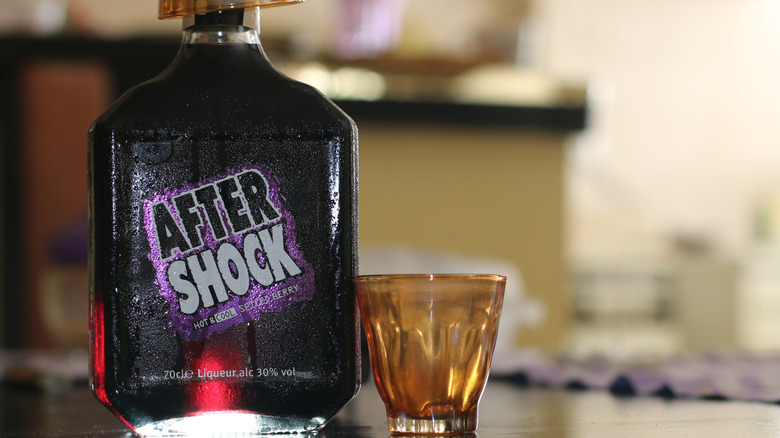
If you were a young adult in the late '90s or early 2000s, you might have some pretty hazy memories of drinking Aftershock on a night out. If we had to guess, we'd say they were hazy not just because this liqueur has been discontinued for a long time now, but because of its brute-force strength. Aftershock was a line of long-forgotten liqueurs launched by the Jim Beam Group in the mid-1990s, and it packed a 40% ABV content into each of its neon-colored bottles — the same strength as most liquors. Where it differed from the likes of gin and vodka, though, was in its no-nonsense flavors: citrus, cinnamon, and the mint-flavored "Thermal Bite" were just a few of its offerings.
We think it's pretty fair to say that Aftershock was a drink designed for people who wanted to get drunk, but didn't want any subtlety to their beverage whatsoever. However, as time went on and the 2000s came to a close, this kind of drinking culture began to feel a little old-school and, shall we say, immature. People's tastes became more refined, alcohols became more nuanced, and the candy-colored likes of Aftershock started to lose their appeal. The liquor was ultimately discontinued in 2009, and although you can still buy bottles today, they're now collector's items.
Navan
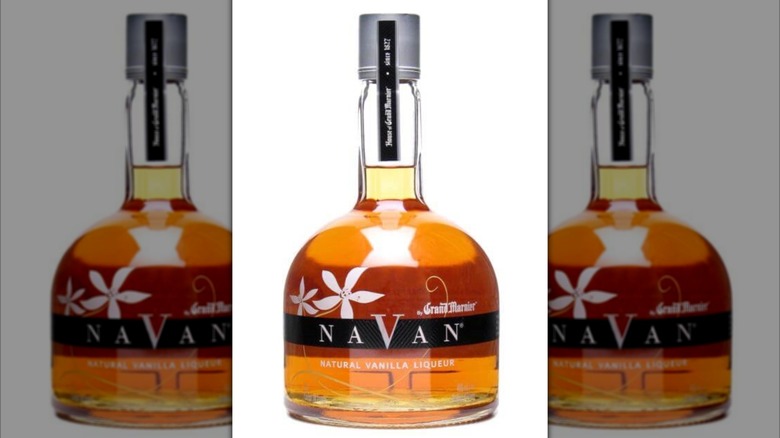
Do you have a vanilla-flavored liqueur in your cabinet? Probably not, right? This flavor note should be super popular in cocktails and mixed drinks, but for whatever reason, it's never quite taken off in the way that we think it should. Perhaps Grand Marnier agreed, and in 2004, it took a stab at revolutionizing the cocktail world with the release of Navan in the United States. The cognac-based liqueur had a deep, heady, vanilla-forward aroma, thanks to the infusion of Madagascan black vanilla beans, and it was designed both for sipping on its own and for mixing with other liquors.
However, in retrospect, Navan looked like it was doomed from the beginning. Grand Marnier's drink was considered way too sweet by industry professionals, and a couple of years after its release, the company had to reformulate Navan to take some of the sugariness out of it. Sadly, though, this didn't lead to a big spike in sales, and the liqueur only managed to hang on for a few more years before it was finally discontinued.
Baileys Glide
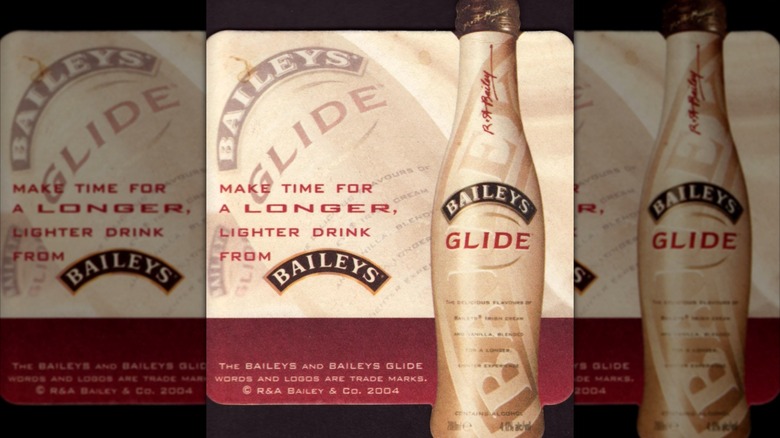
For years, Baileys has been the kind of thing you bust out at Christmas, and Christmas alone. Okay, maybe you'll have it a couple of other nights of the year, when it's chilly, and you're feeling cozy, but generally? It's a seasonal thing. Back in 2003, though, Baileys producer Diageo wanted this to change, and to shift the drink into being a year-round affair. It did so with the release of Baileys Glide, a low-strength liqueur that came in 200 milliliter bottles, and mixed the regular flavor of classic Irish cream with vanilla. The idea was that the 4% ABV drink could be a worthy competitor in the booming alcopop market, and Diageo accompanied the release with a huge marketing campaign.
So, how did Baileys Glide fare? Not well. Not well at all. Less than two years after its original release, Diageo decided that it was time for Baileys Glide to, well, glide into invisibility. While the drink initially had a strong start, its sales saw a massive nosedive, with a near-30% annual decrease in its second year of sales. We guess it was a nice idea, but to be honest, we can see why a cream-based long drink didn't quite excite people.
The Original Canton Delicate Ginger Liqueur
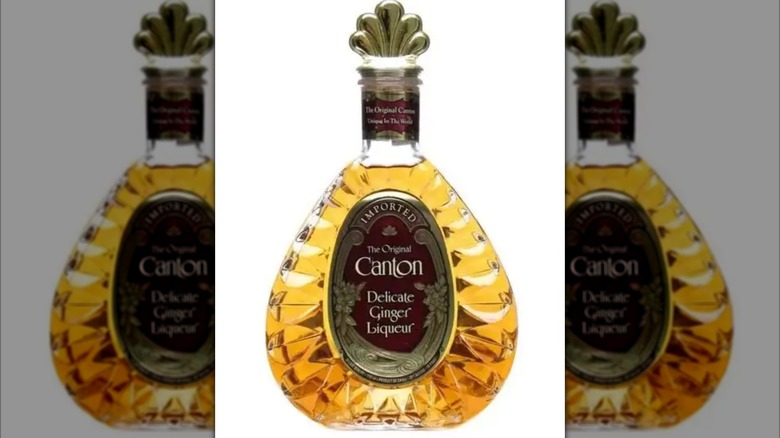
The success of a liqueur — indeed, the success of any beverage or food item — largely depends on the culinary landscape that it's released into. Proof of this can be found in the rise and fall (and rise) of The Original Canton Delicate Ginger Liqueur. This ginger-flavored liqueur was first sold in the US in 1992, having been imported from Guangdong in China and derived from a centuries-old recipe. It came in a particularly eye-catching bottle, which looked almost like an inverted fan. It had a mid-yellow hue and 20% ABV strength.
However, it arrived in the US at a time when ginger-flavored drinks weren't exactly high on everyone's wish list, and sadly, it never quite took off. The Original Canton Delicate Ginger Liqueur was eventually discontinued in 1997. However, a decade later, The Original Canton Delicate Ginger Liqueur was relaunched as Domaine de Canton, with a rejigged recipe and a stronger ABV. It was an immediate hit, thanks to the changes in drinking tastes that had occurred since its original release. Domaine de Canton is now still widely available, but the original beverage is no more. Don't worry, though: If you're not satisfied with the other ginger liqueurs out there, you can make it at home.
Forbidden Fruit
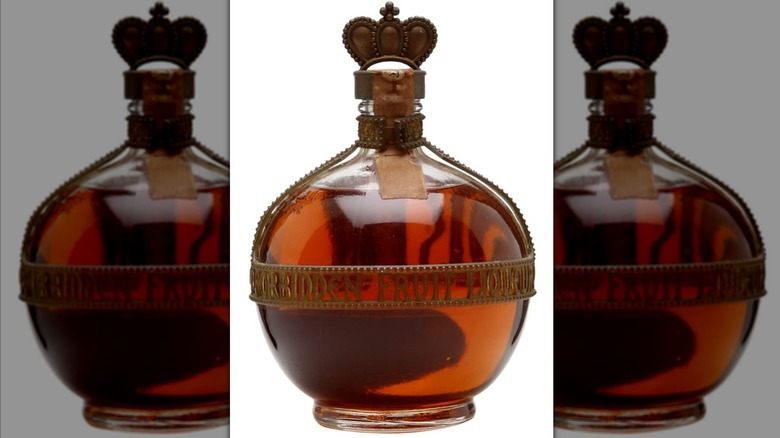
A couple of hundred years ago, the term "forbidden fruit" referred to something you might not expect. Back in the 1700s, this was the name given to the humble grapefruit, which was grown in Barbados before eventually making its way to the US in the 19th century. Although "grapefruit" became its permanent name, the arguably more exciting term for it stuck around long enough for the Forbidden Fruit liqueur to take off around the turn of the 20th century, a mix of grapefruit, cognac, and spices, which came in at 32% ABV. Forbidden Fruit was as notable for its newfangled flavor (well, to US audiences at least) as for its frankly beautiful spherical bottle, which mirrored the shape of its key ingredient.
Forbidden Fruit became a trendy ingredient in the first half of the 20th century, when it was a popular addition to cocktails. It was eventually bought by Charles Jacquin et Cie, with the rights for the bottle also going to the Philadelphia-based producer. However, as the 20th century pushed forward, Forbidden Fruit became less appealing to drinkers, and by the late 1970s, it was discontinued. If you've ever bought Chambord, though, you've held a piece of the history of this drink in your hands: Charles Jacquin de Cie repurposed its orb-shaped bottle for the release of its raspberry-flavored liqueur in the early 1980s.
Galliano Balsamico
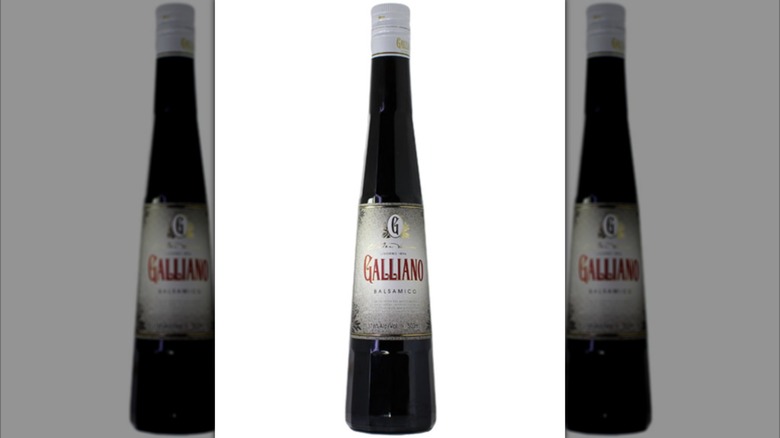
A liqueur that tastes of balsamic vinegar ... we've gotta say, we're not surprised that this one never quite stuck the landing. Nonetheless, we have to admire the bravery of Galliano when it boldly (and perhaps foolishly) released Galliano Balsamico in 2009. Although this liqueur might sound like something that no one would ever drink, its creation was actually rooted in a lot of sense. Galliano Balsamico was developed as a result of the need to find a way to use the flavors of balsamic vinegar in mixed drinks, where it's a surprisingly common ingredient, but to avoid the loss of its distinctive aroma once it's combined with other elements.
Galliano Balsamico was just as punchy as you'd expect, with a seriously strong aroma that was somewhere between fruity and medicinal. Like regular balsamic vinegar, it had flavor notes of plum, prunes, and acidity, and its 37.6% ABV meant that it was hardly shy and retiring on the strength front. Despite appearing to fill a gap in the market, that gap eventually turned out to be pretty minuscule — and so it's probably no surprise that Galliano Balsamico was ultimately discontinued.
Amaro Zara
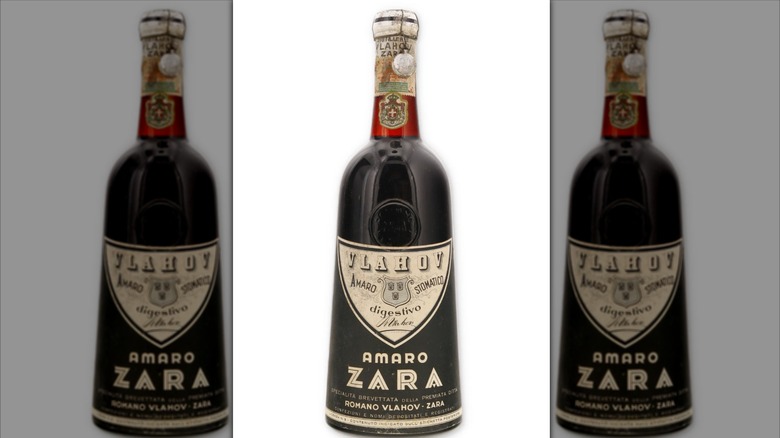
The Alpine herbal liqueur market is a surprisingly crowded one. Drinks like Chartreuse, Génépi, and Appenzeller Alpenbitter may not be drunk regularly around the world by millions of people each day, but in the European mountainous region, they can fight for attention. Back in the late 19th century, Croatian alcohol producer Roman Vlahov decided that he would make a play for the Alpine liqueur market with his own product. The result, Amaro Zara, was a bitter drink that could be found throughout the 20th century, before ultimately fading into obscurity sometime around the 1980s.
Produced in Bologna, Amaro Zara was marketed as a digestif, and specifically as something to be drunk around bedtime. With a 40% ABV, it was as punchy as any other self-respecting Alpine liqueur, but over time, it seems as though it couldn't keep up with the popularity of the other drinks of the region. Amaro Zara ultimately fell out of production, but another of Vlahov's liqueurs, appropriately named Vlahovac, has remained well-known to this day.
Carypton
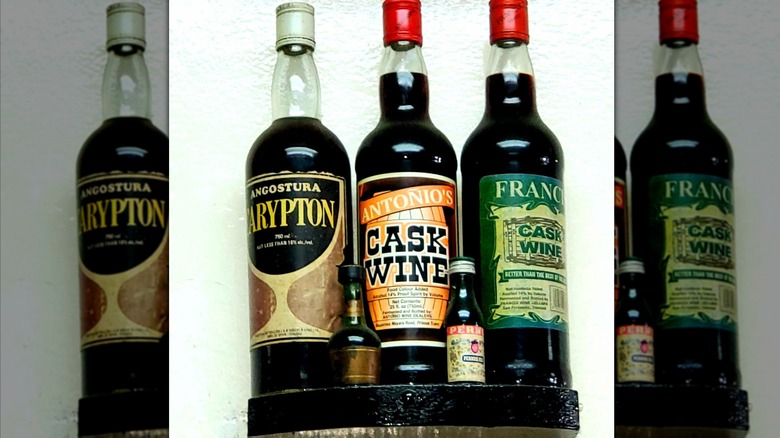
We're kinda nerds when it comes to food and drink history here, and so when we stumbled across Carypton, we knew we had to discuss it. This liqueur, which has a name that sounds like a distant planet in "Star Trek," was originally made by Angostura in Trinidad and appears to have first gained popularity around the late 19th and early 20th century. This aperitif was dubbed "The Green Swizzle of the West Indies," and was a type of falernum, a rum-based Caribbean liqueur that's flavored with the sharp notes of lime and cloves, and then transformed into a syrup with copious amounts of sugar.
Carypton may have had a spell of popularity in the pre-Prohibition era, but as the 20th century pressed forward, it seems as though it completely disappeared. Now, Carypton is mainly known by booze enthusiasts or historians. That said, falernum (a favorite of Jackie Kennedy) and falernum-based liqueurs can still be found in stores today, and you can also whip it up yourself at home with a few easy ingredients.
Patrón Citrónge Lime
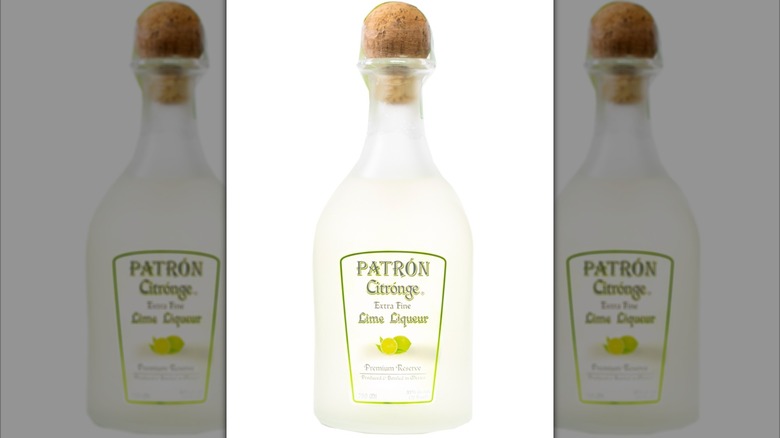
Don't you hate it when a really, really useful ingredient suddenly disappears from shelves? That's how we felt when Patrón Citrónge Lime was discontinued. This Patrón liqueur was a tequila-based drink that infused the base spirit with the heady, sprightly notes of Mexican and Persian limes. It essentially cut a lot of the work out of making a margarita: Instead of having to squeeze fresh limes and measure out the exact amount needed, you could just hit your drink with a glug of this liqueur, and you were good to go (well, after you added the triple sec and gave it a good shake, that is).
Citrónge Lime was just one of Patrón's Citrónge range, with mango and pineapple flavors also available. However, eventually, the manufacturer clearly decided that its citrusy liqueurs just weren't hitting the sales they needed them to. Patrón Citrónge Lime was discontinued, along with the others. We can only hope that Patrón does the same thing with these drinks as it did with its XO Cafe tequila liqueur, which has recently begun reappearing in supermarkets after several years of being out of production. We have hope!