

Where Does Costco Source Its A5 Wagyu Ribeye Steaks?
We may receive a commission on purchases made from links.
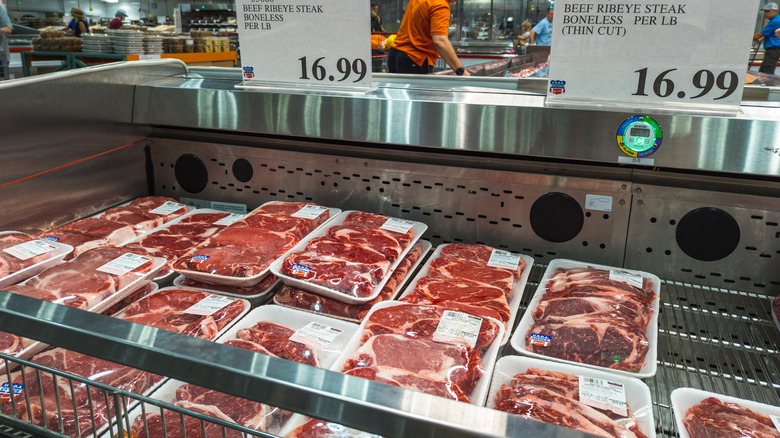
Buying a package of Wagyu ribeye steaks from Costco is a significant investment. Priced at $469.99 for three steaks weighing 16 ounces each, these meaty cuts truly need to deliver when it comes to flavor and texture to justify their high cost. Luckily, according to the Costco website, the steaks are "imported from the Kagoshima prefecture in Japan," which is "collectively responsible for around 20% of Japan's Kuroge Wagyu cattle, the Wagyu breed that produces Japanese A5 Wagyu."
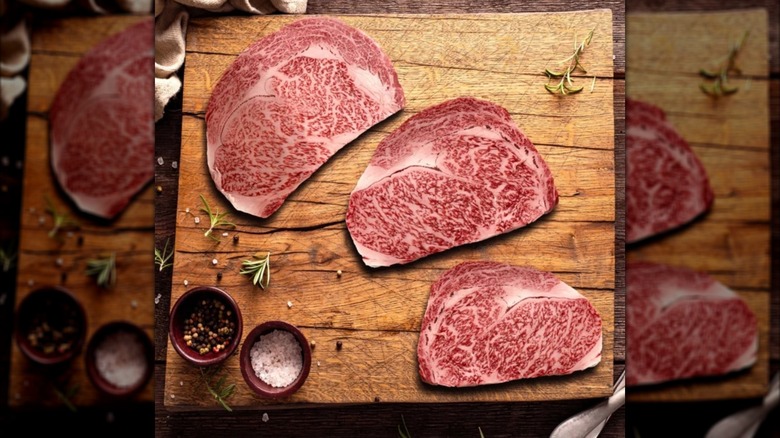
Classed by the Japanese Meat Grading Association, Japanese wagyu is graded into categories according to its marbling, color, and fat level (A5 is the highest grade possible, so Costco's steaks are of a supreme quality). Kagoshima A5 wagyu in particular has a buttery melt-in-the-mouth quality and is world-renowned for its rich flavor and tender texture.
The treasured character of this variety of wagyu is attributed to the way the cattle are reared in a temperate and low-stress environment with plenty of space to roam. The calming surroundings and rearing techniques produce a bounty of fatty deposits that run through the meat (they look like fine white tributaries or streaks). Prized as the highest grade of beef available in Japan, the abundant marbling in this highly sought-after product renders down and bastes the steak as it cooks.
Why is the provenance of wagyu important?
Now, does it really matter where your wagyu steaks come from? As long as they're billed as wagyu on the label, shouldn't they taste the same? Actually, American-produced wagyu beef differs from Japanese wagyu because the cattle are crossbred with Angus cattle. This produces meat with rich marbling that has the beefier flavor of Angus. Other countries, such as Australia, produce their own wagyu too. However, Australian wagyu beef is more similar to its Japanese counterpart because the cattle aren't crossbred. Having said that, the Australian wagyu are fed for a shorter period, which means they have a slightly lower measure of marbling and a firmer texture. Confirming the provenance of your wagyu steaks will give you greater insight into how the cattle that produced them were cared for, what they ate, and whether they lived a comfortable life.
As wagyu steaks are so fatty, the best way to cook them is to sear them quickly in a skillet to allow the fat to melt. As with all steak, you should allow the meat to come up to room temperature before searing it so it can cook evenly. The best temperature to cook a beautiful piece of wagyu is as hot as possible with no extra oil or butter. This technique produces a steak with a caramelized crust and a succulent middle that melts in the mouth.