
10 Of The Best Dishes Anthony Bourdain Tried During His Life
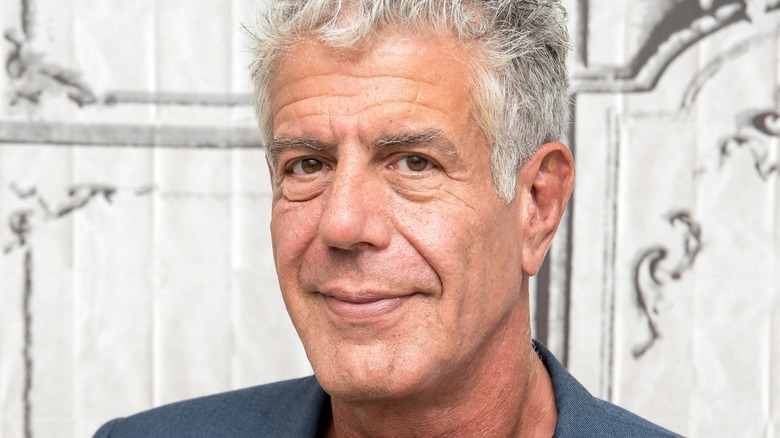
Though Anthony Bourdain started his professional life working in kitchens and later became an executive chef at the New York City restaurant Brasserie Les Halles, it was writing about his kitchen experiences that really propelled him into the well-known figure he became. His 1999 New Yorker article "Don't Eat Before Reading This" led to his 2000 book "Kitchen Confidential: Adventures in the Culinary Underbelly," which became a New York Times Bestseller. The critical acclaim of the memoir then led to his transition into the television world, hosting several series throughout the years, including "A Cook's Tour," "Anthony Bourdain: No Reservations," and "Anthony Bourdain: Parts Unknown."
Through his writing and TV shows, it became evident just how passionate Anthony Bourdain was about food, culture, and the human condition. He traveled all over the world, sampling some of the most adventurous dishes the world has to offer. Always open-minded and intensely curious, Bourdain found an enjoyable aspect of nearly every dish he tried. Thus, creating a definitive list of his favorite dishes without getting into the triple digits would be a difficult task, but there are a few dishes that he highly praised and declared as the best of the best, dishes that he was obsessed with and that were perfect examples of why he so deeply loved gastronomy.
Bún bò Huế
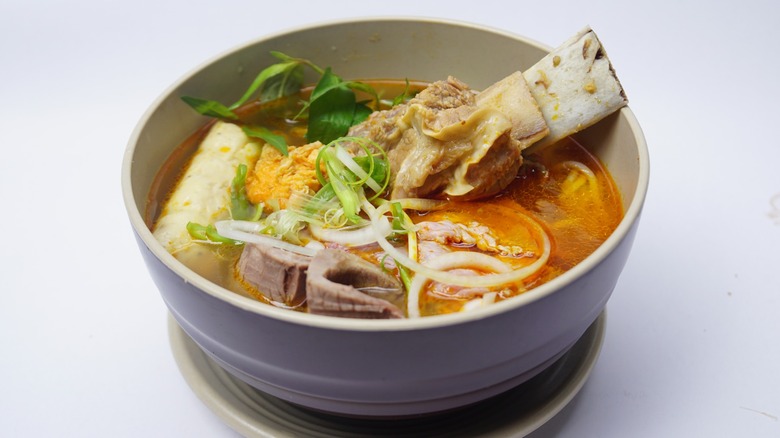
Anthony Bourdain unabashedly loved spicy, soupy bowls of noodles, and the Vietnamese soup bún bò Huế had a particularly special place in his heart. In his opinion, it was the best soup in the world. "In the hierarchy of delicious, slurpy stuff in a bowl, bún bò Huế is at the very top," he said in Season 4, Episode 4 of his show "Anthony Bourdain: Parts Unknown" (via YouTube). According to Bourdain, the soup starts with a bone broth that is flavored with spices, fermented shrimp paste, and lemongrass. Then rice noodles and tons of meat are added, including beef shank, pigs' feet, and crab. And if that's not enough, there are also dumplings in there, all topped with cilantro, green onions, banana blossoms, mung bean sprouts, chili sauce, and a lime wedge.
As he slurped down the bowl of noodles, he passionately claimed that to eat this dish was his purpose on Earth. For him, nothing beat the flavor and texture combination at play in the complicated, piled-high soup. "This is as sophisticated and complex a bowl of food as any French restaurant," Bourdain stated. Considering he was once an executive chef who specialized in French cuisine, we'll take his word for it.
Cacio e pepe
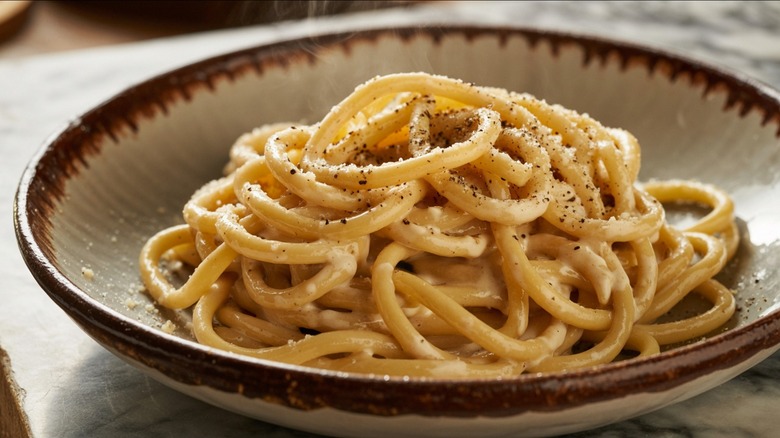
A committed carnivore, it may come as a surprise that Anthony Bourdain's favorite pasta dish was a meat-free one: cacio e pepe. The name of the classic Roman dish translates to "cheese and pepper" in Italian, and those two simple ingredients are the stars of the show. It's the simplicity of the dish that caused Bourdain to fall in love with it. According to the TV host, cacio e pepe is "Simple and sublime" and "could be the greatest thing in the history of the world," as he stated in Season 6, Episode 20 of his series "Anthony Bourdain: No Reservations" (via YouTube).
In the clip, the server shares how the dish is made, explaining that the cooks put a bit of the pasta water in the pan with butter and black pepper, then toss the fresh pasta in Pecorino cheese. Then the dish is topped with more Pecorino and more fresh pepper and served in a bowl made of crispy Parmesan cheese. As Bourdain digs in, he states, "This is the simplest, nicest thing in the world." Though Bourdain refused to disclose the Roman restaurant on camera for fear of it becoming overrun by American tourists, the restaurant has since revealed its own identity as Roma Sparita, where culinary enthusiasts can still go to try a crispy bowl of that allegedly perfect cacio e pepe.
Mapo tofu
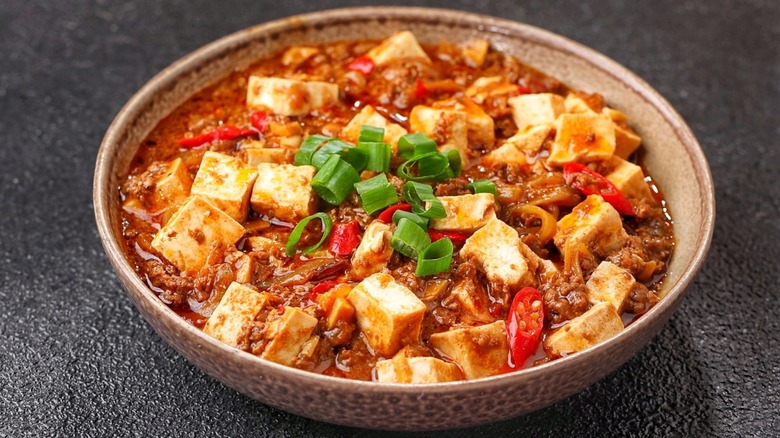
In America, we tend to think of tofu as a substitute for meat, but in many dishes around the world, tofu is used alongside meat. Such is the case with the Sichuan dish, mapo tofu, which Anthony Bourdain considered one of his favorite meals abroad. In Season 8, Episode 3 of "Anthony Bourdain: Parts Unknown" (via YouTube), he called mapo tofu "the apex of Sichuan food." The name translates to "pock-marked granny tofu," and according to the Chinese origin story of mapo tofu, it was created by an elderly woman with smallpox scars way back in 1862.
Composed of ground pork or beef and tofu in a sauce made from bean paste, garlic, chili oil, ground Sichuan peppercorns, and umami-enhancing MSG, Bourdain loved this dish for its balanced flavor and texture. Famously, Bourdain's hangover cure included aspirin, Coca-Cola, and spicy Sichuan food. Mapo tofu is specifically the perfect dish to have when you've over-indulged in alcohol. "If you ever have a hangover ... this will scare the evil right out," he stated on the series.
Roasted bone marrow
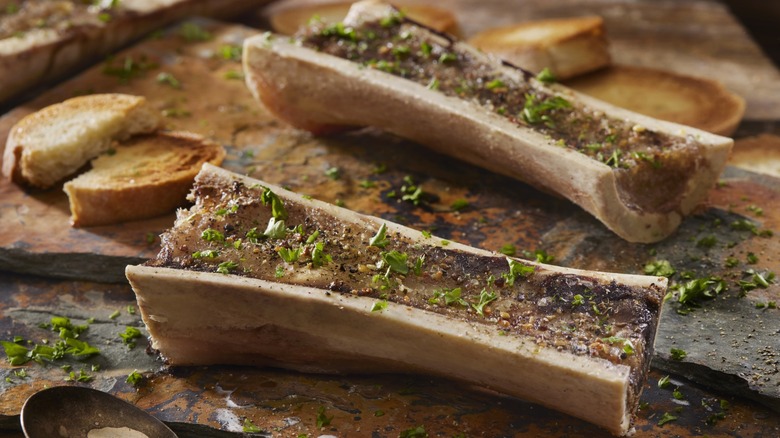
The London restaurant St. John was one of Anthony Bourdain's favorite dining spots in the world. The roasted bone marrow dish was particularly influential — not only to Bourdain, but to culinary culture in general. "If you've ever eaten bone marrow anywhere, it is very likely because they did it here first," he noted in Season 8, Episode 4 of "Anthony Bourdain: Parts Unknown" (via Facebook). "It's a simple good thing but it's one of the most influential dishes in the last 20 years," he added. The bone marrow is served still inside the bone with a side of housemade sourdough bread, a parsley and caper salad, and the finest sea salt.
This iconic dish was so important to Bourdain that he once said he would choose it as his hypothetical last meal. In an interview with My Last Supper, he said his last meal on earth would be the dish served at St. John in London, after hours, prepared by the chef, Fergus Henderson. And he would pair it with a perfectly-poured pint of Guinness.
Chivito
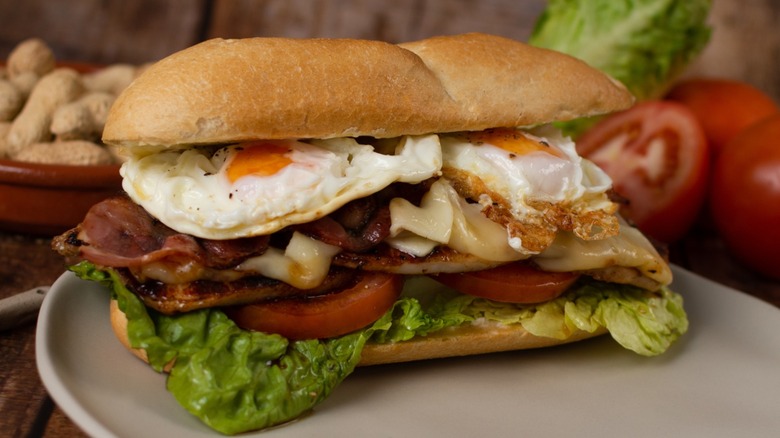
Anthony Bourdain tried some of the finest, most delicate food on the planet, but he also saw the value of indulging in a sloppy sandwich every now and then. His visit to Uruguay could not be complete without trying the nation's national dish, chivito, which is a monster of a sandwich loaded with meat and cheese. "I think this is the greatest sandwich ever ... this is it, this is the king," Bourdain said in Season 4, Episode 14of "Anthony Bourdain: No Reservations" (via YouTube).
The contents of this under-the-radar sandwich can vary depending on personal preference, but Bourdain notes his included ham, beef, eggs, mayonnaise with hearts of palm in it, onions, lettuce, tomato, mozzarella cheese, olives, bacon, and an assortment of peppers. All on a "cakey" bun. "It's like Everest," he said. "You know you really have to sit there and look at it a while and figure out how best to attack it." Such a mountain of ingredients is certainly not an easy thing to eat, and though Bourdain struggled to eat it gracefully, using a pile of napkins in the process, the mess is always worth it.
Sarawak laksa
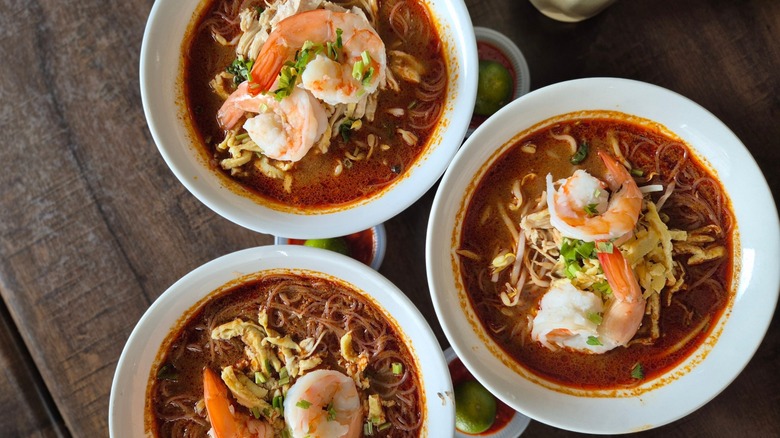
As previously mentioned, Anthony Bourdain loved an array of spicy soups in his lifetime. But there was one spicy breakfast soup from Borneo that he was particularly passionate about: Sarawak laksa. In fact, he's responsible for putting the dish on the map, and now the soup is much more widely known than it once was. While soup for breakfast might sound like a crazy concept to the average American, Bourdain makes a good case for it, calling it a "magical dish" that's the "best breakfast ever" in Season 6, Episode 6 of "Anthony Bourdain: Parts Unknown" (via Facebook).
The soup originates from Kuching on Borneo Island in Malaysia, and it's the savory broth that makes this noodle soup so special. Made of coconut milk, curry, Sarawak hot chili peppers, and candlenuts topped with fried egg, shrimp, and herbs, Bourdain called it "a masterpiece of pain and pleasure" in Season 1, Episode 5 of "Anthony Bourdain: No Reservations" (via YouTube).
Sisig
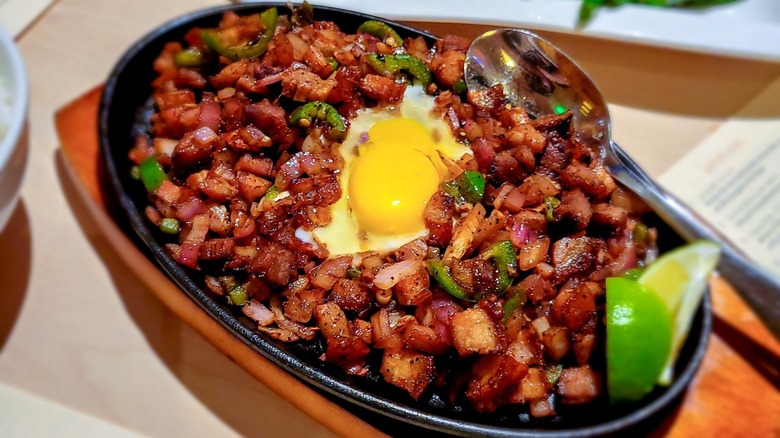
Anthony Bourdain was not afraid of eating any part of a pig, so it's not surprising that he had no problem eating sisig, which he described as "hot sizzling pig face with a runny egg on top" on Season 7, Episode 1 of "Anthony Bourdain: Parts Unknown" (via YouTube). In fact, after trying it for the first time, it quickly became one of his favorite dishes. In addition to its chewy texture and spicy flavor, the dish is partially flavored with calamansi juice, which is similar to lime, giving it a pleasantly sour note as well. Bourdain claimed it was one of the best things to have with a cold beer and crowned it his all-time favorite Filipino street food.
It was one of those dishes that he thought about often and went back to time and time again. In a 2017 interview with the Philippine media outlet Metro.Style (via YouTube), Bourdain expressed his wish for sisig to reach a worldwide culinary audience: "I think the number one Filipino dish that would really set the world on fire that has the highest possibility of success, anywhere in the world, is sisig. I think it's the ultimate drinking food ... It's got flavor, it's got texture, it's got integrity. It's quick. It's easy. It's unpretentious. And it's absolutely delicious."
Risotto di gò
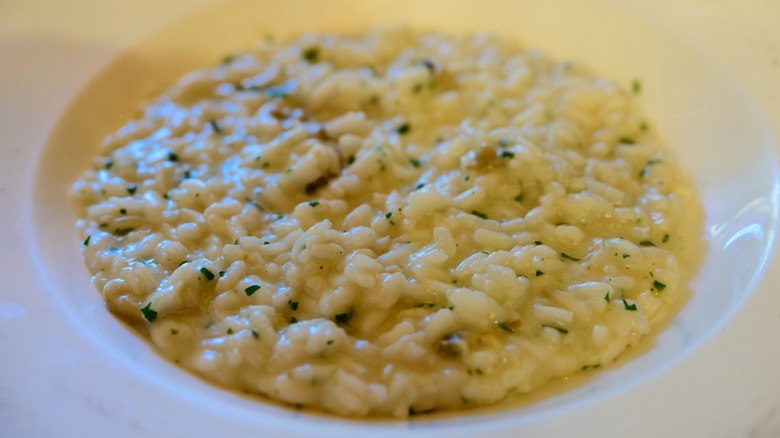
The best part of Italian cuisine is how simple and stripped down it often is. With simple recipes, it's all about technique and quality of ingredients. Case in point: risotto. What initially seems like little more than rice can become a complex and beautiful meal with the right culinary artist behind it. While one can only imagine that Anthony Bourdain sampled many risottos in his life, there was one that took the cake for the best of the best.
In Season 5, Episode 2 of "Anthony Bourdain: No Reservations," the chef traveled to Venice, and there he sampled risotto di gò, a traditional regional risotto, at Trattoria da Romano. Recreated from an early 1900s fisherman's recipe, Bourdain fell in love with this dish. "An amazing confluence of physical forces of the universe come together into a substance that can only be described as otherworldly," he said in the episode (via YouTube).
Because gò is not a particularly desirable fish to eat on its own and can taste bitter when boiled too quickly, the fishermen learned to cook down the fish carefully in a broth, creating the basis of this Venetian classic. This dish is composed of little more than this fishy broth and risotto rice, but with a mastered technique, the result is creamy perfection with a deeply complex flavor.
Yakitori
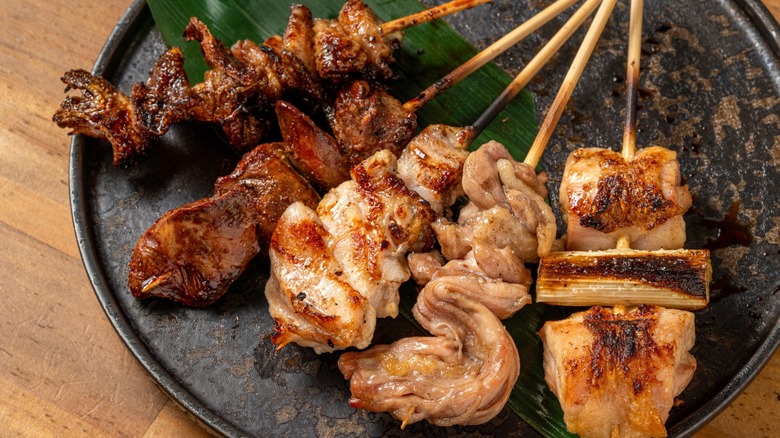
Anthony Bourdain famously did not like chicken, writing in his 1999 New Yorker article that the meat "goes bad quickly; handled carelessly, it infects other foods with salmonella; and it bores the hell out of chefs." But it seems it was specifically American chicken (and America's love of it) that he was opposed to. Because there was at least one way he absolutely loved chicken, and that was in Japan, on skewers called yakitori, meticulously prepared by the finest Japanese chefs. Bourdain called this Japanese chicken dish one of his "personal obsessions" on Season 4, Episode 16 of "Anthony Bourdain: No Reservations" (via YouTube).
Yakitori isn't exactly your typical chicken skewer. This grilled chicken dish often contains out-of-the-ordinary cuts of meat. When Bourdain visited a traditional Japanese yakitori spot in Tokyo, the chef had freshly killed the chicken that morning. Nearly every part of the chicken is used for these skewers, some more of a delicacy than others. Back home in New York City, Bourdain frequented the restaurant Yakitori Totto.
Foie gras hot dog
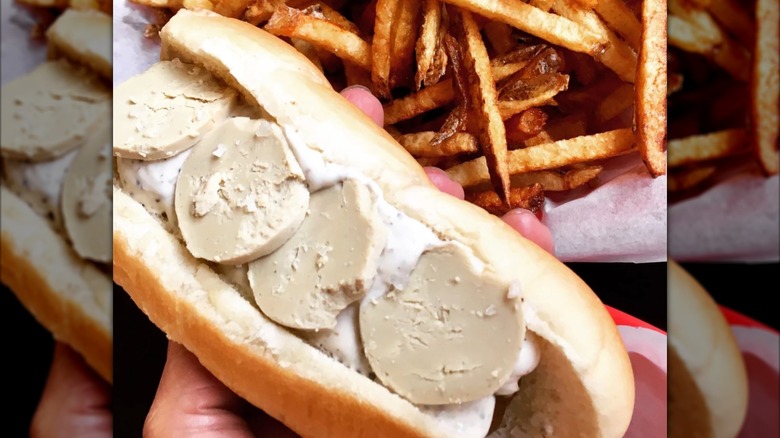
Hot dogs were one of Anthony Bourdain's favorite foods, and he preferred Chicago hot dogs to any other dogs in the world. "As much as it pains me to say it, there's at least one area where Chicago far surpasses New York and given my personal obsession with this particular item, it makes it all the more difficult for me to say that yes, Chicago has, hands down, a better hot dog than New York City," he admitted in Season 5, Episode 5 of "Anthony Bourdain: No Reservations" (via YouTube).
In the segment, the chef-turned-TV-star noted that he specifically loved trying "mutant" forms of hot dogs in different cities, so when in the Windy City, he hit up a spot called "Hot Doug's: The Sausage Superstore" where an array of offbeat hot dogs and sausages were served up. After sampling and loving the traditional Chicago dog there, Bourdain moves on to a more gourmet option: the foie gras hot dog, which is assembled from grilled duck sausage and topped with truffle mustard and fresh foie gras. A hot dog he found "remarkably good."
Static Media owns and operates Daily Meal and Tasting Table.