
Stop Wrecking Your Stainless Steel Pans This Way (And Do This Instead)
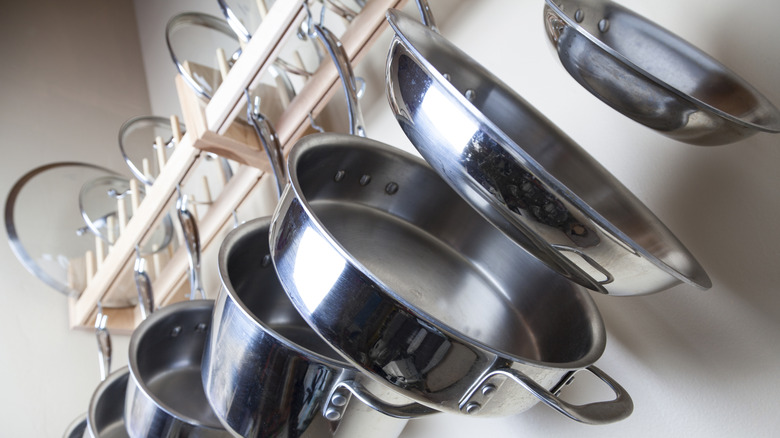
Steel is so durable that its name is a byword for strength. So it's little wonder that professional kitchens and home cooks alike often choose stainless steel pans for their longevity and reliability. But even stainless steel cookware has its limits, and one common cleaning method also shortens its lifespan.
Soaking a hot pan in soapy water may seem like second nature, but even hot tap water is significantly cooler than a hot pan. This rapid cooling from high temperatures is an example of thermal shock, which causes the stainless steel to contract too quickly — essentially forcing the pan to pull against itself. This damage is invisible to the naked eye until the steel can't take the stress anymore and finally warps, becoming functionally useless for cooking.
To avoid this fate, allow a stainless steel pan to cool down for several minutes before introducing any sink water to it. The smaller temperature difference significantly reduces thermal shock to levels that the metal can withstand. From there, normal cleaning agents like dish soap, baking soda, or specialized stainless steel cleaners are all safe to use.
When warping is (and isn't) a threat to stainless steel
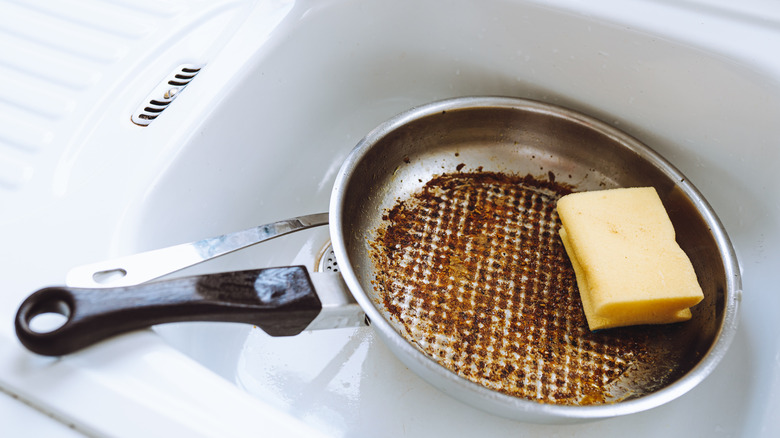
Not letting the pan cool before washing is clearly one of the biggest mistakes to avoid with stainless steel cookware. But why is pouring cold liquid into a hot pan while cooking not an issue? While it's still on the burner, any liquid added to the hot pan is rapidly warmed by the heat source. When placing a hot pan in cooler water, it's not the liquid that suffers rapid temperature change; it's the metal.
A similar thermal shock is the reason that baking sheets pop in the oven. That bang you hear is cold metal warping under the heat of the oven. Baking sheets are more prone to this because they're typically thinner than stainless steel pans, which need to be thicker to survive direct contact with heating elements. But if you ever hear a similar bang come from your pan, you know what just happened to it.
You may think that high-quality stainless steel pans, clad with multiple layers of steel for professional-grade strength, might be immune to warping. But while multiple steel layers do make for a stronger pan, it's not strong enough to eliminate the potential for warping. These pans often have steel layered around an aluminum core, but repeated thermal shock can encourage these layers to separate. This could potentially expose the core, one of the clear signs you should stop using cookware. Just let the pan cool before washing it.