

What 'No Added Hormones' Actually Means For Beef Products
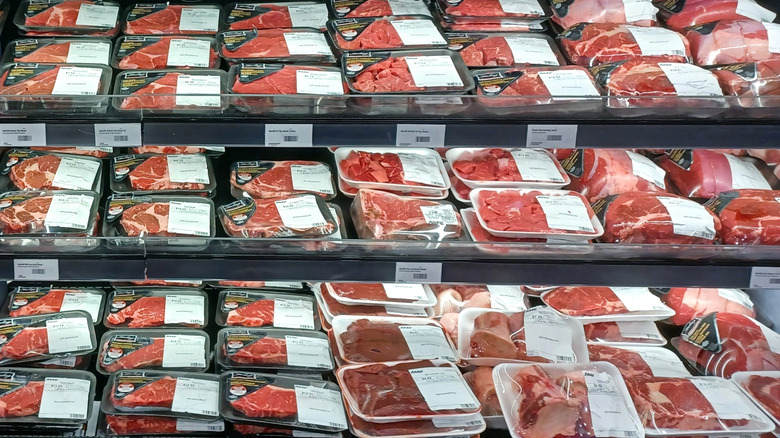
When you're shopping at the store for meat, you're likely to be bombarded with a slew of labels on the packaging. These are intended to provide transparency about the products, but sometimes, they can be misleading unless you have a good guide to understanding meat labels. For example, the label "hormone-free" on chicken is basically meaningless. The same can be said for that label on beef products, but there's a logical reason why and an explanation of what the more accurate label "no added hormones" means.
If you've ever seen the labels "no hormones" or "hormone-free," this is inaccurate because all cellular organisms — plant and animal — have hormones. These chemical messengers are naturally occurring substances that cells require in order to function, which is why this label is no longer allowed to be used. Instead, you're more likely to see the label "no added hormones" or something similar — such as "no hormones administered," "raised without added hormones," or "no growth hormones."
All of these labels mean exactly what they say: No hormones of any kind (plant-based, natural, or synthetic) were given to the cows while they were being raised. However, either of these phrases can only be used as long as the producer shows the USDA sufficient documentation to prove the claim. It's also important to keep in mind, even if a cow's mother was given supplementary steroid hormones while it was pregnant, the beef from that cow can still have the label as long as no hormones were administered after it was born.
Why the 'no added hormones' label is significant for beef
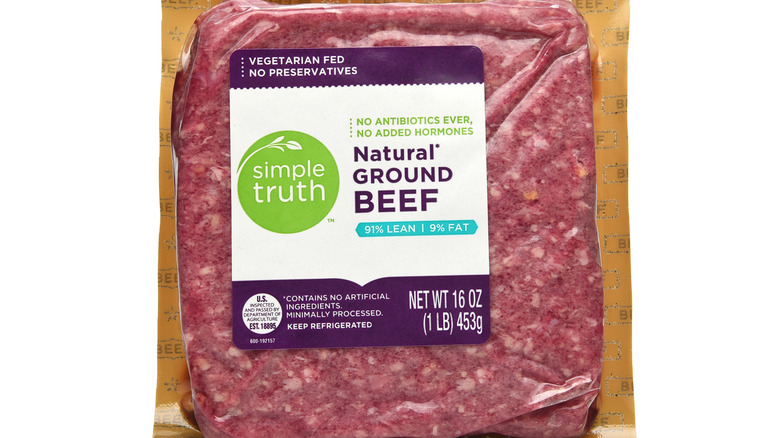
With beef being the American favorite that's the new victim of inflation, it's helpful to understand why it's so special for these products to have a "no added hormones" label. There are actually a couple of reasons. The first is that beef and lamb are the only animal species for which the USDA permits hormone supplementation. With implanted pellets that contain natural, plant-based, or synthetic hormones, this enhancement is used to increase the animals' growth rate so that they mature faster. The agency does not permit the use of hormones in bison, goat, pig, or poultry. Because of that, producers must also include a disclaimer on such products that says "federal regulations prohibit the use of hormones" alongside any "no hormones added" label.
The second reason this label is significant for beef is that hormone supplementation is controversial throughout the retail industry and among consumers. While cattle and dairy farmers can use synthetic growth hormones (like rBST), there are wide concerns that products from these animals can cause health issues in humans. Many people simply believe that added hormones are unnecessary, too, especially since they're prohibited in other countries. Meanwhile, the FDA maintains that there's no risk to consumers because, compared to how much natural hormones are already in the meat, the extra hormone treatment is very small. In fact, a serving of eggs or soy products has much more than hormone-supplemented beef. There's no evidence for possible health risks to the consumer due to the use of natural sex hormones for growth promotion, either, according to a U.S. Congressional Research Service document.