

How To Clean Glassware With Vinegar And Remove Those Stubborn Spots
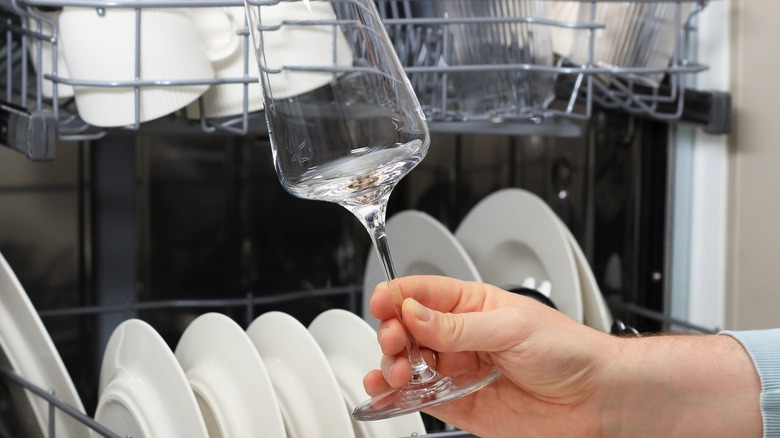
Spotty, cloudy-looking glasses can make you cringe. No host wants to pull out drinking glasses that are less than crystal clear, but hard water, which is what most tap water is, can cause magnesium and calcium build-up, creating an unsightly, murky film to form that is all too common. That's why, when it does, you want to reach for that bottle of distilled white vinegar. This is a vinegar hack that you will wish you knew sooner and will restore glasses to their sparkling selves.
To get started, warm your bottle of vinegar in a sink of warm water before you start the cleaning process. Once warm, let the water go down the drain and fill the sink with the warmed, distilled white vinegar, and place a couple of spotty glasses in the acidic solution. Make certain they are completely submerged. The glasses will need to soak for about an hour.
When your timer goes off, gently scrub the glasses with a non-abrasive scrubber and rinse with hot water. The glass should look crystal clear. Dry thoroughly, and it should be ready to use.
Why vinegar works
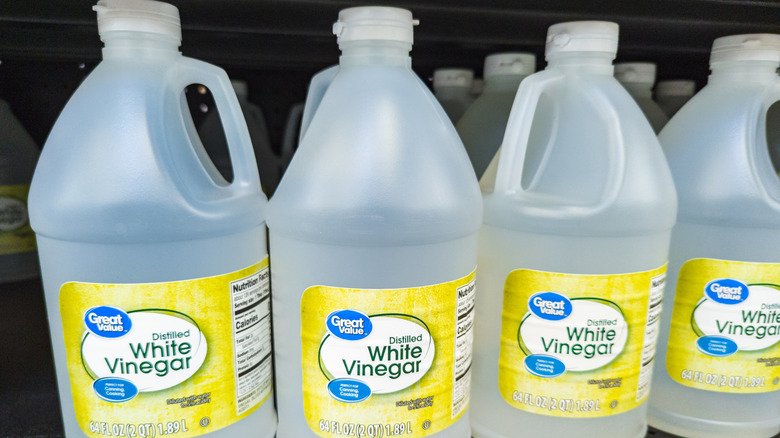
What's the science behind why vinegar is such a good kitchen cleaner? Vinegar's acetic acid breaks down the mineral deposits, leaving you with a haze-free glass. But if you're working with hard water and washing them in the dishwasher, chances are the build-up will return. How can you prevent these spots in the first place? Hand-washing your stemware is the best way to keep those milky spots from forming.
You can try using the vinegar in your dishwasher as a rinse aid if this appliance is the only way your glasses are getting cleaned. Fill a bowl with white vinegar and place it on the top rack of the dishwasher. But whatever you do, follow this dishwasher rule to keep your kitchenware happy: Don't put your fine glassware in this contraption or it will no longer be fine.
That said, this vinegar hack will not work for all glasses. If your stemware is foggy-looking because of etching, vinegar cannot reverse it. Etching can be attributed to a dishwasher cycle being too hot, too much detergent being used, or soft water. The result is nicks and scratches on the surface of your glasses. How can you tell the difference between cloudy glasses and etching? Dip a dishcloth in vinegar and rub the cloudy glass with it using a circular motion. If it starts to look clear, then you are good to go.