

Avoid Using This Tool When Cleaning Your Toaster Oven
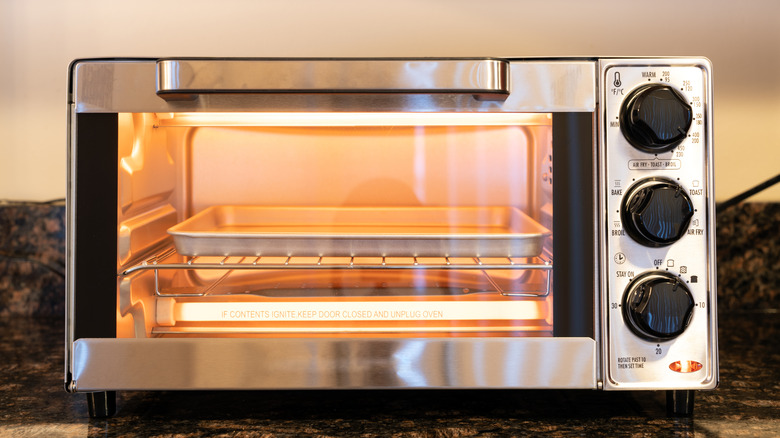
If you're a keen cook, the residue from cooking fats and grease that's arisen from making your favorite dishes can land on appliances that aren't anywhere near the stove, such as your toaster oven. Other times, a layer of grime can gather on the surface if it's simply been too long between cleans. While you might want to reach for heavy-duty cleaning agents to tackle any stubborn food debris, there's one tool you must never use on your toaster oven: steel wool.
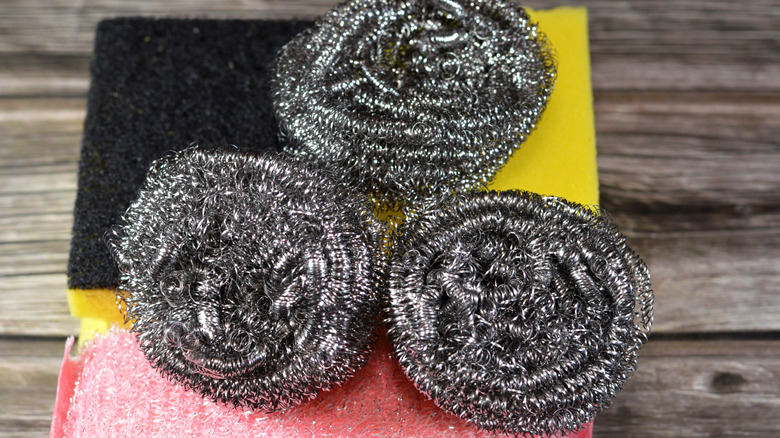
Steel wool is made of many thin metal filaments that cling together in a bundle. These strands can appear soft, but they actually have an abrasive character that makes them useful for removing grime and rust from tough surfaces like oven racks, grill grates, and tools. Steel wool comes in different grades, like sandpaper, which means they run the gamut from super-fine to extremely coarse, depending on what type of job you need them for.
Using steel wool to clean a toaster oven isn't advised because it can abrade its surface, causing unsightly scratches and scrapes, as well as damage any protective layers. This is particularly true of toaster ovens that are finished with stainless steel. You shouldn't use steel wool to clean a microwave for the same reason. The texture of the wool can also scratch the glass window at the front, leaving it looking cloudy and marked.
Buff up a dirty toaster oven with natural cleaning agents instead of steel wool
If your toaster has accrued sticky or grungy residues that aren't coming off with a wet cloth and dish soap, you can try using a mixture of baking soda and water or lemon juice to lightly scrub the interior and exterior of your toaster oven. This household staple has a mild abrasive texture, which dislodges grime without gouging into metal surfaces. Better yet, it's free from the chemical nasties that are present in other cleaning agents and can be used on the crumb tray or on a sheet pan safely too. Just don't use any leftover baking soda and citrus mixture on a Dutch oven, as it can damage the enamel surface.
One of the common mistakes people make with toaster ovens is failing to clean them in between uses. Quick and regular wipe-downs performed weekly, versus sporadic heavy-duty cleans, will prevent grimy buildup and mean you can use natural cleaners more effectively. Cleaning the glass with vinegar will also prevent a brown haze from developing over its surface and ensure you can keep an eye on your toast as it crisps up. Vinegar naturally cuts through grease, but to make it even more powerful, combine it with baking soda to create a bubbly mass that lifts off baked-on residues.