

10 Iconic Foods That Were Invented In California
California doesn't do food by halves. The state's cuisine is as varied as it is fresh, and for decades, it's been held up as an example of a food culture that's willing to embrace change and innovation. Historically, California cuisine is a fusion of styles and contributions from diverse cultures, with French and Mexican influences blending with California's homegrown ingredients. The geography of the state has also had a significant impact on the food that's eaten there, with farm produce blending with seafood to create a melting pot of flavors.
With all of this dynamism in mind, it's probably no wonder that California's been the site of many culinary inventions. Dishes that are now eaten everywhere, like Rocky Road ice cream, carne asada fries, and barbecue chicken pizza, were all born in The Golden State. Some foods that were created there are also pretty surprising, with dishes like cioppino, which is commonly assumed to be an Italian-born dish, invented in San Francisco. Let's take a walk through Californian food history.
1. Carne asada fries
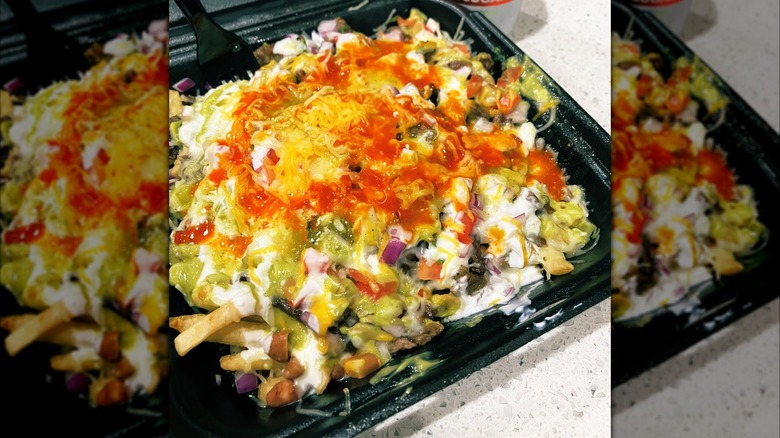
One of the great fusion dishes of the 21st century, carne asada fries is one of California's latest food inventions. It first started appearing on menus and gaining popularity in the late 2000s, when the sheer deliciousness of combining deeply flavorful carne asada with crispy, hot, salty fries came to light. After debuting in San Diego, carne asada fries went on to sweep across the Southwest and became a firm favorite for folks looking for something a little extra from their fries.
While it's not entirely clear who first invented carne asada fries, San Diegan local knowledge points towards the dish coming from Lolita's Mexican Food, an eatery located in the South Bay area. The lack of formal documentation around this, though, has led to some controversy around the dish. Some have (perhaps mistakenly) claimed that carne asada fries were invented in Denver, which critics have argued takes away from the dish's special place in the San Diego food scene. Given the city's love for the dish, it's hard to see it having been created anywhere else.
2. Hangtown fry
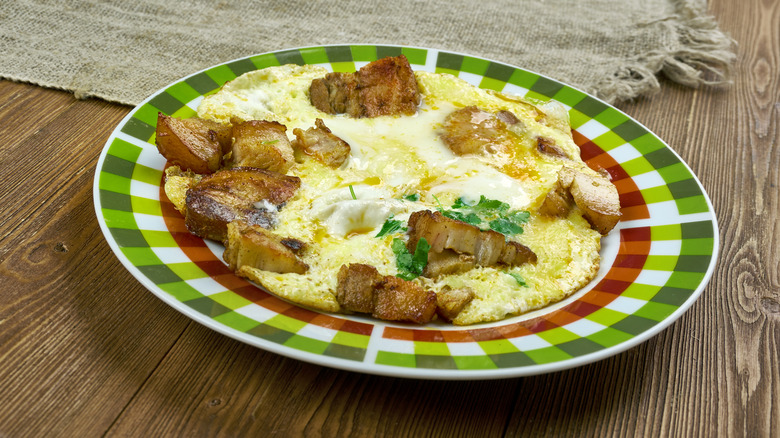
If you haven't seen a Hangtown fry on a menu in a minute, we wouldn't be surprised. One of those regional dishes you may not have heard of, it's a mash-up of eggs, bacon, cheese, and (wait for it) brown oysters, all combined together into an omelet and then piled onto a plate. It's a little strange by today's standards, but back in the Gold Rush era, it was a lot more common. The Hangtown fry was an indulgence for newly rich gold miners who had based themselves in or around Hangtown, now known as Placerville, California. Although the sound of its name suggests that it'd be a good hangover cure, it wasn't strictly invented as such — but regardless, some people still praise its ability to clear your head after a big night.
As you might expect from a dish invented in the 1800s, the origins of the Hangtown fry aren't entirely clear. The various stories of how it was invented are fun, though. One legend goes that it was created after a wealthy prospector asked the chef at the El Dorado Hotel to make him the most expensive thing on the menu. Others point towards a meal made by a miner who was trying to cook in the dark, or the last request of a miner sentenced to be hanged. No matter the origin, it's certainly unique.
3. Barbecue chicken pizza
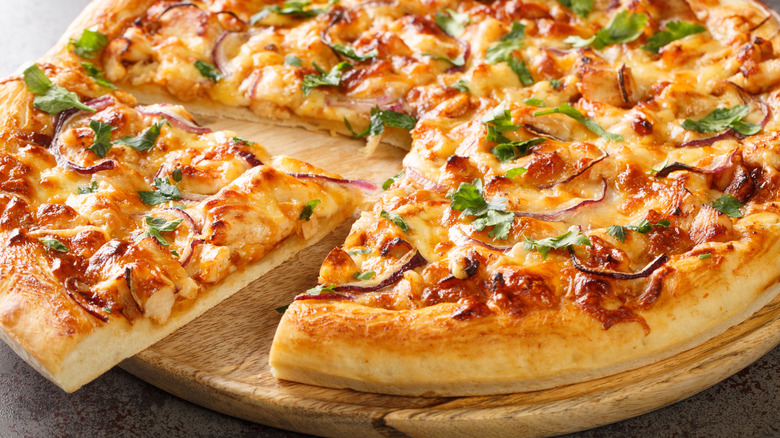
It's hard to believe there was a time when barbecue chicken pizza wasn't a thing, but before 1985, it was nowhere to be seen. That all changed when California Pizza Kitchen entered the chat. This chain pioneered new spins on pizza that brought the classic dish into the modern world, and barbecue chicken pizza was one of its flagship inventions, appearing on the chain's very first menu at its Beverly Hills branch. Its success was immediate and enormous: About 90% of the pizzas sold on any given night were barbecue chicken, with the other, slightly more out-there creations not quite achieving the same acclaim.
Chef Ed LaDou — who previously worked at the famed Spago – invented the barbecue chicken pizza while consulting with CPK's founders during the restaurant's early days. LaDou, who died in 2007, joined Wolfgang Puck at Spago as his first pizza chef before designing the menu at California Pizza Kitchen, and changing the world forever. Nowadays, you can find barbecue chicken pizza at any pizza joint in town, but LaDou's is the one that'll go down in history.
4. Rocky Road ice cream
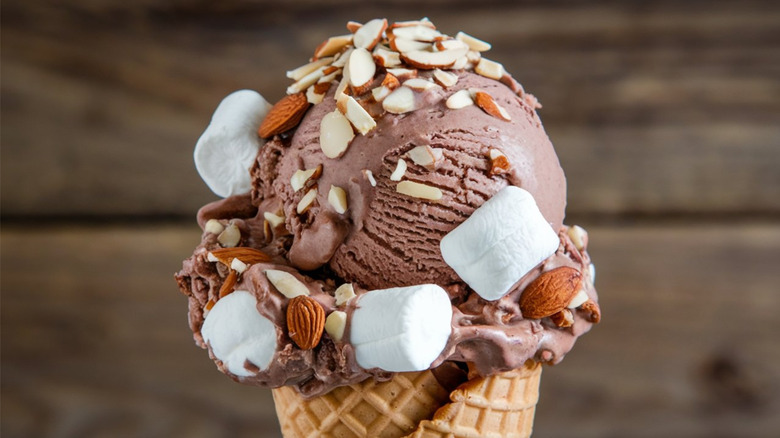
Long before Rocky Road ice cream was in the freezer section of every supermarket across the country, it was a unique flavor, dreamed up in Oakland, California. Rocky Road ice cream is said to have been invented in 1929, and it could well have been inspired by an Australian snack with the same name. Rocky Road, a collection of dried fruits, nuts, and sweets, had been eaten since the mid-1800s in Australia and was said to have been named after the bumpy journey across the ocean to the continent.
By the early 20th century, though, these ingredients were being mixed into ice cream and creating a modern classic. Rocky Road ice cream is generally attributed to William Dreyer and Joseph Edy, who operated Dreyer's Ice Cream in Oakland. Some have argued, however, that Dreyer and Edy were using a recipe made by George Farren, a candymaker who owned Fentons Creamery. Regardless of who first made it, Rocky Road ice cream is now a flavor that we couldn't live without.
5. French dip sandwich
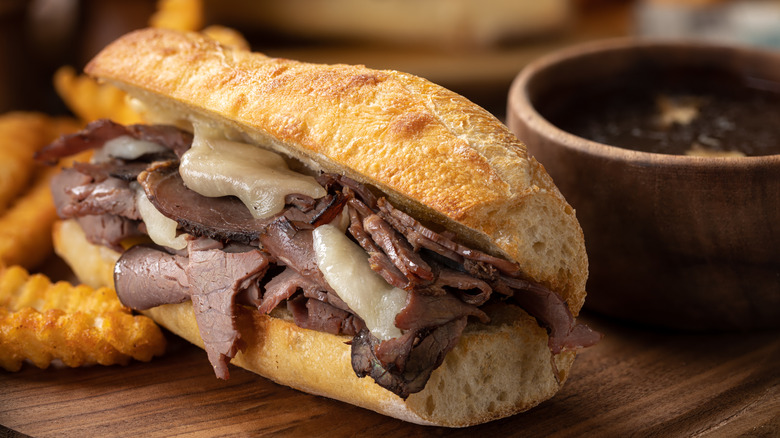
With a name like French dip, you'd be forgiven for thinking that this sandwich came over to the United States from Europe. However, it's a Californian creation, through and through — the French dip sandwich was invented in Los Angeles in the early 20th century. Its origin story, as with so many other foods, is disputed, and two LA restaurants argue over who made it to this day. Most people accept that Philippe's is its birthplace, where owner and chef Philippe Matthieu came up with the sandwich in 1918. Allegedly, Matthieu accidentally dropped a French roll into a pan filled with jus, and when the customer ate it regardless (and loved it), the French dip came into being.
An alternative origin story comes from Cole's, a restaurant that claims it invented the French dip sandwich in 1908. Cole's says that its chef, Jack Garlinghouse, created the sandwich after he softened the bread for a customer who had poor gums. However, discrepancies around historical evidence point towards Philippe's being the true birthplace of this sandwich. Can't we all just get along and enjoy the food, guys?
6. Cioppino
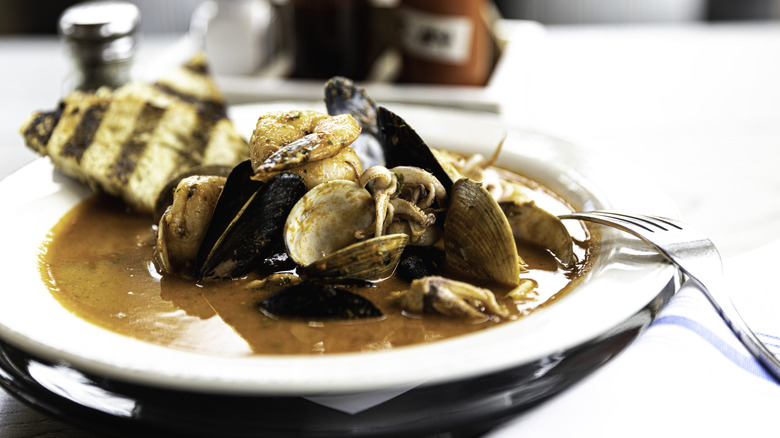
Cioppino's an Italian dish, right? Well ... yes and no. This fish stew seems as though it might have been made in Italy for hundreds and hundreds of years, but it's actually a relatively recent invention, invented in San Francisco somewhere between the mid-1800s and the early 20th century. Cioppino was the brainchild of Italian immigrants from Genoa, who had settled in San Francisco and who would fish in its waters. Apparently, the stew was designed to be cooked and eaten on the very boats that they were working on, as a means to use up fish in a time when refrigeration wasn't so easy.
As for its name, one story goes that it's derived from the phrase "chip in," which the fishermen would yell at each other as they were making the dish. One person would place in their catch of the day, then another, and then another, creating a diverse soup that would also be flavored with herbs and veggies. This tale, of course, may not be strictly true, and it's far more likely that it comes from "ciuppin," which translates from Italian to "small soup." Isn't the first version more fun, though?
7. Green Goddess dressing
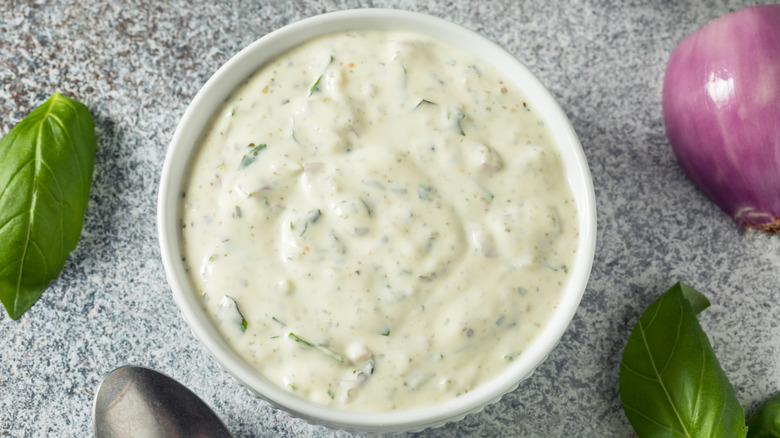
Few foods feel as Californian as Green Goddess dressing. After all, this is the state of whole foods, smoothies, and nutritional goodness, and so it's little wonder that a salad dressing was made that embodies all of these things in one fell swoop. However, Green Goddess dressing isn't that recent, no matter how '90s it feels. It actually dates back to the 1920s and was created in honor of actor George Arliss, who was staying at the Palace Hotel in downtown San Francisco.
Arliss was staying at the hotel while he was starring in a William Archer play titled (what else?), "The Green Goddess." When the play came to San Francisco, Palace chef Philip Roemer decided to do something special. He devised the dressing from eggs, mustard, shallots, chives, tarragon vinegar, and the all-important fresh herbs that give it its vibrant color. The dressing was a hit, and from there, it became a recipe reproduced time and time again. We doubt that Roemer knew he was going to create something so iconic at the time, but his creation has truly lived on.
8. Hot fudge sundae
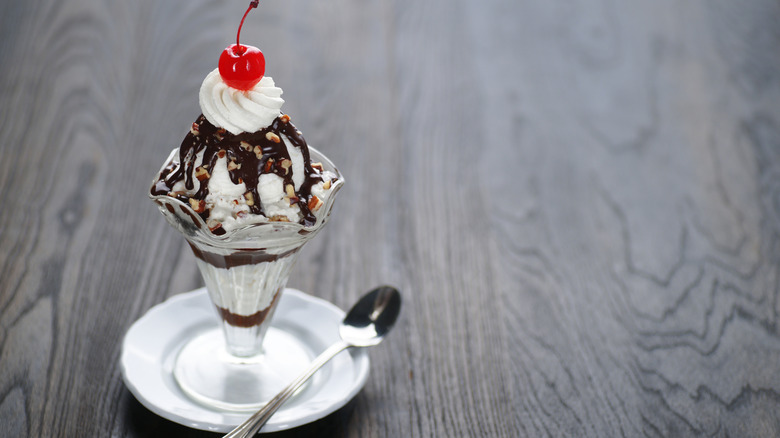
It's kind of amazing that we can track the invention of the hot fudge sundae, given that this feels like the sort of casual but delicious dish that people just stumbled upon. However, its origins are fairly universally agreed to lie in Los Angeles. More specifically, the story goes that the hot fudge sundae was created in 1906 by Clarence Clifton Brown. This ice cream parlor owner, who operated C.C. Brown's, had apparently been experimenting with ice cream and topping combinations for a while and had the sense that hot fudge sauce and ice cream would go well together. After a few false starts, he figured out exactly the right formula for a hot fudge sundae.
Brown's inspiration for the hot fudge sundae perhaps came from his history: As well as a business owner, he was also a candy maker, and so no doubt saw the potential for fudge's use with the ice-cold dessert. Brown began selling it in his ice cream parlor, and it soon took off. C.C. Brown's remained open until 1996, having been sold to chemist John Schumacher in the 1960s, before it closed for good. It left behind a culinary legacy that we're all very thankful for.
9. Mission-style burritos
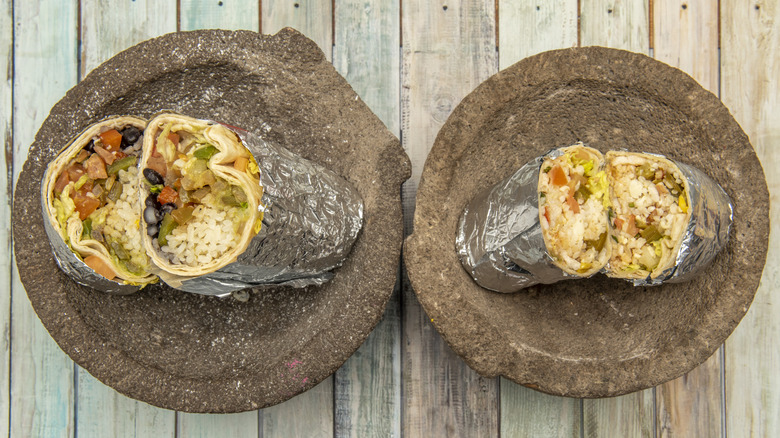
If you're not super clued up on burritos, you might not even be aware that Mission-style burritos stand separately from the traditional version. Classic Mexican burritos tend to be smaller and lighter than Mission burritos, and the beans and rice that are piled into the latter are typically served on the side. Mission-style burritos, however, are weighty, girthy things, which are crammed with meat, rice, beans, and a host of toppings (although some burrito makers prefer to leave the rice out, allowing the flavor of the meat to shine more brightly).
The Mission-style burrito was created in San Francisco's Mission district, and is a style invented and refined by Mexican immigrants who settled in the area. The popularity of the Mission-style burrito has extended far beyond the streets that originally housed it, thanks to fast-casual chains like Chipotle catching wind of how delicious, satisfying, and customizable this food can be. As a consequence, Mission-style burritos became a premium fast food that pretty much anyone can enjoy, and they're now enjoyed all over the world.
10. Cobb salad
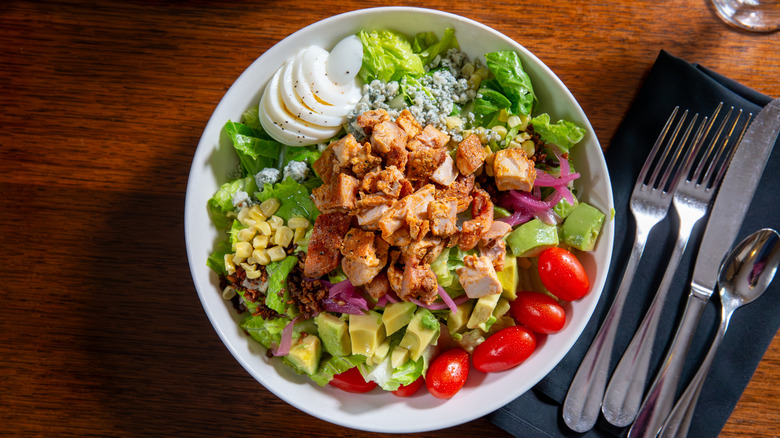
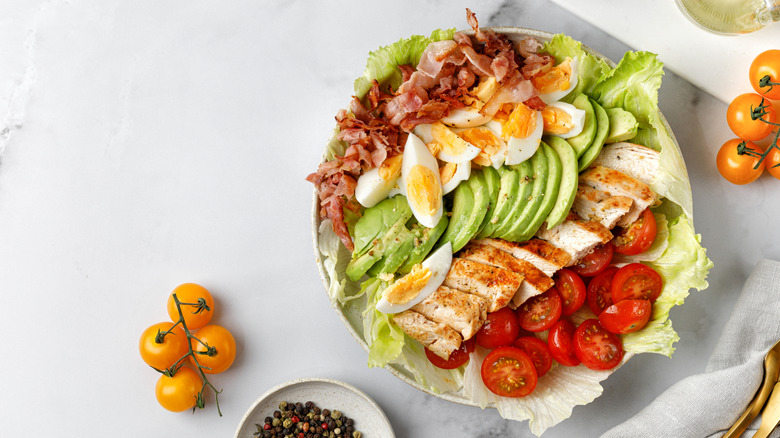
Cobb salad is one of those dishes that you can now find pretty much everywhere, but there was a time when you could only eat it in California. To be more specific, it used to be on the menu of just one establishment: The Hollywood Brown Derby restaurant in Los Angeles. This is widely considered to be the birthplace of the Cobb salad, which was named after its owner, Robert Howard Cobb. From there, the mix of bacon, eggs, Romaine lettuce, avocados, tomatoes, and blue cheese spread across the country, and then the world.
Exactly when it was born, though, and who made it, are slightly less clear. Some people say that it was invented in the 1930s, and specifically in 1937, by Cobb himself, who was looking for a way to use up leftovers while making a meal for himself. Others believe it was invented as early as 1926, and others still claim that Paul J. Posti, the Brown Derby's chef, was the creator of the dish. Regardless of when it was made and who made it, though, Cobb's name was linked to the salad forever and immortalized on tens of thousands of menus across the world.