

The Affordable Steak Cut That Makes A Perfect Pot Roast
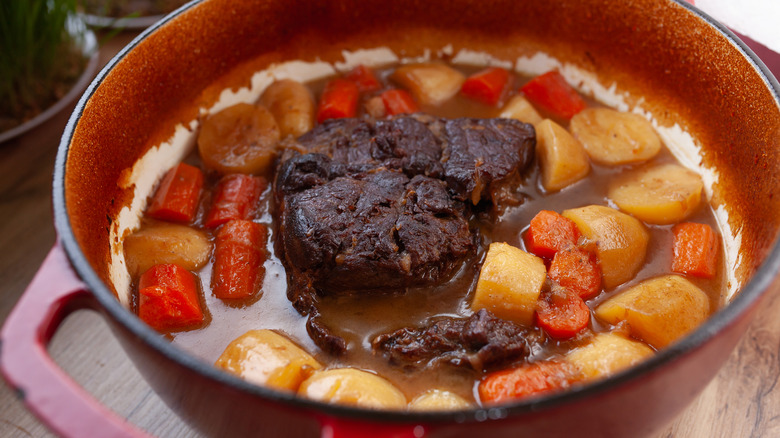
There are several cuts of meat that are perfect for making pot roast, such as chuck, rump, and round roast. However, with U.S. beef prices soaring, purchasing these large joints for a relaxed Sunday lunch can make a huge dent in a family's weekly grocery budget. The solution is to consider more affordable cuts that don't break the bank and yet benefit from a lengthy slow cook, such as blade steak (also known as Denver steak).
Blade steak comes from the shoulder area (or shoulder blade) of a cow, known as the chuck. The reason it's cheaper than other cuts? It has a line of tough connective tissue, or gristle, running along it, which means it isn't ideal for pan-frying like a ribeye or sirloin. A quick sear simply doesn't give the connective tissue enough time to render down and soften. While blade steak is tougher than other cuts, it has a rich beefy flavor that's ideal for slow cooking. Simmering it away for hours in a seasoned broth with a selection of vegetables allows the collagen in the connective tissue to melt down and render. This lends the steak a tender quality, succulent texture, and unctuous flavor once cooked. Moreover, the collagen and fat in the steak imbue the gravy with a rich, umami-ness and complexity without the hefty price tag that comes with bigger cuts.
A blade steak becomes a flat iron steak without the connective tissue
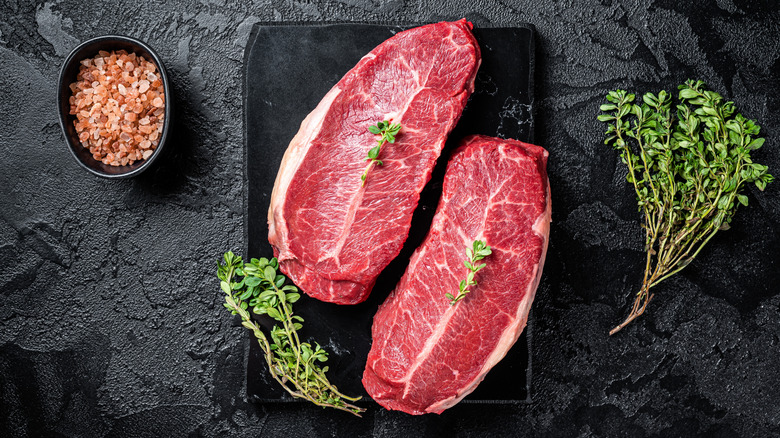
Butchers use the line running down the center of a blade steak as a guide mark for producing other cuts. For instance, slicing it down the middle and removing the connective tissue turns a single blade steak into a pair of flat iron steaks, which can be grilled or pan-seared. However, don't be tempted to use flat-iron steak to make pot roast! Without that strip of gristle and collagen to keep it moist, the steak will develop a tough texture as it braises. Similarly, it's a mistake to use tenderloin when making a pot roast, too, because it doesn't have as much collagen and gelatin that can render down and act as natural basting juices. Other errors you might be making with your pot roast include failing to season it properly or adding the vegetables too early.
No matter which cut of beef you select, sear it first to help the natural sugars on the surface caramelize and brown. This move will imbue your pot roast with heaps more flavor, enhance its meaty taste, and improve the color of the brothy jus at the bottom of your pot. Also, try to add your vegetables towards the end of the cooking time so they don't disintegrate during a long, slow cook. Onions can benefit from a very lengthy braise to draw out their natural sweetness, but potatoes can overcook and become mushy.