

10 Mistakes Everyone Should Avoid With Parchment Paper
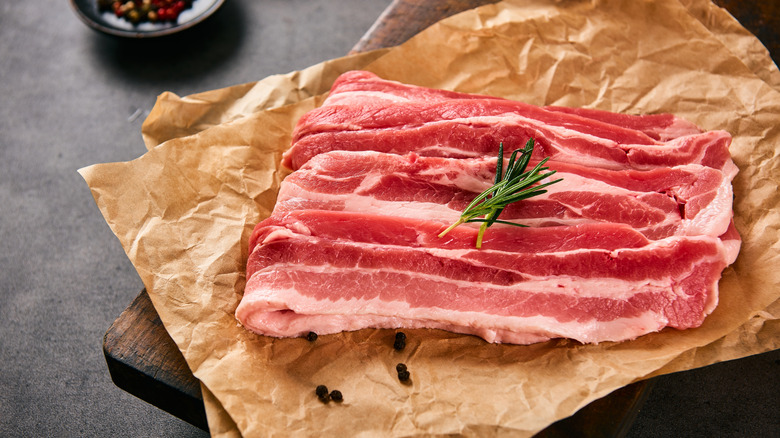
Parchment paper: It just makes everything a little easier. One of the workhorses of the modern kitchen, the development of modern, nonstick parchment paper began in the mid-1800s, and the advancement of the use of silicone in cooking applications in the 20th century eventually led to the product we know now. Today, parchment paper is absolutely everywhere, with rolls of it in millions of kitchens across the United States, and it's being used for everything from steaming fish to making moist chicken. So you'd think that we'd know how not to make mistakes with it by now, right?
That's not the case. For such a ubiquitous and simple product, too many of us have misused parchment paper for way too long, leading to some key mistakes that everyone keeps making. Parchment paper's greatest strength (its nonstick nature) is also its biggest downfall, and certain things everyone fails to do when using it, like adhering it to the cooking surface properly or failing to crumple it up, can lead to a messier meal than you probably wanted. Elsewhere, people forget that parchment paper isn't just for baking, and thereby miss out on a whole world of usage from this versatile little product. If you're ready to optimize your use of this paper and make your life way easier, let's go.
1. Forgetting to reuse (clean) parchment paper
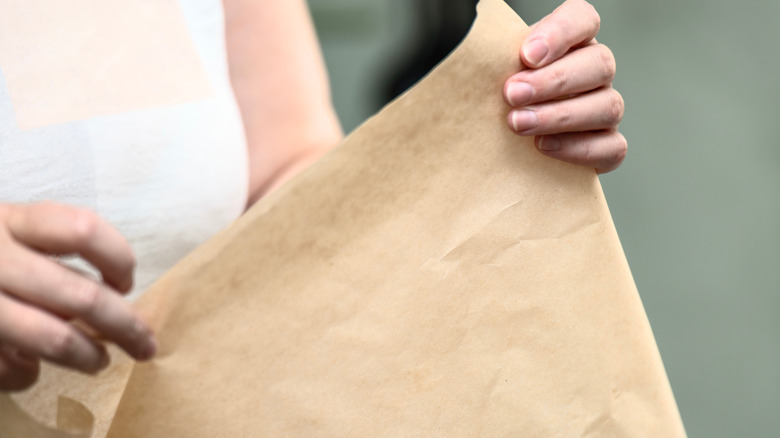
Cutting down on waste in the kitchen is something we should all be doing more of, and that doesn't just extend to our food use. It also extends to the products that we use around our meals, including parchment paper. It can be tempting to think of parchment paper as a single-use item and throw out the sheets we use after cooking with them once. However, parchment paper can be used multiple times before it needs to be disposed of, and you can usually utilize it up to three times before your sheets need changing.
Having said this, it's important to apply a little bit of logic here. Parchment paper can collect food waste and smells like any other material, and if you've just baked some fish on it and then want to use it for your cookies, you're likely not going to make a particularly tasty batch. Only reuse parchment paper if you've cooked mild-tasting, dry items with it, and it can be wiped clean without any residue. Furthermore, if your parchment paper has become soaked through while cooking with it, it's pointless to keep it, as it will have likely lost most of its nonstick and protective qualities.
2. Heating parchment paper to a higher temperature than it can take
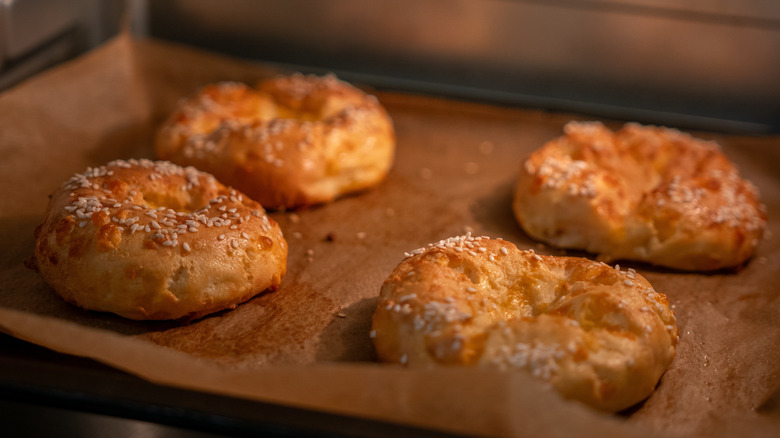
So here's the thing: Parchment paper is paper. We know, wild, right? We say this because it's easy to forget this simple fact, because of parchment paper's sheer ability to be heated to super-high temperatures. However, just like regular paper, parchment paper has a limit to how hot it can get, and if you venture beyond that, you'll find that it begins to burn. This will result in your kitchen quickly filling with acrid smoke and your food taking on the scent of burnt paper and chemicals. When it burns, parchment paper can also flake off into your food, completely ruining its texture as well as its taste. You'll have to start everything all over again.
Generally speaking, parchment paper shouldn't be heated any higher than 425 degrees Fahrenheit. Each brand is slightly different, and some may be able to withstand temperatures a little higher than that, but not much more. Once you've figured out how hot it can go, you can use it to your heart's content, and even employ it to check your oven's hot spots. However, when in doubt, or if your brand doesn't specify a maximum temperature, err on the side of caution and skip it entirely if you're making a dish with significantly higher temperatures than the ones specified.
3. Not crumpling your parchment paper
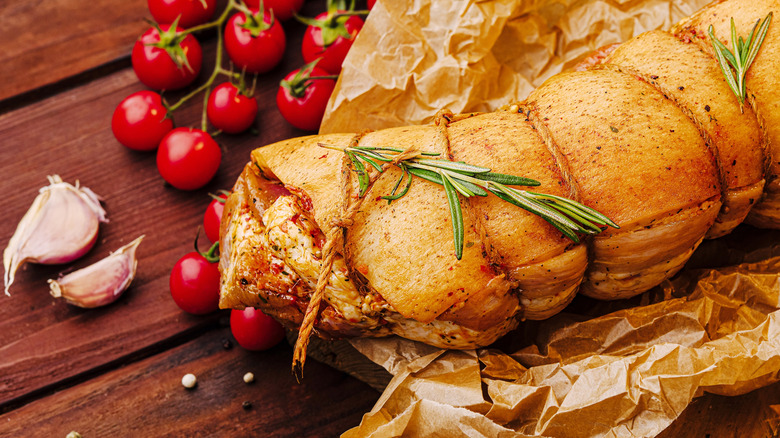
If you're sick of your parchment paper slipping all over the place, you're gonna love us for this one. Way too many people forget the power of crumpling up their parchment paper to make it more malleable. When you do this, you create just enough resistance between your pan and the paper to stop it from sliding around, and it becomes way easier to lay it flat and handle. It also helps to solve the annoying issue of your parchment paper curling up when you try and lay it flat. After you scrunch it and smooth it back out, it'll lose its curl, and you can add your food to your heart's content.
It is worth noting, though, that crumpled parchment paper may not work for every recipe. If you're making something super light that requires a smooth surface, like meringues, the mixture may take on the scrunched-up shape of your parchment paper and lose a consistent appearance. For recipes like that, you're better off cutting your parchment paper to the exact shape of your pan. For the most part, though, this is a trick that you can pull out of the bag when you're making everything from baked fish to sourdough bread.
4. Placing the wrong side down
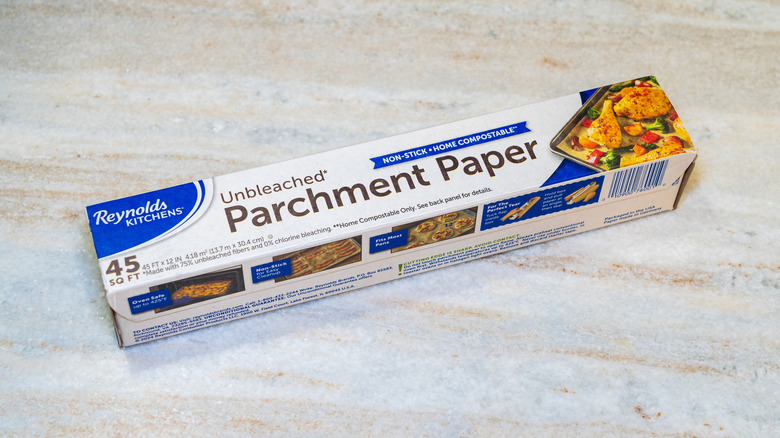
So you may not know this, but not all parchment paper is made equal. The majority of brands on the market, like Reynolds, coat their paper with silicone on each side, which gives it its smooth, nonstick surface. However, some manufacturers may only coat their parchment paper on one side, leaving the other side without any silicone at all. This means that if you place food on it to cook, it won't be nonstick, and you may end up with a load of paper adhered to the bottom.
So, how can you tell if the parchment paper you've got is silicone-coated on both surfaces? Look for the shine. If each side is glossy, then you're good to go and can put your paper down whichever way you like. Conversely, if only one side has a sheen to it and the other side is matte, then you should place the paper shiny-side up. The matte surface may still have some resistance, but nowhere near as much as the silicone-coated one.
5. Using parchment paper interchangeably with foil or wax paper

Parchment paper, wax paper, and foil can all serve similar functions in the kitchen, but crucially, all of them are different. They all have their strengths and weaknesses, and parchment paper in particular has a few things that it can't quite do as well as its counterparts. Where this is most obvious is in its ability to wrap food, where it's notably weaker than both foil and wax paper. The latter's excellent for wrapping cold foods or things like sandwiches, thanks to its ability to stop items from getting soggy. Foil, meanwhile, is a lot more malleable than both, and so it's better for wrapping irregular items or things that need a stronger seal.
Foil is also much better than parchment paper when you need to cook something at a higher temperature, and it's the go-to choice for grilling. On the other hand, parchment paper is the superior choice over both for general cooking, where you need a nonstick surface. Foil will still have to be greased before cooking food, whereas wax paper isn't resistant to heat and its surface will quickly melt.
6. Not greasing your pan before you use parchment paper
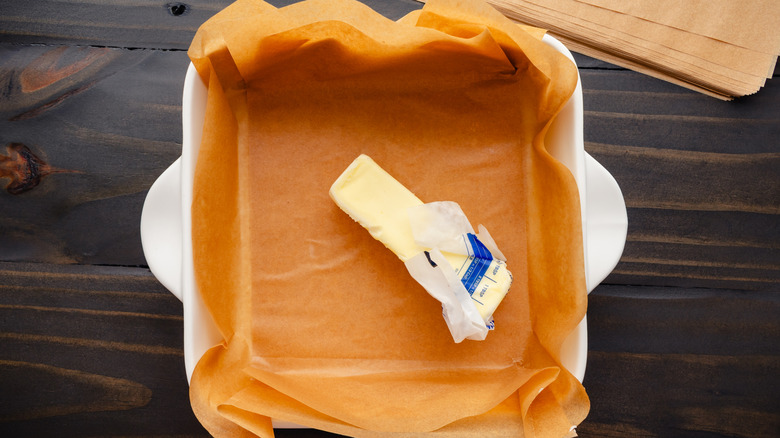
Hey, you know how parchment paper can help you cut down on using oil in your food? Turns out that you still need a little bit of it, although not on the side you might think. One of the most annoying things about parchment paper is that it can slip around when you put it in your pan or tray, leading to your food becoming dislodged. However, if you grease your pan before you put your parchment paper down, it will adhere to it nicely. You'll get no slippage, and everything will be nice and secure.
Naturally, this will increase the amount of washing up you'll have to do after, but we think it's a small price to pay. Don't forget, too, that you may want some oil on the top of your paper. Parchment paper is great for making things nonstick, but this can often be at the expense of fat and, therefore, flavor. Plus, keep in mind that adding grease to either side of your parchment paper will likely decrease the number of times you can reuse it, as it can make it soggy.
7. Only using parchment paper in your oven
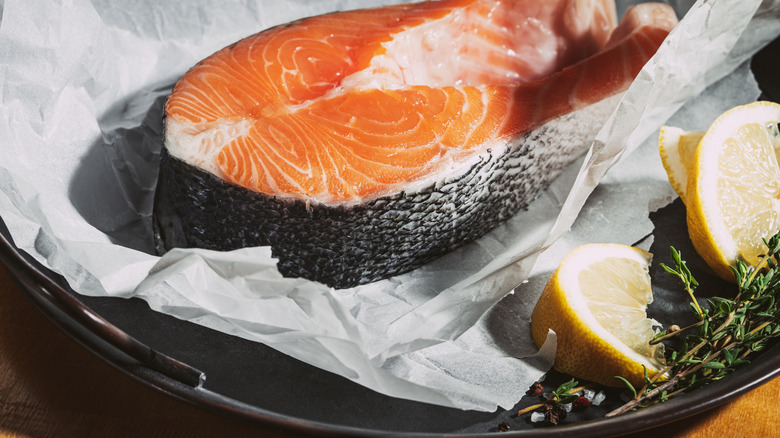
As we all know, parchment paper is a lifesaver when you're baking or roasting things. The single sheet can be the difference between food that attaches itself to the bottom of your sheet pan and items that slide seamlessly onto your cooling rack. However, the oven is far from the only appliance you can use parchment paper in. It's just as useful when microwaving or slow-cooking dishes, and you can also pop it in your air fryer, provided that you don't exceed its temperature limit.
When microwaving food, parchment paper can prevent it from sticking to plates or other ceramics, and it can also serve as a cover to steam items. Just make sure you're piercing it if you're doing the latter, so that your steam has a chance to escape. You can put parchment paper in a slow cooker to line it, and while it might not entirely prevent mess if you're making soup or stew, it's an awesome choice for drier dishes. You can even fry with parchment paper by placing a sheet in your skillet before you add eggs or salmon. You'll need to cut your parchment paper down to size before you do this, though, so that it doesn't inadvertently come into contact with your burner.
8. Not trimming your parchment paper — or trimming it too much
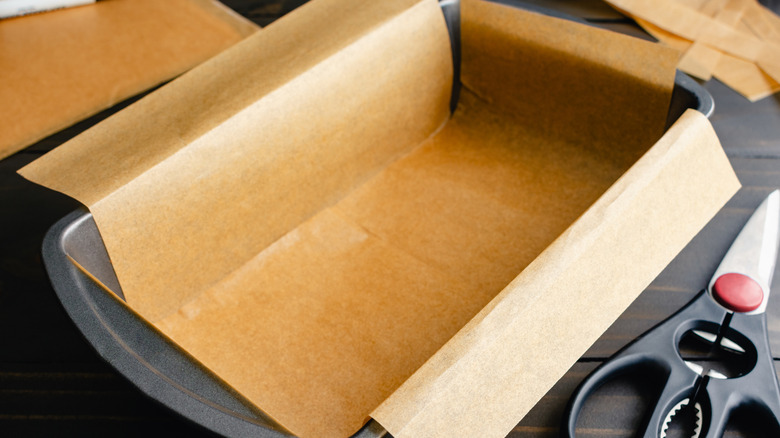
Trimming your parchment paper is something that everyone should do, but few people actually bother to make the effort. Instead, they simply shove their parchment paper into their pan and hope for the best with the size they've torn off. When they do this, the parchment paper will have an irregular fit, and you'll either end up not covering your pan properly (thereby defeating the purpose of using parchment paper in the first place) or you'll leave loads of it hanging over the sides. This can make the retrieval of your food messy and, in some cases, may increase the likelihood of your parchment paper burning.
So, before you use your parchment paper in a skillet, sheet pan, or casserole dish, grab the scissors. To line a sheet pan or casserole dish perfectly, aim for a piece of parchment paper that's a few inches wider and longer than its base. You can then either trim it down to size so it fits on the bottom, or you can make diagonal cuts at its corners, so that it folds into the pan nicely and also covers its sides.
9. Forgetting that parchment paper isn't just for lining pans
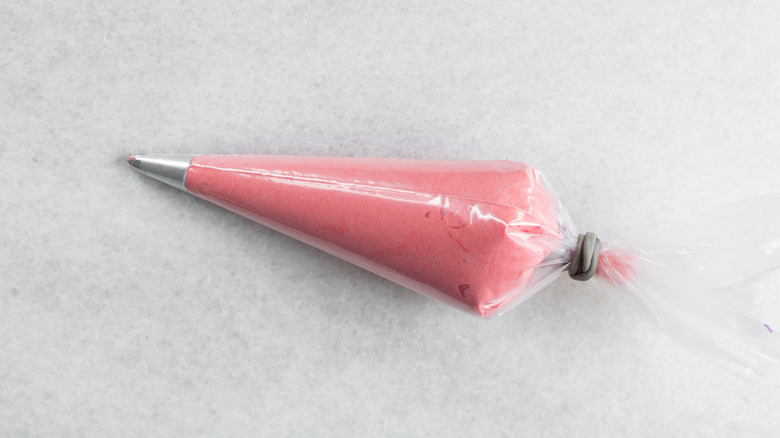
We all know parchment paper is the pan lining material to beat, but it can do so much more than provide a nonstick surface. Its slippery quality and malleable nature make it ideal for a host of other uses in the kitchen, including some you may not have thought of. Parchment paper is the ideal product to use for a makeshift paper piping bag, thanks to its sturdiness and ability to siphon icing through it without it sticking to its sides. Just take a rectangle of parchment paper, fold it into a triangle, roll it up, and snip the tip off.
@mezemike Cooking homemade Döner kebab while travelling In Cyprus – easy Fakeaway / healthy takeaway alternative #fakeaway #donerkebab #kebab #easyrecipes #foodvlog
Elsewhere, parchment paper can be used to shape food seriously well. If you're making ice cream cones, it's the perfect material to use to coax them into their conical form. Or, if you want to try your hand at a viral recipe, use parchment paper to make a homemade doner kebab. You simply smush your meat mixture between two slices of paper, roll it up, and pop it in the oven. You'll end up with a wafer-thin piece of meat that you can rip up and stuff into a pita.
10. Trying to recycle or compost parchment paper (unless you're buying specific brands)
It's a noble thought to want to recycle or compost parchment paper, but it may not always be the best move. This is because a lot of parchment paper has to be disposed of in the trash, instead of through more ecologically friendly methods. Parchment paper's silicone coating means that it doesn't break down as easily as other materials or papers. With composting in particular, it can also release silicone and other chemicals into the soil or mulch, which you probably don't want.
However, there are certain brands that you can compost, and if you're keen not to create too much waste, they may be worth buying. If You Care parchment paper is totally compostable, and is made with unbleached, chlorine-free paper. It also manages to be nonstick, despite cutting down on the more unpleasant chemicals. If you're in any doubt about whether the brand you're using is nonstick or not, check the manufacturer's label or go to its website.