

Technically, You Can Put Aluminum Foil In The Microwave. Here's Why You Really, Really Shouldn't
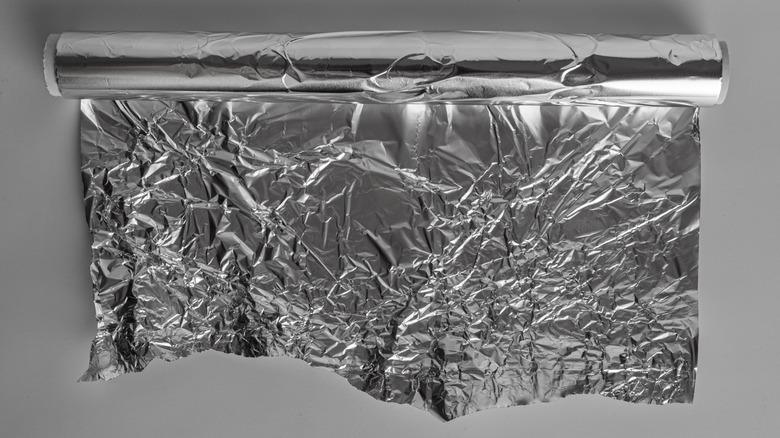
Yes, it's possible to put aluminum foil in the microwave — but it's almost never a good idea. What looks like a harmless shortcut for reheating or covering leftovers can turn dangerous fast. Plenty of people assume a quick zap won't do any harm, but the reality is that even when foil can be "safe" under very specific circumstances, those rules are so narrow they barely count as usable.
Microwaves work by firing electromagnetic energy that makes water, fat, and sugar molecules vibrate until they heat up. The walls of the appliance are metal too, but they're thick enough to handle that energy and reflect it evenly. Foil, on the other hand, doesn't play by those same rules. It's thin — too thin — and instead of absorbing or reflecting microwaves predictably, it scatters them. The result is chaos inside your appliance, not heat in your food.
So yes, it's an everyday item you probably should never put in the microwave — even if some guidelines say it's allowed. The moment that smooth, shiny sheet wrinkles or crumples, it turns into a spark generator. Those sharp creases collect electrical current and can scorch your food, fry your microwave's interior, or even ignite a small fire. It's a "you shouldn't, but you can" situation that almost always ends with regret.
The science (and sparks) behind microwaving foil
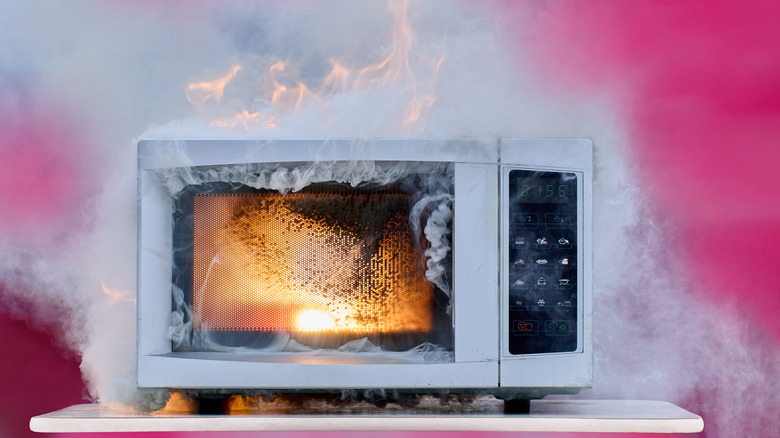
To understand what happens when you put metal in a microwave, picture the energy inside bouncing around like light in a hall of mirrors. Those electromagnetic waves ricochet off every surface — including the foil — but because it's so lightweight, the metal can't handle the flow of current running through it. Unlike the thick walls that can absorb and redirect that energy, foil gets overwhelmed, forcing the electricity to arc instead of disperse. Once that charge hits a crumpled edge, it releases as a spark.
Those sparks — called arcing — can burn through the foil, melt parts of your microwave, or even catch nearby packaging on fire. Even if flames don't appear, the damage can still be there: Scorched spots on the microwave's interior, a warped turntable, or melted pieces that point to hidden internal damage. What looks like a harmless sheet of foil can quickly act like a live wire.
In rare cases, manufacturers say smooth foil can be used to shield small spots that overcook easily, like the tips of poultry wings — but that doesn't make it foolproof. The conditions are fussy: The foil must stay perfectly flat, only cover a small area, and never come close to the oven walls. One wrinkle, one bad angle, and you've recreated the same mistake everyone makes with aluminum foil — believing that "safe enough" means safe.