

What Exactly Is Christmas Jam And How Do You Make It?
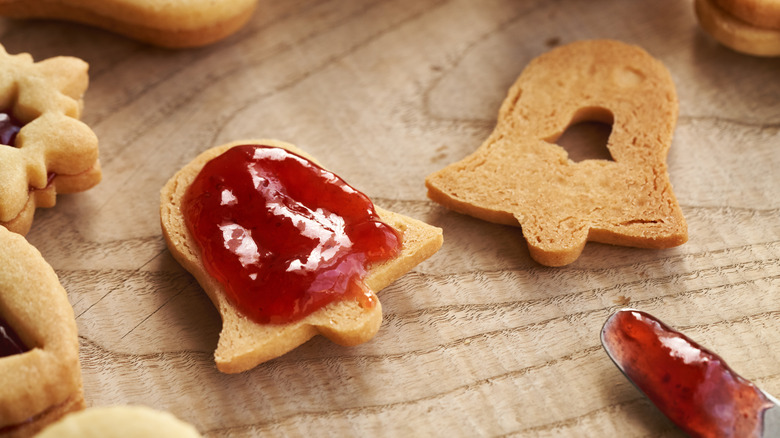
Christmas jam has a way of showing up right when the season leans into its biggest flavors. It's a rosy, bright spread built on cranberries and strawberries — a pairing that hits that sweet-tart balance people love this time of year. Home cooks often treat it as a holiday multitasker: Something you can spoon onto warm biscuits, tuck into a cheese board, or get wrapped up as a hostess gift by anyone who admits they're a bit too obsessed with Christmas.
Cranberries and strawberries play off each other in a way that gives Christmas jam its own distinct flavor. Cranberries bring their natural acidity and deep ruby color, while strawberries soften the edges and keep the sweetness steady. That mix gives the jam that unmistakable "holiday kitchen" wintry note people expect from anything with a December label. It ends up being versatile enough to show up at breakfast and still hold its own next to the richer dishes that come out later in the day.
Behind all of that is a long tradition of preserving fruit for winter, a practice that dates back to ancient cooks who relied on whatever sweetener they could find. Today's take isn't about stretching ingredients through winter anymore — it's more of a seasonal touch that captures what people like about the holidays in the first place: Bright flavors, warmth, and something homemade on the table.
How Christmas jam comes together
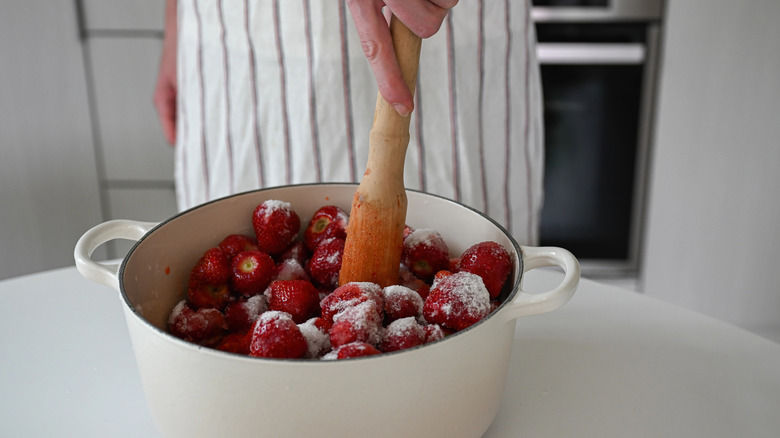
The process behind Christmas jam follows a gentle rhythm that keeps the fruit front and center. Most recipes begin by pulsing the strawberries and cranberries so they cook evenly — a simple step that helps everything break down once it hits the heat. From there, the mixture goes into a large pot with sugar, which does more than sweeten the fruit. It helps the mixture thicken, giving homemade jam the perfect texture once it starts to cook down. Pectin is added later, acting as the setting agent that helps the jam hold together once it cools.
After the fruit and sugar warm through, the mixture is brought to a complete rolling boil — the point where it bubbles hard enough that stirring doesn't calm it down. That's the moment the flavors concentrate and the fruit softens into something cohesive. Adding the pectin right after this stage shifts the mixture from a pot of simmering berries to something with more structure. It's a simple step that feels approachable even for beginners, which is why so many families keep it as a delicious recipe for Christmas morning without treating it like a complicated project.
The rest is surprisingly flexible. Recipes can be halved if you don't need a dozen jars, and frozen fruit works just as well as fresh when strawberries are out of season. Some cooks keep it purely fruit-forward, while others make small adjustments based on batch size or sweetness preference. No matter how you customize it, the basic method stays steady — a loose, reliable process that fits easily into the holiday season.