

The Julia Child-Approved Tip For A Tidy, Mess-Free Kitchen
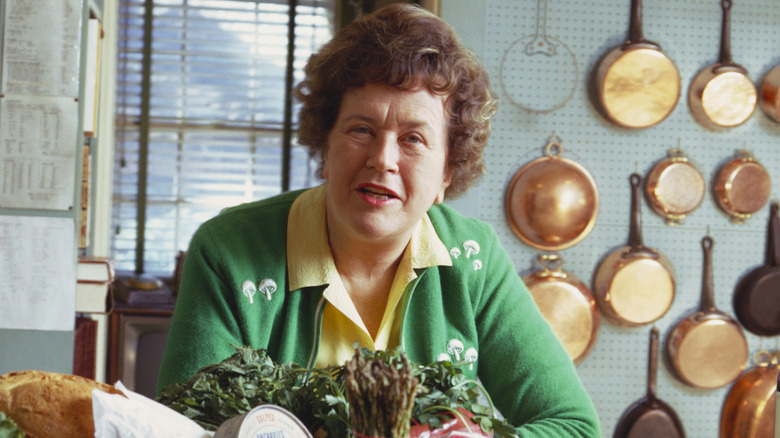
Famous for popularizing French classics stateside, Julia Child introduced home cooks to the pleasures of preparing beef bourguignon, coq au vin, and more in the family kitchen. Aside from coming up with incredible easy-to-follow recipes and sharing her favorite foods with the masses, the cookbook author also taught people how to manage their culinary workspace better with some choice words of advice. For instance, in the foreword of her debut cookbook, Mastering the Art of French Cooking, the culinary icon said, "Use all the pans, bowls, and equipment you need, but soak them in water as soon as you are through with them" to keep a tidy kitchen.
Julia Child only cooked with bougie pans made of copper due to the way they hold and distribute heat evenly. However, the same soaking rule applies for any variety of pan you're cooking with, be it stainless steel, aluminum, or carbon steel. Soaking your cookware in water softens any residues on the surface and loosens any stuck-on bits of food. This means that when you do wash them in hot soapy water, you can get the job done with a little elbow grease. Instead of scrubbing your pans and damaging their surface, you can simply wipe them clean. Bowls, measuring cups, sheet pans, and utensils, such as wooden spoons and spatulas, can also benefit from a quick soak while you get on with preparing the rest of your recipe.
Never put hot pans in cold water
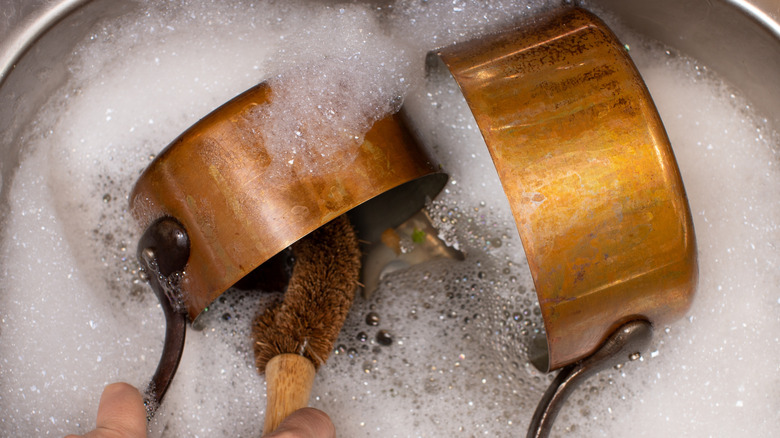
One word of warning? Never put hot pans straight into a sink of cold water. This action can trigger a phenomenon called thermal shock. The sudden change in temperature from hot to cold can cause pans to warp and chip as well as negatively affect their non-stick coating. For this reason, you should wait for your pans to cool down slightly before putting them in the sink to soak (leave them on the stovetop or pop them on a rack beside the sink). Other items, such as plastic bowls, graters, or chopping boards that haven't been anywhere near the heat of the stove, are perfectly safe to submerge in a soapy bath immediately.
In her book, Child also advised cleaning up after yourself frequently, rather than waiting for the very end, to avoid confusion. If you're making a complicated recipe and are surrounded by dirty whisks, bowls, and saucepans, it can be very easy to feel overwhelmed. Moreover, once you've enjoyed your meal, returning to the kitchen to clean up a giant mess is the last thing you'll want to do. Tidying up as you go and giving your cooking area a full nightly shutdown makes the morning run more smoothly, too.