

What Kitchen Flooring Materials Can Be Cleaned With A Swiffer Sweeper?
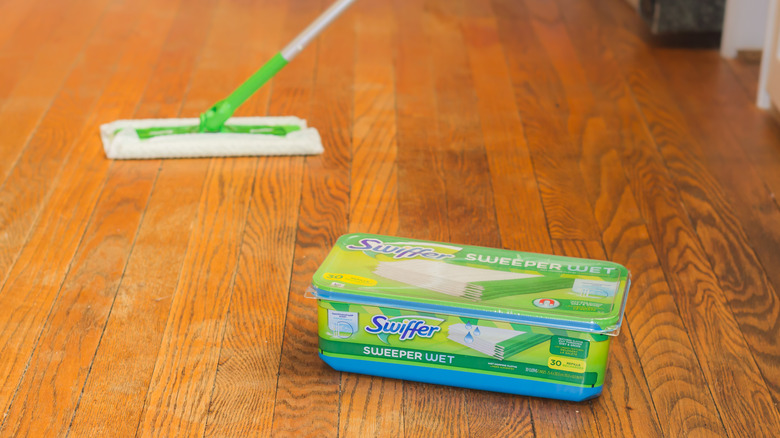
Mopping the floor is one of those house chores where the prep and cleanup are far more annoying than the actual work. Filling and emptying the bucket and keeping the mophead clean are chores in themselves, and the ever-present danger of knocking dirty water all over the floor is just another drawback. If you find all this as bothersome as I do, you are probably the proud owner of a Swiffer Sweeper. This easy-to-use wet-and-dry mop requires minimal setup and zero cleaning, since all you do is quickly attach one-use cloths to the mop and get to work.
The dry cloths, which are designed to pick up as much dust and dry dirt as possible, can be used on any type of flooring, just like a normal sweeping brush or duster. They're lovely and soft, and won't leave any scratches on your floor. The wet cloths, on the other hand, contain liquid cleaning agents that should only be used with certain types of flooring. If your kitchen has vinyl, porcelain tiles, ceramic tiles, finished hardwood, laminate, or finished bamboo flooring, it's safe to use Swiffer wet cloths on it. These flooring types are sturdy and well-sealed enough to handle the moisture and cleaning agents in the cloths.
If you accidentally use a Swiffer Sweeper on the wrong type of flooring, however, there's no need to panic. It likely won't cause any immediate damage to your floors, but frequent or continuous use could cause damage down the line.
How to know if your floors are Swiffer-safe
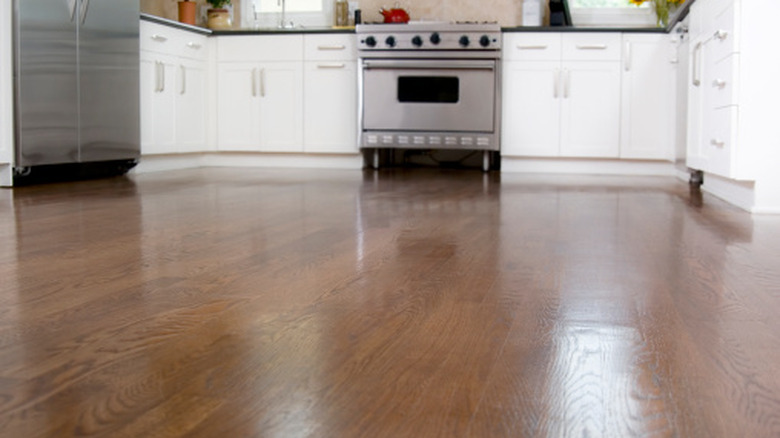
There's nothing too special or unique about Swiffer wet cloths, so if you already safely mop your floors with water and cleaning agents, you can confidently make the switch to Swiffer. Similarly, the types of flooring that can't handle Swiffer cloths often can't handle moisture in general, and should be cleaned with as little water as possible. This includes untreated, waxed, or oiled wooden floors, along with non-sealed stone tiles. Because these floors have no or limited protective covering, caring for them takes extra time and effort, and people usually stick to natural cleaning agents like vinegar, rather than chemical kitchen floor cleaners.
If you don't know what kind of flooring you have, it's important to find out before you start cleaning. You can tell real wood flooring from vinyl or laminate just by looking, since the wood-like patterns on vinyl and laminate are printed. If you look closely, you'll definitely be able to tell. If it's real wood, you should be able to tell from its texture and any shine on it whether it's treated or not.
What are the benefits of using a Swiffer Sweeper?
One of the benefits of Swiffer wet cloths compared to a traditional mop is the reduced amount of liquid they use. There's no chance of water pooling anywhere on your floor, and less liquid used means faster drying — which is good for even heavily protected floors. If you're wondering how water damage can affect your floor, this poor Reddit user can answer your question. They accidentally left their Swiffer mop on a treated wooden floor for 24 hours, and the moisture seeped into the protective coating, leaving a milky-white mark. As long as you remember to put your Swiffer away once you're done with it, however, your floors should be fine!
The other benefits of Swiffer are connected to how quick and easy they are to use. These benefits do come at a price, however. Buying refills is undoubtedly more expensive than using a normal mop, and there's also the environmental concerns that one-use cleaning products bring with them (though there are various cleaning hacks out there to help in these areas). In the end, it's all about weighing the pros and cons — for me, personally, the bother of normal mopping severely affects how often I do it, so using a Swiffer Sweeper is totally worth it.