

10 Ways Supermarkets Convince You To Spend More During The Holidays

During the holidays, cash is king. In the run-up to Thanksgiving and Christmas, an extraordinary amount of money is spent in the United States by people who are looking to have a jolly old time: Data analytics firm Statista estimated that close to a trillion dollars was spent in retail stores during the 2024 holiday period. A lot of that money is, of course, spent in supermarkets and on food, drinks, decorations, and gifts. With the number of choices that consumers have these days around where to buy their holiday grub, though, supermarkets are keenly aware that they have to fight for every penny.
So, how do they get your business? And once you're in their stores, how do they get you to spend more money than you maybe intended to? It turns out that the tactics they use are both extensive and intricate. Supermarkets rely on a combination of timing, promotions, schemes, and customer psychology to get people to part with their hard-earned cash. In addition, grocers have a keen understanding of sensory perception and how to use smell and sight to entice people into putting more on their credit cards. Given that some grocery stores are already overpriced, you can end up spending way more than you had planned. Let's take a look at some of these supermarkets' favorite tactics.
Retailers start way before the holidays

You've probably felt in recent years that stores are winding up for Christmas earlier than ever before, with holiday items being stocked and displayed toward the end of the summer. Well, there's a name for that. "Christmas creep" is a very real trend that sees retailers ready themselves for the festive season earlier and earlier — and the reason they do it is to get you to spend more money in their stores.
The thinking behind this is twofold. The first point of Christmas creep is that it introduces customers to the idea of spending money for the holidays earlier, so that they feel they can, and should, make purchases over a longer period. The more time Christmas goods are in stores, the more time you have to spend money on them at a time you should be trying to save on groceries — and the more money goes into the pockets of the supermarkets. Additionally, Christmas creep works to build excitement and loyalty around certain retailers and items, so that when you're ready to finally start splashing the cash, you've made a mental shopping list for prominently advertised items. The risk for customers, though, is that the longer availability of holiday goods can lead to overspending, so it's wise to be conscious of this move and not feel rushed into buying things. You've got time.
Holiday sales are everything
We're probably not teaching you anything new here, but sales are highly effective when it comes to driving customer purchases. They're never more impactful than around the holidays. This is the time that most of us will spend more money than at any other point in the year, after all, so supermarkets are desperate to offer the best deals around. Traditionally, of course, these sales would take place on Black Friday, but in recent years, these sales seem to go on forever.
Regardless of how long they last, though, they still create a sense of urgency for customers who feel that if they don't buy the cut-price item right in front of them, it'll be gone for good. Ultimately, this can result in people spending more money than they should. A study conducted by Qualtrics found that two out of five people part with more cash than they're comfortable with because of holiday sales, and oftentimes, the things you're buying aren't things you even need. Make no mistake: Supermarkets know exactly what they're doing here.
Stores place items strategically at eye level

Have you ever walked into a store looking for something for a festive dinner party, only to find another, better version of that item right in front of you that you're suddenly desperate to buy? It can seem like fate — but usually, that very occurrence is carefully planned by supermarkets. "Eye level is buy level" is a common refrain among retail experts, with items that are placed within your direct line of sight being more likely to be bought. This is, quite simply, down to convenience: Customers are less inclined to hunt around the store for cheaper options when they're in a rush, and if something's right there, they'll just pick it up and end up spending more in the process.
During the holidays, supermarkets employ the eye-level trick pretty much everywhere. Stores will put more expensive items in your eyeline, and tuck the cheaper, just-as-good versions away at the top or bottom of the shelves. Additionally, they may well put holiday items that you might not need or even want at eye level, to drive additional sales and increase margins. This is where online shopping comes in handy. If you spend the time making a list of the exact items you need and their specific brands, instead of just going for the first option, you'll likely save a lot of dough.
The music they use can affect your mood

The first time you hear a Christmas song each year can bring a rush of pure, childlike joy — but as everyone knows, they can get old fast. There's nowhere that these tunes are more wearing than in supermarkets, where you can hear the same version of "Rudolph the Red-Nosed Reindeer" again and again to your heart's content. Imagine how the employees feel.
Interestingly, though, supermarkets toy with your expectations around music in ways you might not expect. While some supermarkets may opt for classic Christmas music as a way to evoke a feeling of nostalgia and coziness, others intentionally opt for more relaxing music, which can create a sense of calm. You're therefore more likely to spend time in these stores, which feel like a port in a storm away from the Christmas crowds and therefore encourage you to spend more money in them. Where you're more likely to hear Christmas music, though, is in supermarket adverts, which allow them to create a sense of brand loyalty — thereby driving more sales. No matter what they're choosing to play, you can guarantee that stores know what they're doing.
Stores go big on displays and holiday colors
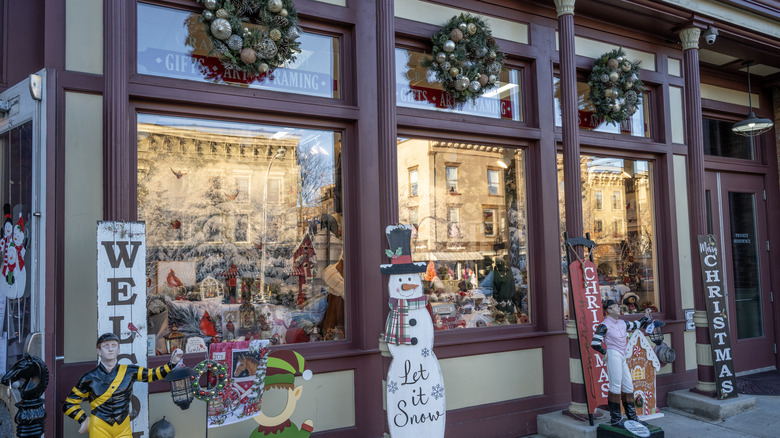
Red, green, and gold. When the holidays roll around, we seem to see nothing but these three colors, which have come to be emblematic of Christmas and the wider season. Stores are well aware of the link that people make between colors and the holidays, and so they'll intentionally deck the halls with more of it to introduce customers to the idea of holiday spending. Stores will also slightly shift their color schemes to create a more contemporary feel, while still creating that sense of a special occasion.
They incorporate these colors in eye-catching displays that capture sales very effectively. By displaying their top-selling items in big, punchy arrangements that catch the eye immediately when you walk through the door, supermarkets grab your attention and create a higher likelihood of impulse purchases. Every retailer knows that first impressions are everything, and the bigger and better the displays are, the more chance they have of getting your money.
Supermarkets bombard you with promotions

Does it ever feel like the supermarket isn't a place you go anymore, but instead it's a place that comes to you? No? Well, when was the last time you checked your emails? Supermarkets keenly understand that purchases start before customers even walk into the store, and they know they have to try and get you there during the holidays. As a result, you can expect to see a barrage of emails from supermarkets during the holiday period as they ramp up their marketing campaigns.
In those emails, you'll likely find a fair few promotions. A direct approach when it comes to sales during the holidays has a psychological effect: Simply put, it can make you feel special and as though you beat the system. At a time when everyone's spending more money than usual, that's a valuable feeling for supermarkets to capture, as it will cause customers to walk straight into their stores. Emails aren't the only way they'll do this, either: You can also expect social media managers to be incredibly busy in the run-up to Christmas as they pummel customers with sponsored ads.
Stores create dedicated Christmas aisles
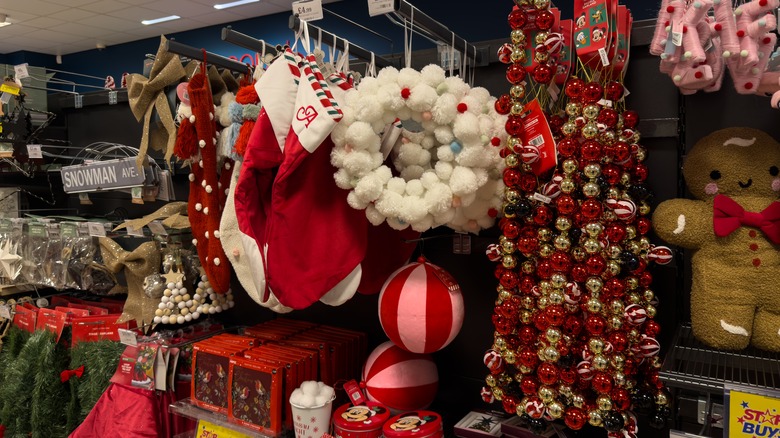
It's a pretty wild occurrence each year when you walk into your local supermarket and find that somehow, absolutely every product is suddenly Christmas-themed. Well, that's not quite the case, of course — but they make you believe it, by putting together dedicated Christmas aisles, which are usually situated right by the front door. These are naturally the first port of call if you require any Christmas goods, but the fact is that supermarkets also cram them full of items that you probably don't have any desire or need for. While you're caught up in the holiday spirit, you can end up making a fair few impulse purchases that you probably didn't intend to.
Stores will often try and drive these impulse purchases by placing high-margin, potentially unnecessary items at eye level. If you go to places like Walmart, you might be greeted with inflatables, toys, and niche decorations sitting right in front of you. That's why you should ask yourself if you really need to buy these things, or whether the supermarket you're in is trying to get you to want them.
Scent is an unexpected tool
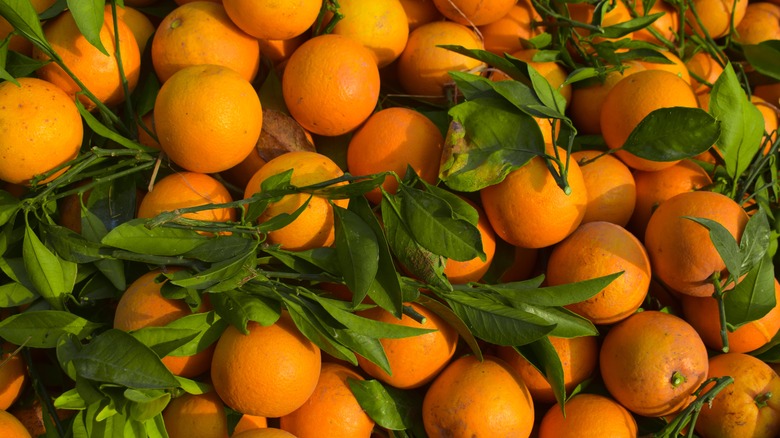
Have you ever noticed that the supermarket you're in smells especially Christmassy? Maybe you've been greeted by the smell of mulled wine wafting through the air or the scent of zesty oranges. Well, that's likely by design. Store executives are very aware of the power that scent has on a shopping experience, and during the holidays, it can be used to evoke a feeling of coziness, nostalgia, and festivity. This, in turn, can drive sales surprisingly effectively.
You may also have noticed that the smells in the air at your supermarket are fairly basic and direct, with things like pine, cinnamon, clementines, and freshly baked holiday cookies landing on the nose. That's intentional, too. A 2012 study discussed in ScienceDaily tested the impact of smell on retail sales and found that when customers were fed a simple orange scent over a more complicated one or no particular scent at all, they spent about 20% more than the other two groups. That's a pretty big margin for something so basic, right?
Loyalty schemes and nifty ways to save get customers to spend more

Loyalty programs are one of the best things that have ever happened to supermarkets. These schemes are designed to make people feel as though they're getting something back from the place they shop, and while they definitely do benefit a lot of the time, the real winner is the supermarket itself. Supermarket loyalty schemes drive customer commitment and an emotional connection to the store, and during the holidays, that sense is higher than ever, with retailers going into overdrive to keep bringing people back.
They do this in a number of ways. Offering free shipping through loyalty schemes is a very valuable way for supermarkets to capture customers. Not only do they put all their spending into the store, but they're also required to spend a certain amount to qualify for the free delivery, bumping up their overall bill. Early access to Christmas items through schemes can also be a real winner for retailers and can create impulse purchases. In addition, repeat purchase offers or discounts through loyalty apps help create a sense of saving, which can get people through the door at the most competitive time of the year.
Stores can use upselling to get you to buy pricier items you may not need
Why buy a cheaper version of something when a better, slightly more expensive one is right there? That thought process is something that supermarkets bank on in their customers, and you can bet that they exploit it during the holiday season. Upselling is a key tactic around Thanksgiving and Christmas, and supermarkets will frequently offer higher-quality items at a discount, thereby convincing you to spend a little more than you intended. That item may not have anything special about it, other than better branding — but the supermarket walked away with more of your money.
Supermarkets will also try to upsell you on bigger sizes of certain items or collections of smaller items that they might frame as "stocking stuffers." Bundles and packs are also common around this time of year, and retailers will promise that you're making a savings by buying everything in them -– but did you need everything in the first place? This is where a list once again comes in handy. If you head into your supermarket armed with a list detailing exactly what you want, you're far more likely to walk out without having spent more than you should. Don't get tricked into parting with your hard-earned cash: You'll need it when January rolls around.