
5 Kitchen Items You Should Thrift And 5 You Should Always Buy New
Buying household essentials secondhand has many benefits. You can often find unique vintage items hidden among the shelves of thrift stores that you can't find at retail stores, including some kitchen thrift collectibles worth hundreds of dollars. And these items tend to be far more reasonably priced than if you were to buy them at retail value. Additionally, thrift shopping offers an excellent way to give household essentials a new home and reduce waste. However, when it comes to tools and utensils used in your kitchen, not every item should be thrifted.
While there are many benefits to buying some kitchen essentials secondhand, there are a few drawbacks as well. Some vintage cooking tools might not meet current standards for food safety. Additionally, some pre-owned items might not have been well-maintained or cleaned by the previous owner. If you're looking to stock your kitchen, these are the items you should consider thrifting, as well as the ones you're better off purchasing new.
Thrift: Tableware
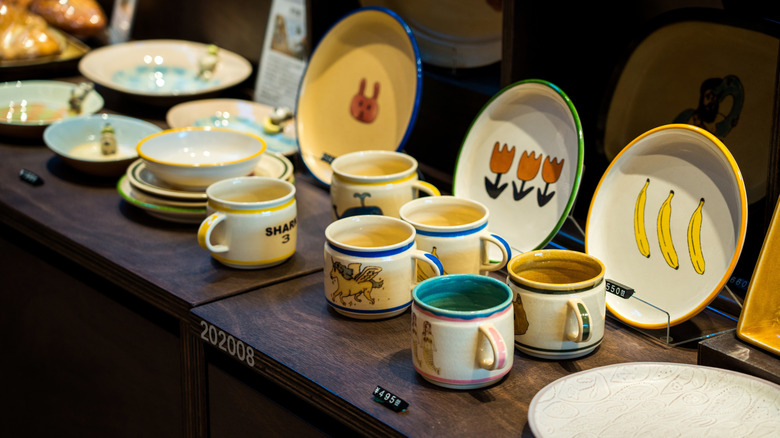
Your basic tableware, like plate and bowl sets, mugs, and cups, are excellent items to thrift. In fact, some of the most iconic vintage dishware brands are hiding among the shelves at thrift stores. Whether you're looking to piece together your own collection of unique dishes or purchase entire sets, these items tend to be easy to find at thrift shops. You can find unique vintage designs to make your tablescape pop, and these secondhand sets are typically far less expensive than the retail price.
If you do choose to thrift your tableware, be sure to check pieces for chips and cracks before purchasing. Additionally, if you're on the hunt for vintage pieces, it is important to be wary of lead, which was used in the paint of many dishes made before the 1970s. According to the CDC, no amount of lead in the blood is safe, so being aware of which dishes to avoid is critical. Avoid vintage crystal and pottery, vintage dishes with intricate designs and bright colors, and any dishes made before the mid-1970s.
Buy New: Cutting Boards
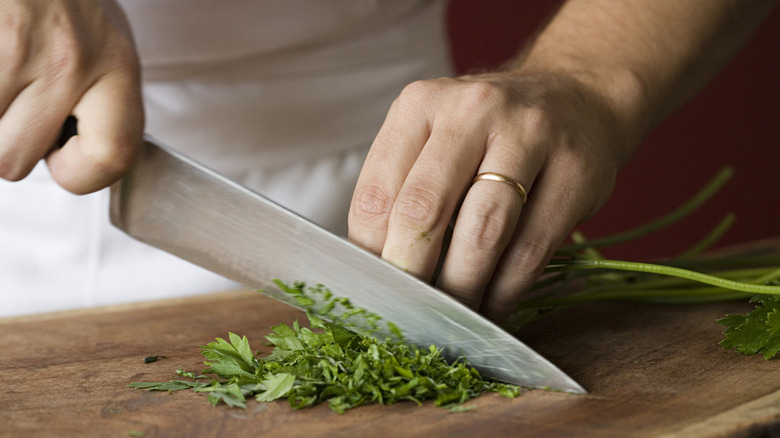
While there are often tons of cutting boards for sale at thrift shops, this is an item you're better off purchasing new. Both wooden and plastic cutting boards can harbor bacteria. Foods like raw meat can seep into the pores of a wooden cutting board and create bacteria buildup that may be harmful to health. Similarly, plastic cutting boards can harbor bacteria in the cuts and scratches on the surface of the board. Without being able to confirm whether the previous owner(s) took care of the cutting board and kept it clean, it's best to play it safe and purchase this kitchen essential new.
In an article for Martha Stewart's website, interior stylist and vintage expert Leah Ashley explains why she chooses not to thrift cutting boards for her kitchen: "There is no real way to disinfect a cutting board without chemicals." That being said, the exceptions to the rule are if you find a hidden gem cutting board that has not been opened or if you plan to purchase a board as a piece of decor rather than a practical tool.
Thrift: Pyrex
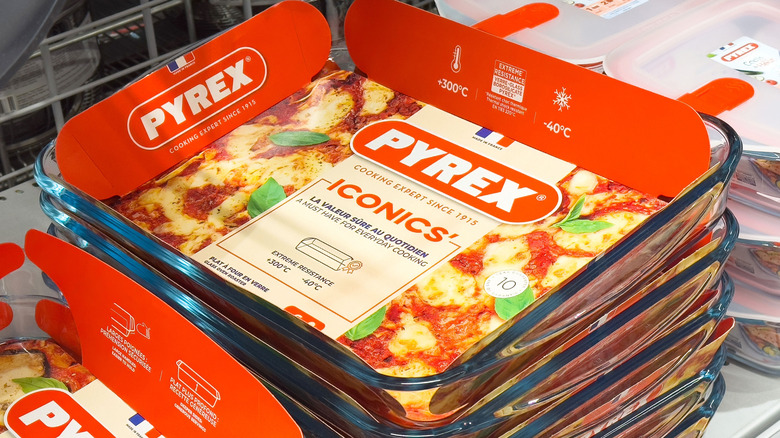
Pyrex (formerly PYREX) was a form of tempered glassware created in 1915 and was extremely useful in cookware due to its ability to resist high heat. Vintage Pyrex was made with borosilicate glass, which was uniquely adaptable to extreme temperature changes, allowing items to be transferred directly from freezer to oven. In comparison, modern Pyrex is made from soda lime glass, which is weaker and less equipped to handle extreme temperature changes.
People often prefer the vintage Pyrex for its durability and unique designs and patterns. These dishes can last decades. The key to discovering if a Pyrex dish at the thrift store is actually made from the stronger borosilicate glass is to check the label on the bottom. If the logo is in all caps, it's vintage. One Reddit user explained why knowing the difference is so vital: "The old stuff doesn't explode if you take it out of a 400 degree oven and sit on the glass cook top of your stove. My wife found that out one Easter Sunday." Pro tip: Keep an eye out for the 'Sunny' 1960s Pyrex dish as these coveted yellow bowls will sell for between $65 and $200 online!
Buy New: Nonstick Pans
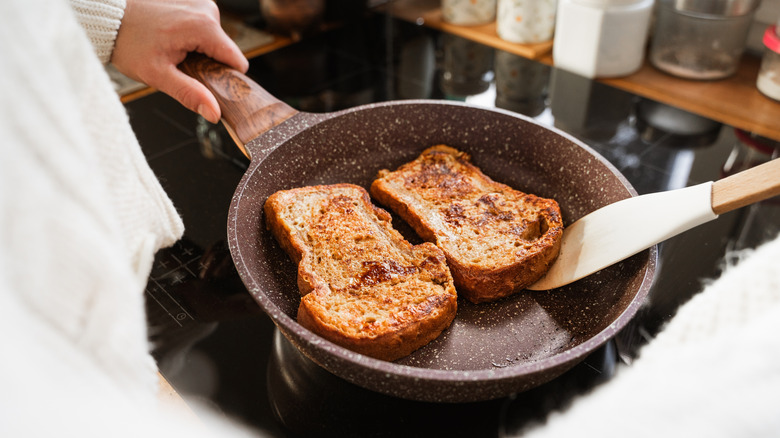
Despite professional chefs rarely using nonstick cookware, nonstick pots and pans are a lifesaver in the average kitchen, making cleaning a much less painful process. However, the safety standards for the non-stick coating used in this cookware have not always been what they are today, so older items may not be safe to cook with. The substances used to make nonstick coating (like Teflon) can leach dangerous toxins when overheated or damaged. According to this Reddit user online, nonstick cookware is the one kitchen tool they always buy new, because at the thrift store, "99.9% of the pieces you find are scratched."
Jennifer Prince, owner of It's FOUND Vintage, explained why she also prefers to buy this kitchen item new: "Most of the pots and pans I see thrifting were donated for a reason, as many are scratched or pitted, meaning that chemicals may bleed into your food." Since there are safer alternatives available, it's a good idea to stick to the retail options on this one and avoid any possibility of microplastics leaking into your food when cooking.
Thrift: Cast Irons
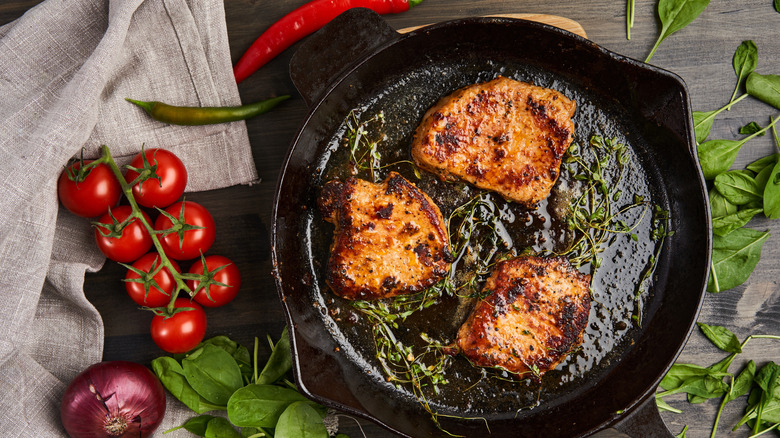
Cast iron cookware has long been a preferred kitchen tool for chefs around the world. These heavy skillets can be used for searing, browning, frying, roasting, and sautéing on the stovetop or in the oven or grill. They're known for their ability to distribute heat evenly to the food, and their durability makes them an incredibly versatile and useful kitchen staple. If properly maintained, a good cast-iron skillet can last you a lifetime.
Cast irons are generally considered a good kitchen tool to thrift, but it's important to know what to look for. Be sure to seek out one with minimal rust and then clean it thoroughly and properly when you bring it home. This Reddit user recommends simply looking for a cast iron that is the size you want and has the "least amount of rust as they will be the easiest to restore. And of course, avoid any with visible cracks." Choosing a specific brand is generally a matter of preference, but there are some cast-iron brands you might want to avoid.
Buy New: Coffee Makers
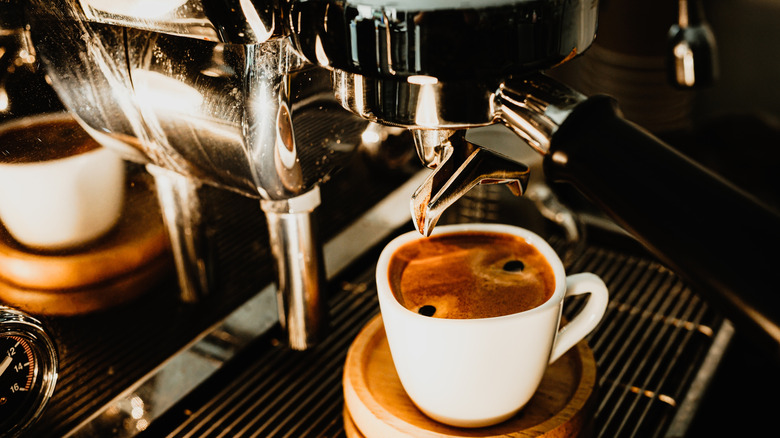
Making coffee at home instead of buying a daily cup at the local coffee shop is a noble endeavor, and no caffeine-lover's kitchen is truly complete without a good coffee machine. While it may be tempting to buy one from your local thrift store, you might be better off purchasing new. In fact, this Reddit user recommends skipping any kitchen appliance that holds liquids "even if it looks clean" because of the risk of bacteria and mold buildup. Bacteria and mold tend to grow in damp, dark environments, and without any way to ensure the previous owner properly cleaned out the insides of the machine, there's no way to truly know if it's free from these microorganisms.
Another commenter explains that coffee machines simply are "not worth getting second hand" because there are so many affordable options when buying new. Risking any sort of illness as a result of bacteria and mold buildup is not worth it when you can purchase a brand new coffee machine for a reasonable price.
Thrift: Copper Pots and Pans
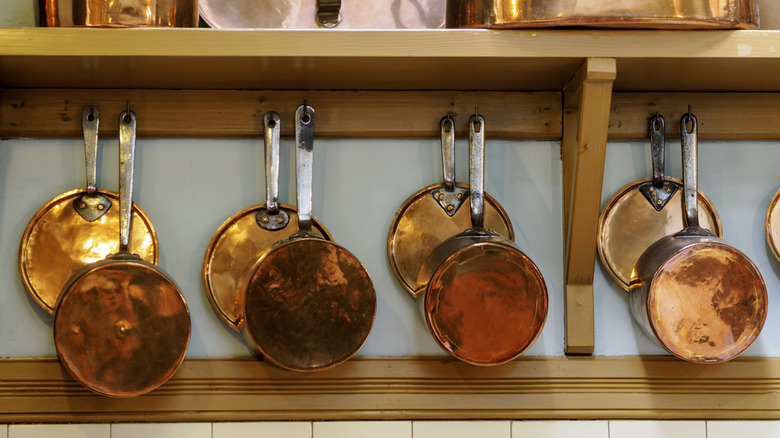
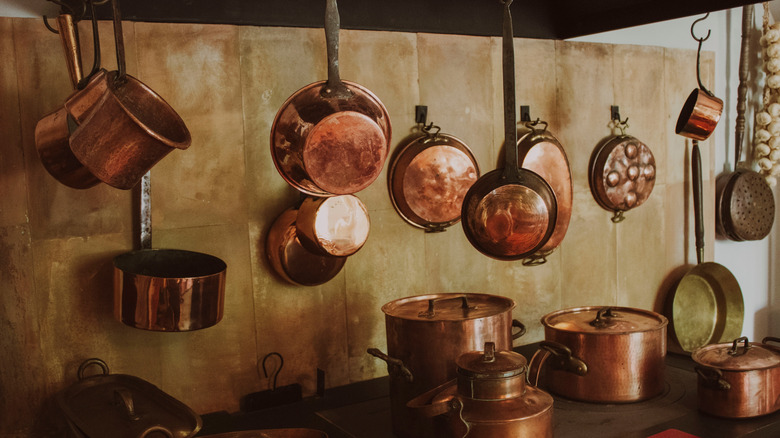
There are several benefits to cooking with copper, including its even heating distribution and accurate temperature control. Not only do these pots and pans tend to be aesthetically pleasing in the kitchen, copper also has antibacterial properties that can improve immune system function. That being said, copper can be expensive, and buying a new set at retail price can cost you anywhere from a few hundred to a few thousand dollars. So, if you can find one in a thrift store in good condition, this is an excellent secondhand purchase to add to your kitchen.
When looking for secondhand copper cookware, there are a few things to keep in mind. Copper is a heavy material, so you should seek out pots or pans that have some weight to them. If they're too light, it might indicate that it's only lined with copper and not made entirely of the metal. One Reddit user explained, "From my experience, good copper pans are no joke when it comes to price (and weight!). I learned that the hard way after picking up a cheap one online, it was super thin and the food burned so easily."
Buy New: Electronic Appliances
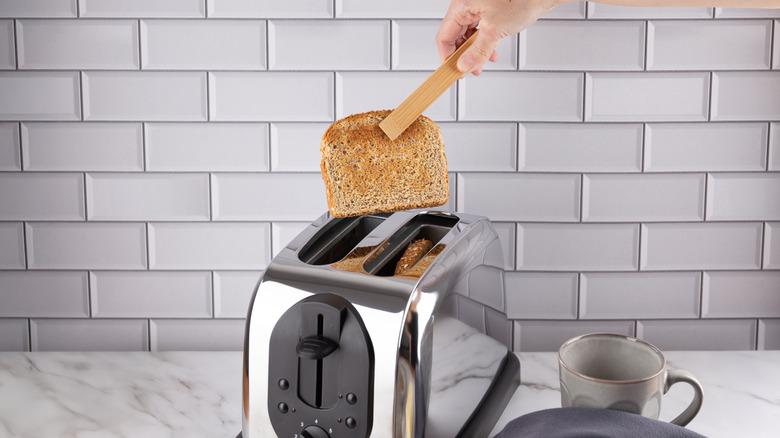
Purchasing any electronic appliance secondhand comes with some level of risk. No one wants to purchase a toaster, blender, or mixer only to bring it home and be disappointed when it doesn't turn on or work properly. Thrift expert Jennifer Prince uses this rule of thumb: "I always avoid items that I can't test on-site." Small appliances, like toasters, can typically be found for reasonable retail prices anyway, so there's no need to gamble on a secondhand item.
A thrifter on Reddit explained that even if the kitchen appliance does work when turned on, there's no guarantee that it will heat properly or display the correct temperature. This could be problematic when it comes to appliances like toaster ovens or crockpots. As one user on Reddit puts it, thrifting "anything that plugs in is kinda risky", so you might want to consider avoiding any small electronic kitchen appliance that you can't test until you get home.
Thrift: Kettles
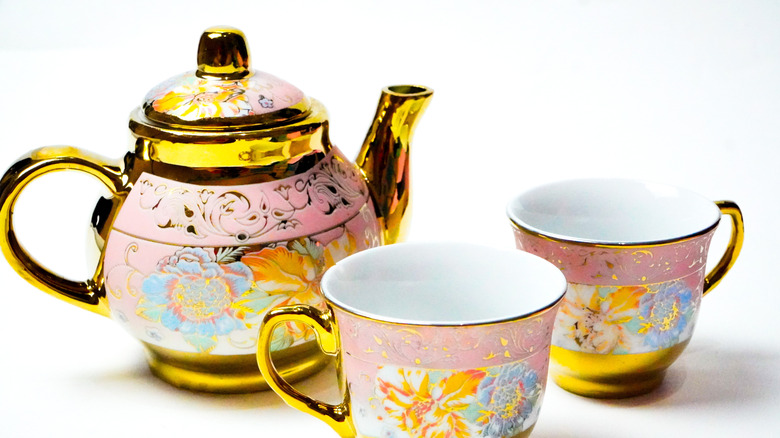
Kettles are not only a must-have kitchen staple if you enjoy hot tea, but they make an excellent decor addition to your stovetop as well. Thrift stores are often filled with old-school kettles decked out in funky, unique patterns, so these are an excellent option to buy secondhand. Also, while kettles do hold water, the potential for bacterial growth is far less than something like a coffee maker because kettles are reasonably easy to clean.
One Redditor explained, "Kettles are very easy to clean and are pretty self-contained, with the electronics usually in a base that doesn't get wet." Additionally, some vintage kettle brands are highly coveted online and sold for a hefty price, so treasure hunting for hidden gems in the thrift store is typically a more affordable option when it comes to this kitchen essential. When you bring your pre-loved kettle home, be sure to give it a good scrub and use vinegar to clear out any mineral deposits from previous use.
Buy New: Plastic Containers
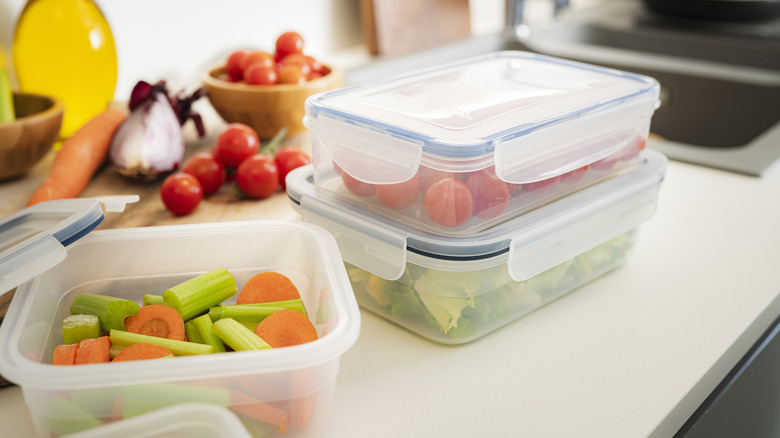
Avid thrifters online warn against purchasing any kind of plastic container secondhand based on the constantly changing regulations for plastic safety. Old plastic might not be food safe if it is older, damaged, or has been used improperly (i.e. microwaved). Plastics with scratches or cloudiness should be avoided. Since it is difficult to determine exactly how old a container is, you may not know if it was made food-safe based on modern-day standards. Thus, you're better off purchasing your Tupperware and other plastic cookware new.
BPA is a chemical that has long been used in plastics to make them more durable and break-proof. Unfortunately, BPA exposure is also connected to health conditions like cardiovascular disease and type 2 diabetes. When buying plastic containers, look for the label "BPA-free" to avoid any unnecessary exposure to this harmful chemical. Since 2010, many plastic container companies, including Tupperware, have made the switch to BPA-free plastics in accordance with food safety standards.