

Everyday Items You Should Never Put In The Oven
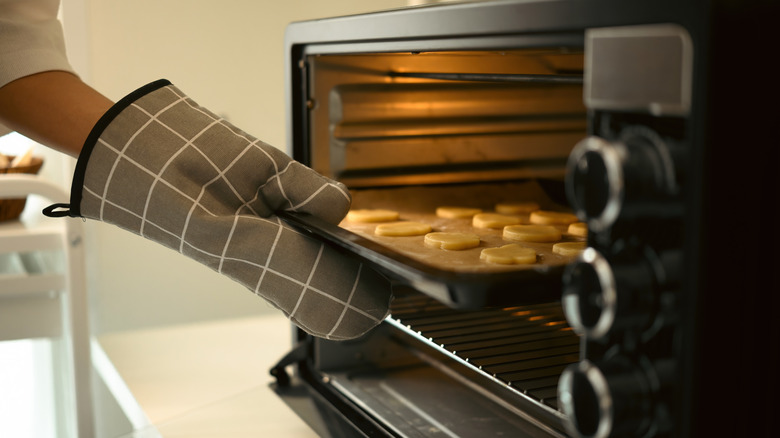
An oven is a godsend, for sure. It can do so much, from baking bread and sweet treats to reheating leftovers. It is also perfect for carrying out unusual hacks you might not have thought of, like ripening avocados in a flash or getting the most flavor out of canned tomatoes. While this terrific appliance is definitely a savior, things can go south quickly when using it, especially if you put the wrong items in it. When we write "items," we mean everyday kitchen tools you'd assume are perfectly safe to use in the oven. These objects can cause the appliance to malfunction, leading to a mess that would take ages to clean up. In the worst-case scenario, terrible accidents could occur when you put these everyday tools in the oven, and no one wants any of that.
Fortunately, to save you all that trouble, we have put together a list of common kitchen items you should never put in the oven, along with the reason for each of them. With some of these tools, it also comes down to paying attention to oven-safe labels, which we will get into as well. All in all, while there are plenty of mistakes you could be making with your convection oven (or gas oven), placing certain items in them that can lead to disasters is one blunder that needs to stop right away.
Plastic
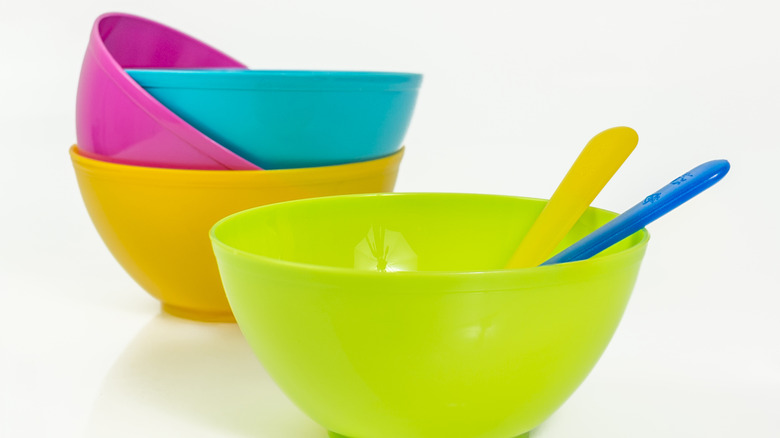
Unless you're using a dish made with silicone (which is a heat-resistant plastic), any other plastic utensil should never be put in the oven. This includes plastic wraps, too. The reason is pretty simple: Most types of plastic cannot bear incredibly high temperatures, making them unsafe for the oven. Putting them in the oven will cause them to melt easily, for one, and the melt can end up everywhere, specifically on the oven floor and sometimes even in its crevices. If you aren't able to get rid of all those melted bits while cleaning, they'll keep burning every time you use the oven, leading to an awful odor. Imagine how hard it will be to get rid of that!
That's not the only thing you should worry about. Melted plastic usually emits toxins at such high temperatures. It goes without saying that these toxins can be harmful if inhaled or consumed. Last but not least, it can also catch fire in the oven easily. Considering all these factors, why take a risk? It's best to just avoid placing plastic spoons, bowls, and wraps in the oven. When it comes to silicon as well, check whether it has an oven-safe label first, just to be completely sure.
Wax paper
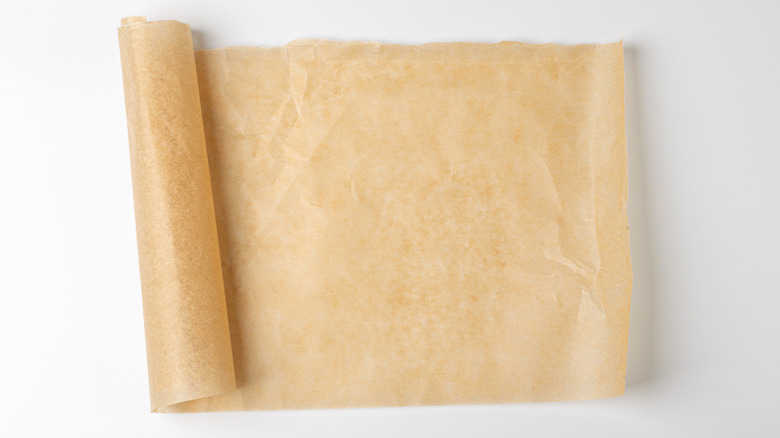
A lot of people think wax paper is the same as parchment paper, which is an honest mistake, given how similar the two look. Aside from their comparable appearance, there is a major difference between the two, one of them being that wax paper is covered with, well, wax. Just like candle wax, this product can melt quite easily and possibly also catch fire. As a result, when you're looking to line your baking tray before use, opt for parchment paper or silicone mats, as they are made to withstand the high temperatures in an oven.
Other than catching fire, melted wax can ruin whatever you're baking, which you definitely do not want. In most cases, no type of wax paper is safe for the oven, so there's really no need to look for such a label; just use the aforementioned alternatives instead. That said, if you have a bunch of wax paper at home and are wondering if it can be used for anything at all, the short answer is yes. There are plenty of brilliant wax paper hacks for the kitchen you should consider, like wrapping food in it or even laying a piece on your countertop while kneading dough to prevent it from sticking everywhere.
Certain types of glass utensils
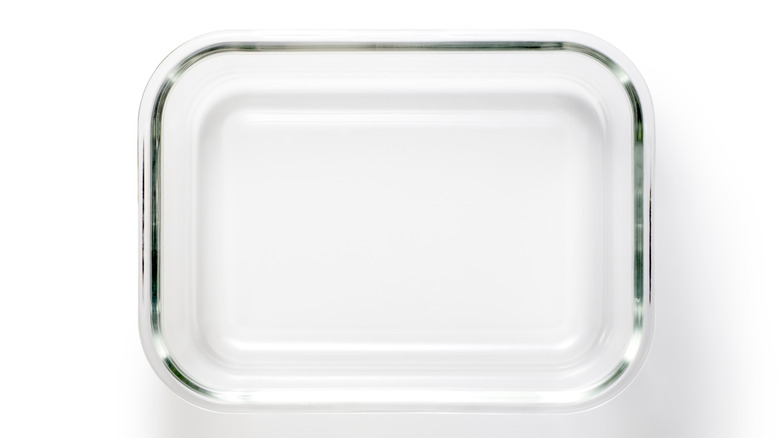
You may have often used your favorite glass dish in the oven while making casseroles, pasta bakes, or other foods. So, it's easy to wonder why glass is on this list. The thing is, the ones you're using are possibly made of borosilicate, often sold under the Pyrex brand. This type of glass can indeed be used in the oven. But other types of glass utensils, specifically those that are untempered or really thin, shouldn't be put in the oven.
This is because this type of glass cannot withstand heat higher than 392 F, and in many cases, ovens need to be set to higher temperatures. Since thin, untempered glass isn't designed to handle high heat, it will essentially ruin your food and oven, as the glass will surely break. At a slightly lower temperature, the glass might not crack, but its quality may be ruined. Hence, it's not worth putting in the oven.
When it comes to a tempered, thin-glass utensil, it's best to check if it is oven-safe and how high a temperature it can endure first to prevent issues later on, as not every type is made the same. Even though Pyrex glass is usually oven-safe, review its manual thoroughly before placing it in the oven to make sure you're following all necessary precautions.
Takeout containers
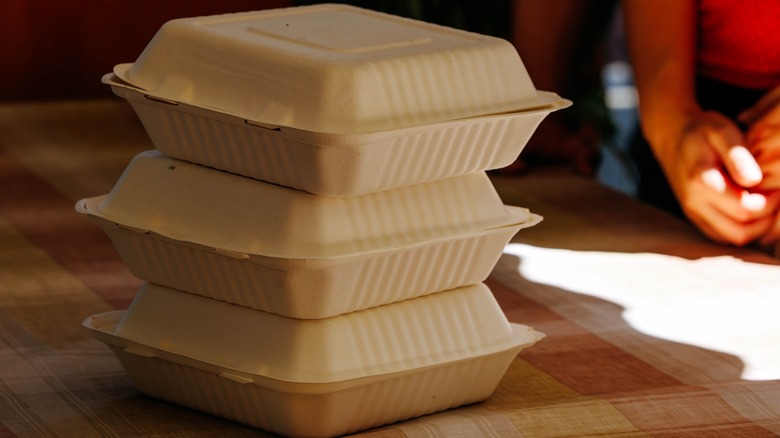
Whenever you're in a hurry to heat leftovers from your favorite restaurants, it may seem like a good idea to put the entire container in the oven. Truthfully, it really isn't. In fact, takeout containers are some everyday items you should never put in a microwave or an oven. The reason is that these boxes are usually made of plastic, Styrofoam (actually called polystyrene), or cardboard. Plastic, as discussed earlier, will melt at high temperatures when put in the oven. Speaking of Styrofoam, even though containers made with it may seem like they'd do well under high heat, as they can keep food warm for a long time, they won't. This is because Styrofoam releases toxins when heated and may also burn.
Coming to cardboard containers, they shouldn't be placed in the oven either, mainly because they can ignite at a high temperature, typically over 400 F. Moreover, if you've got a cardboard takeout container or pizza box that's full of logos, it's even more crucial not to put it in the oven. At an oven's high temperature, the ink used to make these logos can also emit harmful chemicals. Given all these consequences, your best bet is always to transfer your leftover takeout food to a proper oven-safe plate, bowl, or tray, and then heat it.
Wooden utensils
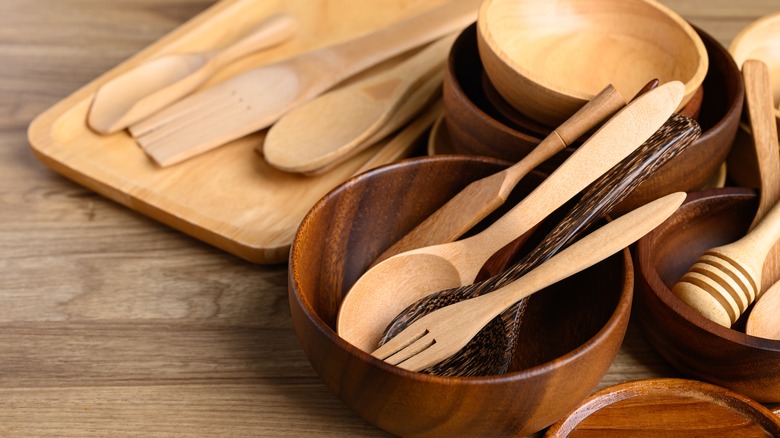
Wooden utensils won't release toxins when you put them in the oven, so they might seem like a safe bet. While that's true, it's also likely that the wood will burn. It's easy to wonder why this would happen, given that certain wooden utensils are often used on a stovetop, and those don't typically burn. Well, if you think about it, it's unlikely you would let them come into contact with direct or even indirect heat for long, which reduces the chances of them burning. When left in the oven for a while, the heat can add up quickly and lead to bad consequences.
How quickly wood will burn due to high temperature in the oven also comes down to its type, whether it's treated or untreated, soft or hard, and even its overall make. But even if you're using top-quality wooden utensils, it's best not to take a chance and keep them away from the oven, unless it has a label that says it's oven-safe. Even in that case, take a look at the instructions and how high a temperature the utensil can handle before you use it, just to be safe.
Canned food
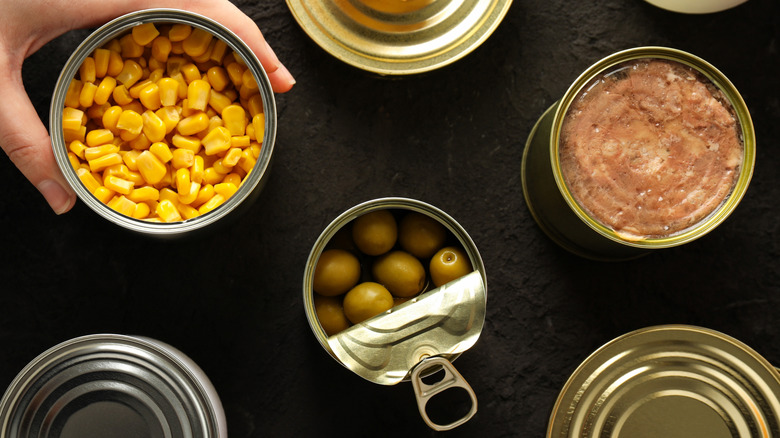
Technically, canned food doesn't need to be heated, but if you're one of those folks who prefer to do so, hold up before you place the can inside the oven, as there's a lot that can go wrong. Firstly, if you place an unopened can in the oven, the steam the food releases will have nowhere to go. So, it will most probably explode, and the food will splatter inside your oven. All those tiny metal pieces could also end up getting into the vents of the appliance, causing it to malfunction.
Considering this, you might think that placing the can in the oven after opening it shouldn't be an issue. This will still cause problems, though, as cans are made of metals that can emit harmful chemicals when heated over a certain temperature. These chemicals can mix with the food and, if consumed, lead to health issues. Hence, the best bet with canned food is to transfer it to an oven-safe dish and then go about with the heating process.
It's also possible to heat the food on the stovetop or in the microwave after transferring the contents into an appropriate utensil. Just don't heat the food directly in the can under any circumstances. Another reason for this is that cans usually have a layer of Bisphenol A inside (colloquially known as BPA), which can easily transfer into your food. Excessive consumption of BPA can lead to health risks, so it's always better to take that extra step of transferring the food.
Loose foods
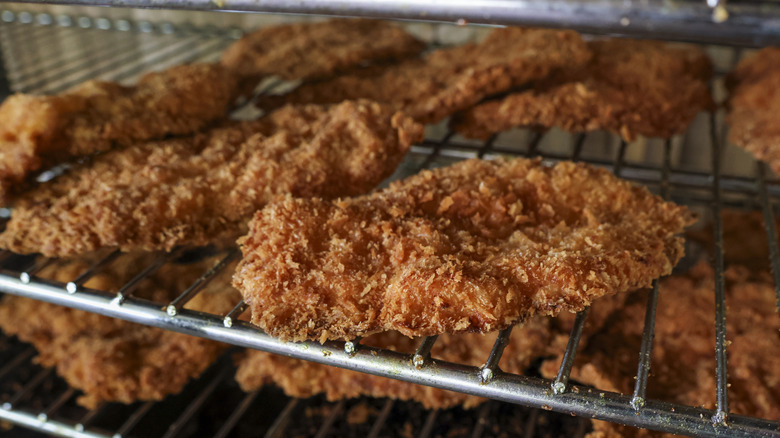
Though this one isn't a kitchen tool, many people tend to make the mistake of placing foods in the oven as-is. Doing so may seem harmless enough, but it's actually a rookie mistake. Think of it this way: When you place loose food items on the oven rack directly, they have no support other than those thin metal wires. So, it's very likely for the food to slip through, especially if it's something flimsy, like thin slices of meat or veggies. In case you've used thicker cuts of meat or vegetables, or anything that can stay put on the rack, the juices the food releases will have nowhere to accumulate. Hence, they'll start dripping on the oven floor. All of this will create a mess that will surely end up being very hard to clean.
If food gets into some crevices of the oven, and you aren't able to get all of it while cleaning, it will burn every time you use it. While that may not seem like a big deal, the worst-case scenario here is that those burned bits might ignite. But even if that doesn't happen, the burned bits will cause other food items that you put in the oven later on to have an off-putting smell. Keeping all of this in mind, isn't it just easier to place your food on a dish, a tray, or anything else? We think so, too.
Wet oven mitts or pot holders
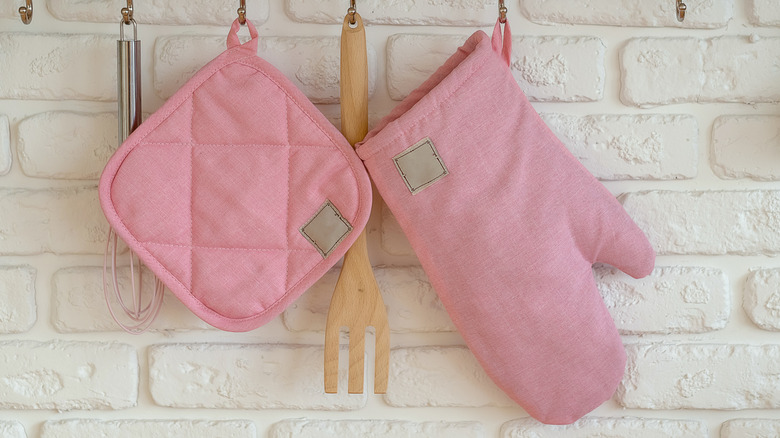
It would surely be a rare instance for anyone to put wet oven mitts or pot holders in the oven. But some folks do, usually when these items need quick drying. This practice should be avoided at all costs, mainly because the water they contain will turn into steam once the oven is hot. When you open the oven door, the steam will rush out and cause severe burns. Burns caused by steam can be horrifying – so much so that you might even need to seek emergency medical care. So, it's definitely not worth taking a risk.
You should never wear wet oven mitts, even when taking food out of the oven. This is because the water they contain will turn into steam the moment you touch the tray, burning your hands. Taking these factors into account, it's best to use something else when your oven mitts or pot holders are wet. If you're looking to dry them as quickly as possible, use a dryer instead, but stay away from the oven.
Aluminum foil (on the oven floor)
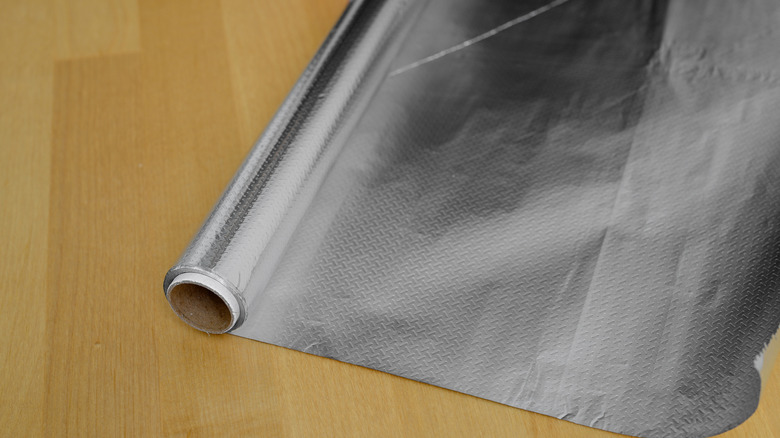
Technically, aluminum foil can be used in an oven, and it actually works really well with dishes and trays. But problems arise when you lay the foil on the oven floor. Unfortunately, all the heat will bounce off it, even as the foil keeps the oven's surface clean. While you might think that isn't a biggie, it will actually make the oven hotter than it should be, which can eventually result in food burning quickly. Besides that, if you don't change the foil on the oven floor often, it could also melt or burn over time due to the intense heat. Think about how hard it would be to get your oven cleaned up after that! Not to mention that melted or burned foil could also ruin your appliance.
Some folks who own convection ovens also block their air vents with foil, but that's an even bigger mistake, as it disrupts airflow. A convection oven's heat circulation relies heavily on its air vents. Blocking them will lead to the oven not performing as well as it should, and because of that, you'd have to repair your appliance regularly. So, it's ideal to just give your oven a scrub as often as needed, or use proper liners specifically made for it, rather than foil.
Gadgets with batteries
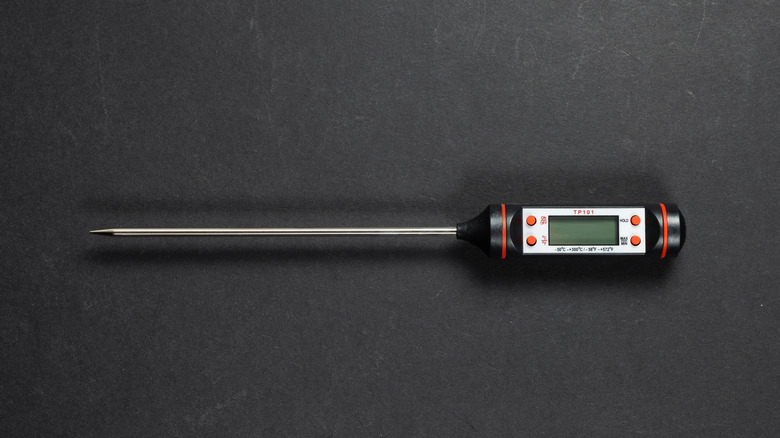
A lot of gadgets often used when cooking food in an oven have batteries, like timers and digital thermometers. It's ideal not to put any of these in the oven, as the batteries can explode. That will definitely ruin your oven and lead to injuries, especially if you're standing too close to it during the explosion. Luckily, though, you don't need to put a timer in the oven at all, as most of these appliances are already equipped with one. When it comes to battery-operated food thermometers, it's even more likely for people to put them in the oven to keep track of the food's temperature.
But considering the consequences, it's best to manually keep track of how long it would take for your food to cook. Take it out a few minutes before it's ready and then stick the thermometer in to check its temperature (crucial when it comes to meat). In case your food hasn't reached the right temperature, place it back in the oven to let it cook further. Then, take it out and stick the thermometer in again, repeating the process until the food reaches the right internal temperature.