

Neither Washed Nor In An Airtight Container: How To Keep Cauliflower Fresh Longer

The versatile cauliflower has lately become a replacement for different foods. Finely chop it with a box grater or food processor to replace rice or blend it into soup to give your soup a creamy base without using dairy. It's also a handy substitute for a meat-free chicken parmesan. Cauliflower is delicious as the star in various recipes like the Indian dish, aloo gobi, or the Italian relish, giardiniera. Given how useful this veggie is, it's nice to always have some crisp cauliflower on hand. To do that, you need to store it correctly.
The best way to store a cauliflower, whole or cut up, is in the crisper drawer of your fridge. Leave it unwashed, remove it from its shrink wrap, and place it in a bag with holes, with the stems facing up. Keeping it upside down prevents moisture from building up on the florets, which can make it spoil faster. Doing all this, it should last up to 10 days in the fridge, ready for your delicious meat-free roast. Chopped up florets may not last as long — up to five days in the fridge — but you can help them stay fresh and crisp longer by keeping them in a perforated bag with a paper towel or two to catch the extra moisture.
Freeze your cauliflower to store it even longer
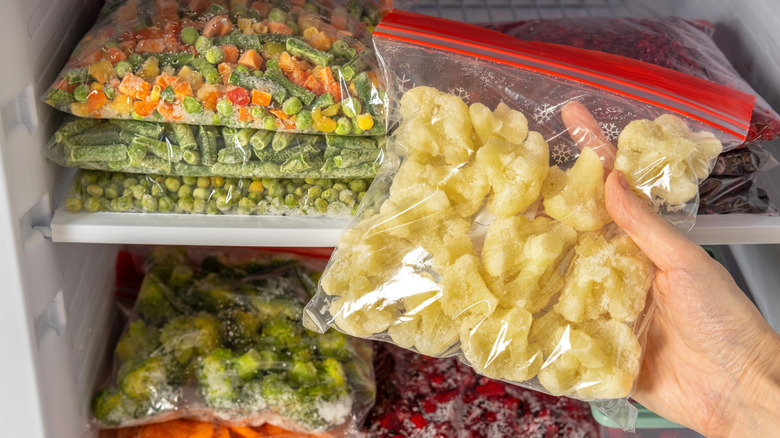
You can also freeze cauliflower to keep it fresh and tasty for up to a year. The process is a little more work than just keeping it in the fridge, but it's worth it. First, slice off any brown spots. You can cut it up into florets or freeze it whole — although florets are easier. Bring salted water to a boil, then blanch the cauliflower in the water for two to three minutes. Make sure you have an ice bath ready. Quickly transfer the cauliflower into the cold water to quickly stop it from cooking. Let the cauliflower cool, then place it on some clean towels to dry off. Set your cauliflower on a lined baking tray and freeze it for three hours. After that, you can put it in a freezer bag, and you're good to go. If you skip the blanching step, the cauliflower's cell walls will break down, resulting in a mushy veggie once it's thawed.
Frozen veggies are a great way to take your meal to another level. It's also a way to ensure you always have healthy veggies on hand. Cooking cauliflower from frozen can be amazing if you know how to do it right. There's no need to thaw it; you can cook straight from frozen. Steaming, roasting, and air frying are effective methods to prepare this veggie. Beware of boiling, however, as that will just bring out their mushiness.