

Julia Child's Ideal Beef Cut For Pot Roast Isn't Chuck Or Round
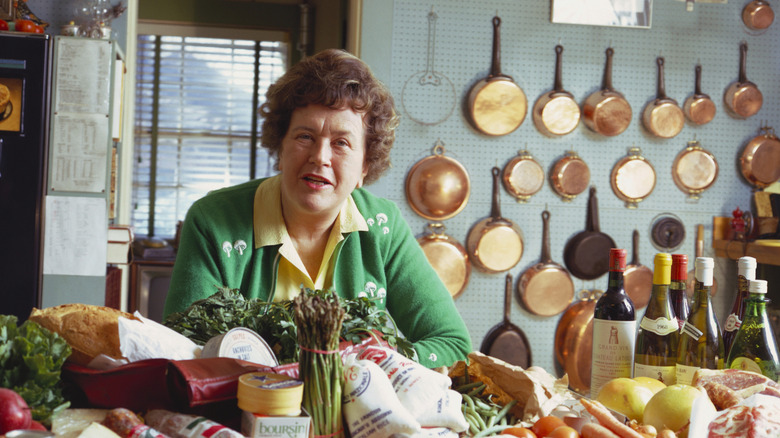
Julia Child may be known as "The French Chef," but she taught the U.S. how to cook. Decades later, her recipes are still beloved by many, although sometimes it's hard to ignore the fact that many of the classics were written in the '50s and '60s. One example of this? Child's recipe for "Boeuf a la Mode," which most Americans know as a pot roast. This in-depth recipe doesn't use the cuts you might expect. In fact, it might be hard to find some of Julia's unusual cuts of beef at a modern American butcher. The usual cuts of beef for this hearty meal include, chuck, round, and brisket, while Julia suggests rump, followed by sirloin, tip, and knuckle. Modern pot roast heroes do make an appearance; chuck comes fifth in Julia's roundup. Then, there's top round, with bottom round bringing up the rear.
Rump, sirloin, and tip are all very affordable cuts of meat, while knuckle is rarely used in modern home kitchens. However, if you can get it (and you know how to cook it), you'll find that knuckle is a real bargain. Child's original recipe appeared in 1961, so it was probably written in the 1950s, when rationing and post-war shortages were ongoing. On top of that, it's based on techniques from France, where austerity after WWII was much more severe. If cheap cuts worked in her Boeuf a La Mode, of course, she was going to use them.
Techniques to get a lot out of a little when it comes to beef
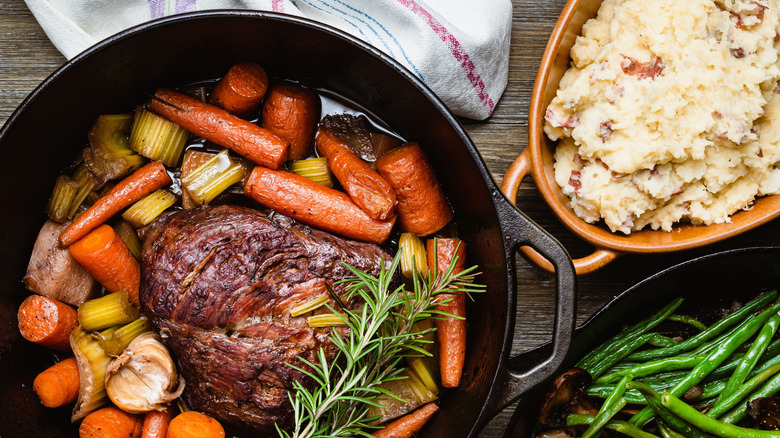
All the cuts Julia Child suggested can be tough, as they're extremely lean and naturally have almost no marbling. This is one of the reasons for their inexpensive prices. To get the best out of all of them, you need to cook your meat for a long time. Marinating also helps to impart moisture. As Child's recipe involves six to 12 hours sitting in a spice-laced marinade and a long, slow cook of up to four hours, using affordable meat that will be improved by the process just makes sense. In fact, Child noted in her recipe in "Mastering the Art of French Cooking" that if you use these cuts and traditional cooking methods, you won't have to worry about overdone meat.
Child also referred to a process called "larding" in her recipe. Although she described it as not being essential, she did imply it was normal at the time for butchers to insert pork fat into braising beef, which bastes the meat internally. This is no longer standard practice, perhaps because even for braising and stewing, we tend toward somewhat easier-to-work-with cuts of meat. And overall, our beef simply tends to be more marbled due to advances in farming techniques, changing tastes, and cooking styles.
How to make Julia Child's recipe work as a modern cook in a modern kitchen
Julia Child's labor-intensive pot roast doesn't make sense as a weekday dinner you whip up after work, but if you really want to impress, give it a go. It's written for 10 to 12 people, so even halved, it would make enough to meal prep and feed the average dinner party.
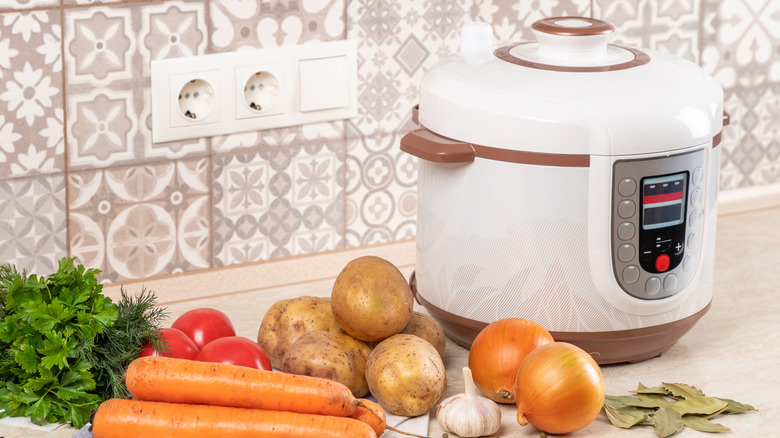
Much of the recipe time is hands-off, so you can drop your meat in the marinade in the morning, and do the rest of the cooking when you get home in the evening. Likewise, you could leave your Boeuf a La Mode in the slow cooker while you do other things if you make a few adjustments to the recipe. Another legendary home cook, and the queen of stress-free dinner parties, Martha Stewart claims that one hour at 350 Fahrenheit in the oven is equal to six hours on low in a slow cooker. You'll need to reduce the levels of liquid for best results.
Child did mention that her recipe works well if cooked ahead, too, so you could use it to make a week of pot roast lunches or dinners on meal prep day. If you think you can best The French Chef, or you don't like any of the traditional pot roast ingredients, you can also make your own swaps. Julia Child wouldn't mind at all; she was all about being realistic about real-life cooking and aimed to get as many people into the kitchen as possible.