

The Lesser-Known Steakhouse Method Often Used For That Crispy, Caramelized Crust
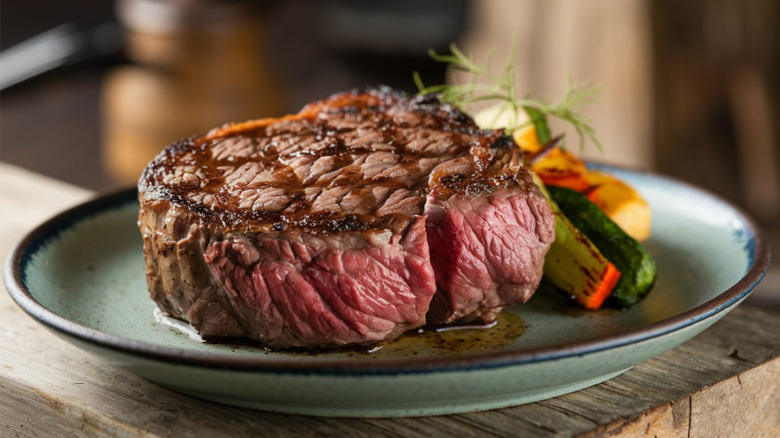
One of the best parts of a restaurant-quality steak is the crisp, delicious crust that locks in so much flavor. But if you've ever tried to recreate this at home, your efforts may have fallen short regardless of what techniques or pans you used. The reason for that might be an unusual piece of equipment typically only found in professional kitchens.
It's common for restaurants to use traditional broilers for steaks, where the meat is cooked by superheating the surrounding air. However, some steakhouses like Ruth's Chris, The Palm, and Morton's use infrared broilers instead. These also provide intense heat, but the method of heating the food is slightly different.
Unlike typical units' reliance on warming the air in the oven, infrared broilers radiate much higher heat with enough intensity to be directly absorbed by the food. Models vary, but some of the hottest professional models can reach temperatures of 1,800º Fahrenheit – over three times as hot as a typical home broiler. Scorching temperatures like these do a remarkable job of sealing in flavor and can cut cooking times in half.
How to make a crusty steak at home
Infrared broilers are an uncommon home appliance due to price — they start at hundreds of dollars, but restaurant-grade models cost thousands — as well as fire safety. Due to their ultra-high temperatures, consumer-grade models are often recommended for outdoor use, and commercial-grade units are unsafe without professional fire safety systems. But there are other ways to develop a great steak crust at home.
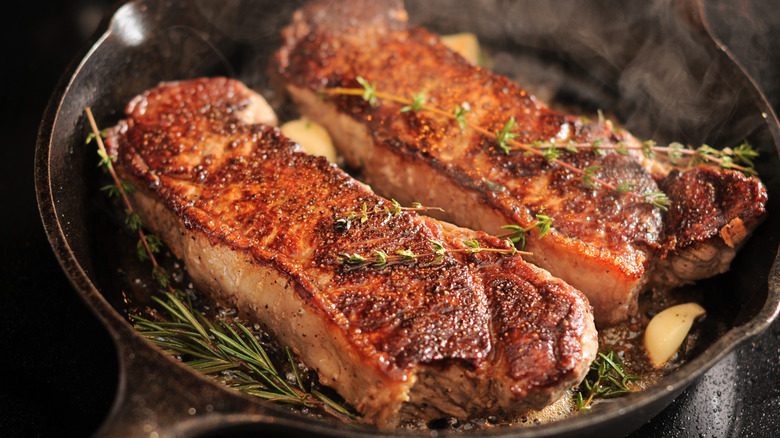
No matter the method, high temperatures are essential to crust development. One of the tips for cooking steakhouse-style steaks at home is to sear them in a cast-iron pan. Cast iron's durability means it can withstand the high temperatures needed, and its excellent heat retention means that the pan will stay appropriately hot through the cooking process.
One option is to try the cold searing method of cooking steaks. Unlike traditional methods of putting the meat in a hot, oily pan, cold searing calls for it to go in an unheated pan. Turn the burner to high, and flip your preferred cut every two minutes. After the first two flips, reduce the heat to medium and continue flipping until properly cooked. Frequent flipping prevents the heat from penetrating too deeply into the meat, while doing just enough to gradually develop a crust. With enough practice and tricks like letting it rest before cooking, you too can master steakhouse secrets only the experts know.