

The Affordable Way To Build Raised Beds For Your Vegetable Garden

We may receive a commission on purchases made from links.
Growing your own vegetable garden is easy when you have plenty of green space in your yard, but you have to get a bit more creative when all you have is an apartment with a small patio or balcony. Whatever your outdoor setup, raised beds can help diversify your space. Using these beds to grow vegetables is among the best gardening tips from Martha Stewart because they help her stay organized. However, while buying just one ready-to-use bed can cost $100 or more, you can save money by repurposing large containers.
Some types of large, cost-friendly containers to consider include food-safe plastic bins and buckets. If you don't already have some, you can get six Rubbermaid storage totes on Amazon for about $100. For an even cheaper option, try using 5-gallon buckets — you can get six from ePackageSupply on Amazon for around $30. In fact, anything that's food-safe and at least 8 inches deep can be used to make a raised garden bed. All you need to do before adding your soil is drill holes in the bottom of your chosen container for proper drainage. If water sits at the bottom, it can become stagnant and anaerobic (depleted of oxygen), which will hinder root growth.
Set the containers on your patio or on the ground so you can access your vegetables easily. If you want to go the extra mile with your affordable raised beds, though, you can also build tiers out of two-by-fours to hold your planted containers.
Benefits of growing vegetables in raised container beds
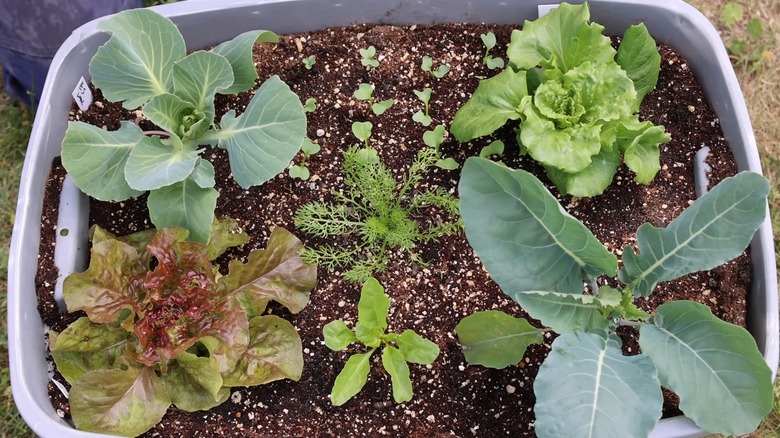
Whether you're regrowing foods from kitchen scraps (like celery, garlic, and onions) or planting traditional seeds, growing them in raised beds made out of containers has several benefits. For instance, you can put these beds anywhere and manage the soil easier so your vegetables always get the right amount of moisture and nutrients. If you lift your raised beds off the ground, some pests and weeds won't be able to reach them. Any weeds that do infiltrate your garden are easy to remove after sprouting because its soil will be softer than the ground.
One of the biggest benefits of having raised garden beds, however, is that you can grow almost anything. Want to plant hardy vegetables in your garden during winter? Several great options include cabbage, cauliflower, kale, and mustard greens. Plus, the deeper your container is, the more room deep-rooted plants like carrots will have to flourish. But you don't have to limit these raised garden beds to vegetables. They're also a great fit for fruits like tomatoes and strawberries, as well as small fruit trees like fig trees. Additionally, they work wonders for confining invasive herbs like lemon balm and mint to their own space.