

Why You Should Never Order Red Lobster's Fish Sandwich
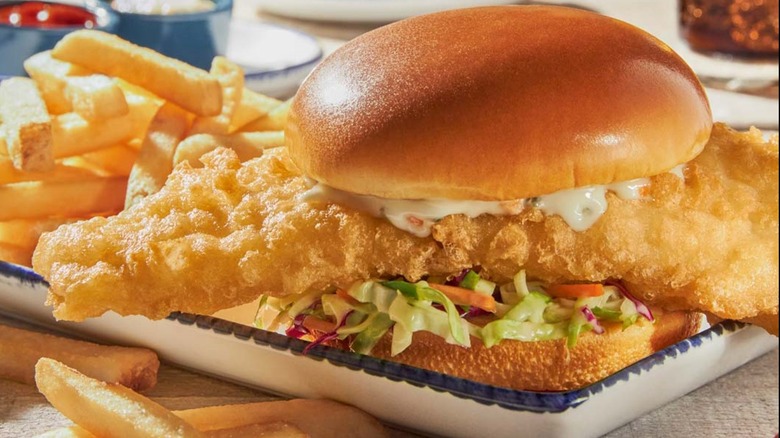
Red Lobster's Crunch-Fried Flounder Sandwich sounds tasty. It's battered and fried flounder on a brioche bun, with tartar sauce and coleslaw. People seem to like it, praising its crispiness and the freshness of the flounder. So what could be wrong? Unfortunately, in our deep dive into chain restaurant fish sandwiches, we rated it a "shouldn't" for one main reason: its sodium content.
The American Heart Association recommends keeping your sodium intake to under 2,300 milligrams per day but suggests you ideally keep it under 1,500 milligrams. A teaspoon of salt will supply you with around 2,000 milligrams of sodium. This fish sandwich with the hush puppies and fries has 4,150 milligrams. That's almost two days' worth of the maximum recommended level. With nearly half of all Americans suffering from hypertension, which leads to increased risks of heart disease and strokes, is it smart to offer a dish with that much sodium? The sandwich also includes 17 grams of saturated fat, which certainly means it should be added to our list of dishes at Red Lobster you should avoid.
How to avoid all this sodium
If the Crunch-Fried Flounder Sandwich is not an ideal meal, what should you get next time you're at Red Lobster? Honestly, very little on the seafood chain's menu is wise to order if you're watching your blood pressure. The Grilled Atlantic Salmon has 680 milligrams of sodium, still almost a third of the maximum daily recommendation. A Simply Steamed Crab meal is only 290 milligrams. And the fish sandwich isn't even the worst offender! The Seaside Shrimp Trio comes in at a whopping 5,500 milligrams of sodium! So, why are they using so much?
Salt is a powerful flavor enhancer. It reduces bitterness and bumps up sweetness, sourness, and umami notes. It goes well with everything. Today's diners demand a lot of flavor, and the easiest, quickest, and cheapest way to achieve that is to add more salt. We even recommend you put it in your salad!
You can get used to salt. The more you have in your diet already, the more you need to make your food taste better. And restaurants know this. They are in a constant flavor race with each other. If any one of them tries to tone down their sodium usage, they know the customer will just go somewhere else. Requesting less salt can be tricky, as many foods are salted well before you come in to eat. If you really need to consume less sodium, the best way is to eat at home.