

10 Pantry Staples To Stock Up On For The Holidays
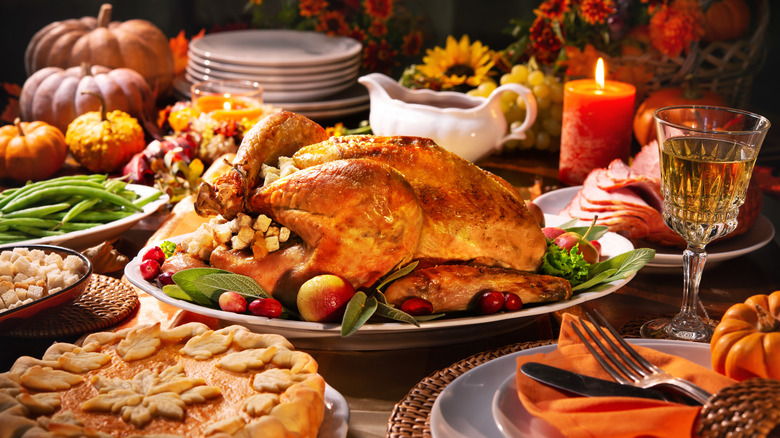
When the holiday season rolls around, it's time to get prepared — and your yearly grocery list is likely one of the first things you're dusting off. The fridge needs to be stocked with turkey and all the trimmings, and your freezer requires filling with all of those delicious frozen snacks that are going to be rolled out when your guests arrive. Hey, we won't tell them they're premade — your secret's safe with us. What about your pantry, though? This is a space that often gets overlooked when it comes to the holidays, for the sheer fact that pantry items are long-lasting and often bought in larger quantities. As a result, it's all too easy to go, "I'll definitely have enough flour and sugar!" and then head off to the store without a care in the world.
Well, that way lies disaster, folks. We go through pantry items way quicker than we think around the holiday season, and staples like flour can be used in countless different ways, often when you least expect it. The last thing you want is to get to the big day and find that you don't have enough herbs to flavor those iconic holiday dishes or breadcrumbs to top your casseroles. Luckily, that's where we come in. We've put together the ultimate guide to the pantry staples you need to stock up on — including some you might not have thought of — and all of the reasons why you'll need them.
Flour
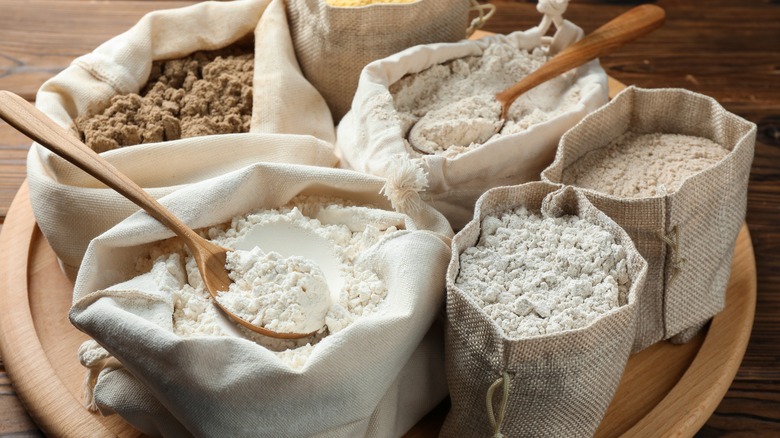
Flour is such a pantry standard that it's easy to completely forget about it. If you're not someone who bakes year-round, it's the kind of thing that you reach for only when you need it and restock when you're completely out. However, around the holidays, that will lead to a complete disaster. The truth is that you'll need flour for a lot more than you think during the holidays. It serves as the primary ingredient not only for cakes and cookies, but also for pie crusts, breads, biscuits, and scones, all of which you may only make once a year. It can be used as a glue to fix pastry together, as a coating for fried food, as a way to keep ingredients from sticking to your kitchen counter, and as a thickener for gravy, sauces, soups, and stews. Its uses are endless.
So, before the holiday season, make sure you stock up on flour — and not just one type. Buy a big bag of all-purpose flour (King Arthur's flour is widely considered the best by bakers) and self-rising flour. You should also ensure that you have alternative flours like cornstarch or rice flour on hand, as these can crop up in surprising ways in holiday recipes. Plus, consider grabbing yourself a bag of gluten-free flour in case you have any last-minute guests with wheat intolerances.
Molasses
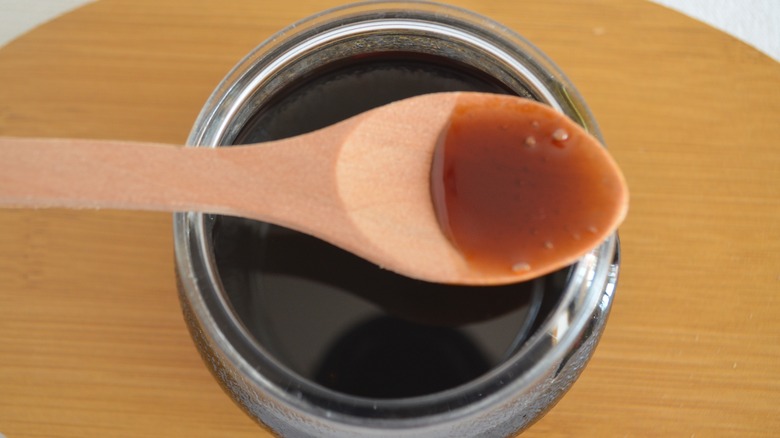
Sugar is naturally a must-have ingredient during the holidays, but what about molasses? This sweetener is one of the quintessential flavors of Thanksgiving and Christmas, and yet it's the kind of thing that you totally forget about during the year. Then, you reach for it to make some Christmas cookies and find that you're fresh out — or that your current stock has gone bad due to excessive heat and humidity.
Remember that molasses is used for a lot more than just cookies. It can give depth where sugar can't and is a key ingredient in pies and desserts. It's also a delicious addition to a festive hot chocolate or pumpkin spice latte, and it's often used in glazes for baked hams. So, make sure you're buying yourself a fresh jar before the season starts and everything sells out. In general, light molasses will suit most purposes, but if you want options, pick up a jar of dark molasses as well. Blackstrap molasses can provide a serious intensity to dishes, but for a lot of people, it may be way too bitter.
Canned pumpkin
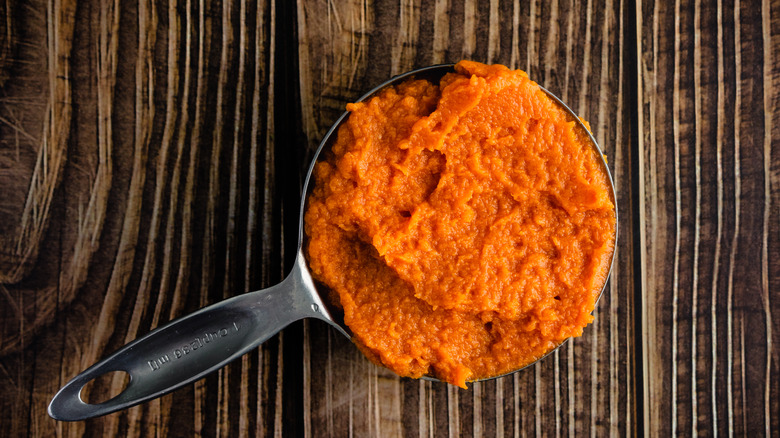
Believe it or not, canned pumpkin purée can be used in way more than just pumpkin pie — it's a handy ingredient to have around. Sure, it's obviously going to be the main ingredient in your Thanksgiving dessert, but it's also a key addition to a pumpkin spice latte. (Who has the cash to buy them in Starbucks anymore, right?) Canned pumpkin can also be incorporated into a wide range of dishes around the main holiday meals that have that festive flavor. You can use it to make pumpkin pasta, pumpkin scones, pumpkin mac and cheese, pumpkin soup, or even pumpkin hummus for a holiday buffet.
It's also worth remembering that, unless you really need the space, you really won't mind stocking up on canned pumpkin ahead of time. This item lasts between two and five years in your pantry, so even if you don't use it this year, you'll use it in 12 months' time. Get to the store a couple of weeks before the holiday rush truly starts, and grab as many cans as you can fit in your cupboard.
Herbs and spices
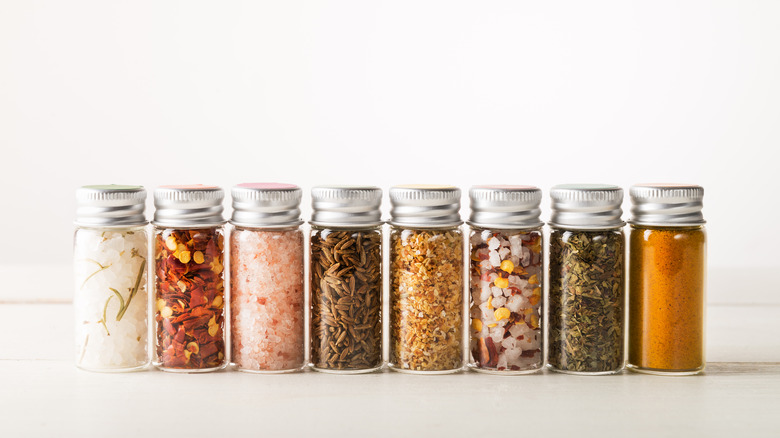
Okay, this is a big one. Herbs and spices are the kinds of things that you only realize you need more of when it's too late. They can sit in your pantry for years at a time, slowly depleting in stock, until the moment you truly need them — and then they're gone. This is especially likely to happen with herbs and spices that are generally only used seasonally, like sage, nutmeg, mace, and allspice. Even if you do have a little bit of those key aromatics left, it's also important to remember that herbs and spices have a shelf life. After a couple of years, they lose their potency and will have way less impact in your dishes.
It's therefore important to do a full inventory of herbs and spices once the holidays roll around. First, check whether your spices have expired, and if any need immediate replacement. Then, check how much you have of each. Prioritize herbs and spices like nutmeg, sage, rosemary, vanilla extract, cloves, star anise, cinnamon, and mint; these are the types that you're probably most likely to be low on without realizing it. It's naturally pretty expensive to replace all your herbs and spices, though, so if you're conscious of cost, check through the recipes you'll be making and what you'll need for them.
Powdered sugar
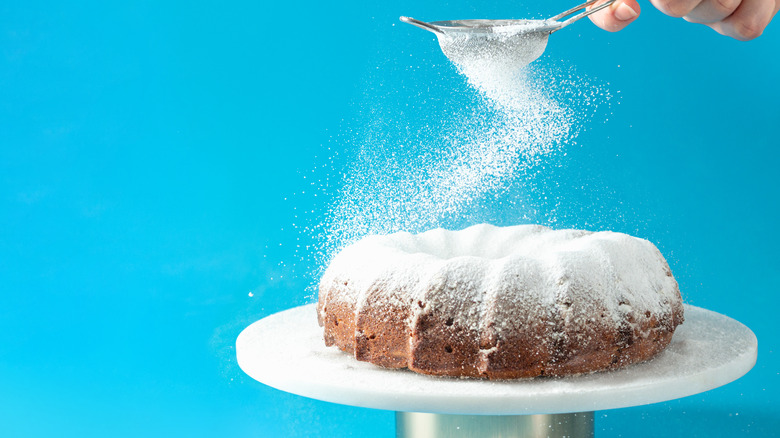
White granulated sugar isn't the only type you need during the holidays. You'll also likely need a steady supply of powdered sugar, particularly if you're planning on doing a lot of hosting. Powdered sugar (also known as confectioner's sugar) is a primary ingredient in icing and frosting and therefore is a standby when you're baking all of those delicious holiday treats. However, it's also surprising how often you have to call on it to dust cakes, cookies, or gingerbread houses — and whether you've made them or purchased them at the store, it's important to give them that little extra touch.
The good news is that you probably won't need a lot of powdered sugar to get you through the holidays. Most people, unless they're doing some industrial-level baking, will likely be able to get by on one or two medium-sized bags. Powdered sugar doesn't really expire, so if you stock up this year, you can probably use your supply in 12 months. But bear in mind that it can change in texture. After a few years, it'll begin to clump and lose its powdery quality, and it'll be harder to get that nice snowy effect.
Oils and fats
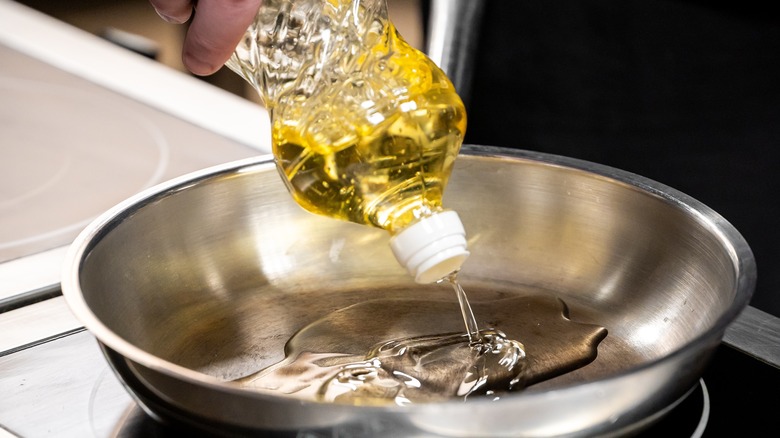
Oils and fats are going to be the backbone of every single dish you make during the holidays, and the last thing you want is to be skimping on the good stuff during the most important meals of the year. So, make sure you're doing a big restock of both of them before everything kicks off. Ensure that you have a good selection of the standard oils you'd use for everyday cooking, and consider what you'll be using them for. Grab a normal oil for your main dishes, an extra-virgin olive oil for any festive salads, and plenty of butter (for, y'know, pretty much everything).
Don't forget, too, that because you're likely cooking dishes during the holidays that you wouldn't make any other time of the year, you may need specific oils and fats to do this. If you're trying out a new deep-fried starter, go for vegetable, sunflower, or peanut oil. These oils all have high smoke points and won't stink up your kitchen. For the best roast potatoes, you may want to grab some goose fat or coconut oil. Plus, think about purchasing a good-quality margarine or butter alternative that'll be useful for day-to-day eating, so that your family doesn't dig into all of that expensive butter you bought for Christmas Day.
Breadcrumbs
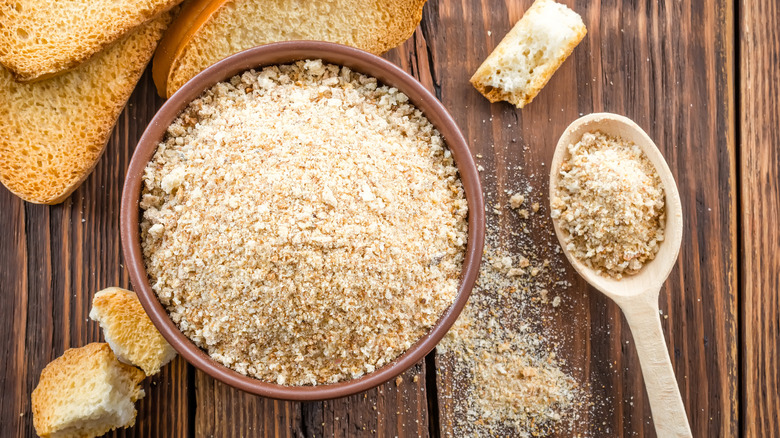
Spare a thought for breadcrumbs: A lot of people don't. Breadcrumbs are called for more often than you might think during the holidays, and they're one of those ingredients that most of us just don't have on hand when we need them. Over Thanksgiving and Christmas, you'll find tons of recipes that call for breadcrumbs as a topping or as a thickener for a sauce. Plus, it's a vital ingredient if you're making your own stuffing. It's also an ingredient that can be made way more exciting by adding some herbs, spices, garlic, cheese, or bacon bits.
So, grab yourself a couple of bags of breadcrumbs before you forget. We'd recommend getting one container of regular breadcrumbs and one of Panko breadcrumbs. The latter can be used for your fancier toppings and fried foods thanks to its ultra-crispy nature, while the former is helpful as an everyday thickener. Make sure you keep your breadcrumbs in an airtight container well away from any moisture sources (so avoid putting them in that cupboard above your kettle). If you're not careful, they'll turn soggy and become kind of useless.
Dried fruit
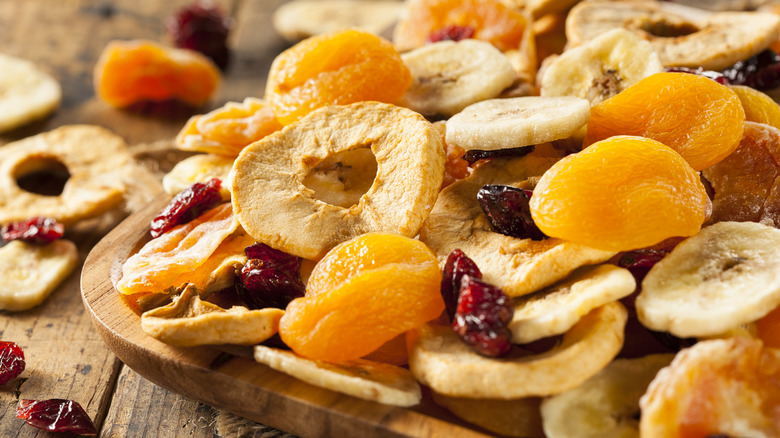
Dried fruit is one of those things you might only buy during the holidays, but this year, don't forget to stock up. Even if your recipes don't explicitly call for dried fruit, you can find a lot more uses for it than you might think. It can make desserts and baked goods more festive, it can be a quick snack, it can be thrown onto bowls of oatmeal and into salads, and it can be a tasty part of a holiday appetizer. You can also use dried fruit on a holiday-themed charcuterie board or warm it up and serve with ice cream.
Don't stop at raisins and dried cranberries, either. Treat yourself and go for some dried fruits you might not have ordinarily bought. Dried figs and dates are a delicious choice for a burst of sweetness, and their robust flavor holds its own in meat-based appetizers or in desserts. Prunes are a lovely addition to cakes, while dried apricots can be incorporated into a festive tart. Don't forget, too, that if you think a little further ahead, you can dry your own fruit without a dehydrator. It's a great way to save on food waste while stocking up your pantry.
Cocoa powder
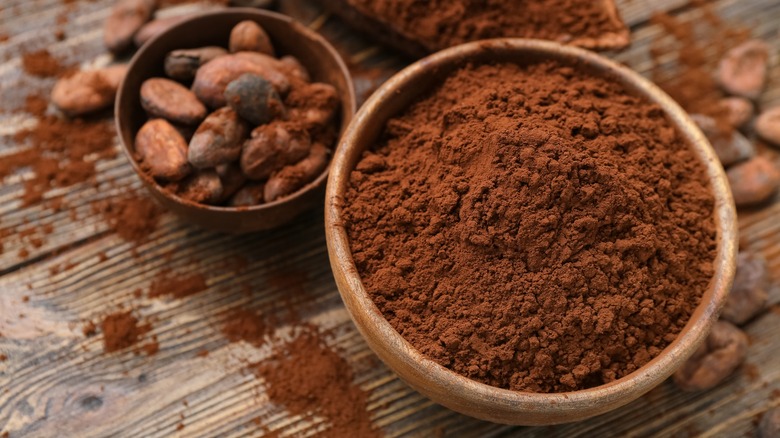
Would it be Christmas without cocoa powder? We don't think so. Cocoa is one of the key flavors of the holidays, and cocoa powder ends up in a wide range of dishes. Naturally, the vast majority of them are desserts, which are likely to be in constant supply during the Thanksgiving and Christmas period, but it can also be a useful addition to holiday stews to give them more depth. You're also going to need it for all of that Christmas cocoa you'll want to make and as a topping for cakes and cookies. Additionally, it can be used to rustle up edible gifts for your friends. Brownie in a mug, anyone?
When buying cocoa powder, be very careful that you're not buying cocoa mix instead. This composite product may be great for making hot cocoa, but its additional ingredients limit your ability to use it anywhere else. Most home cooks will get by just fine with natural cocoa powder. Consider splurging on a more expensive brand if you can afford on it. This is the kind of ingredient where you really notice if it's of lower quality.
Nuts
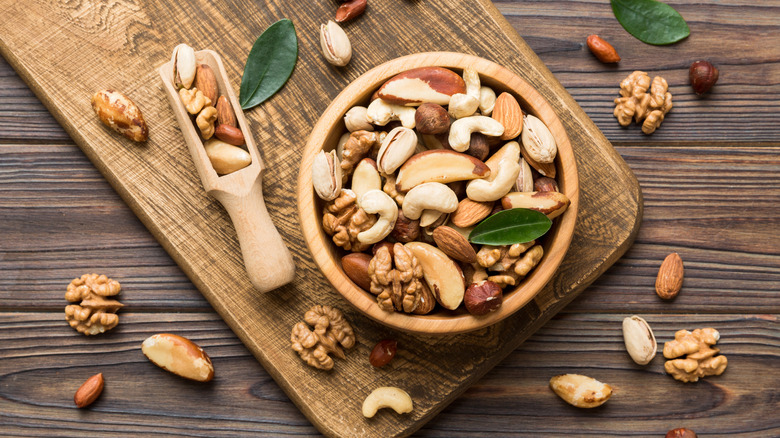
Don't forget about nuts this holiday season, guys — you'll probably need them a lot more than you think you will. Nuts have been a staple during the holidays for hundreds of years, and as a result, they have a central place in a lot of festive dishes, both sweet and savory. Your recipe might suddenly call for flaked or slivered almonds or crushed walnuts, and you don't want to be caught short. Plus, it's frequently used as a topping, and it's a quintessential festive snack, particularly at parties.
Unlike a lot of other pantry items, nuts may not carry over from the last holiday period. They can go rancid in just a month or two, so if you haven't used walnuts since last Christmas, the pack you bought then won't be good to eat. Check the best-by date and whether the nuts have a strange, sour smell or an overly soft texture: If they do, you need to buy more. As for which nuts to buy, it's good to get a selection, but we'd start with walnuts, pecans, hazelnuts, almonds, and peanuts, all of which are likely to be used most during the holidays.