

The Filipino Way To Make Beef Stew 10x Better
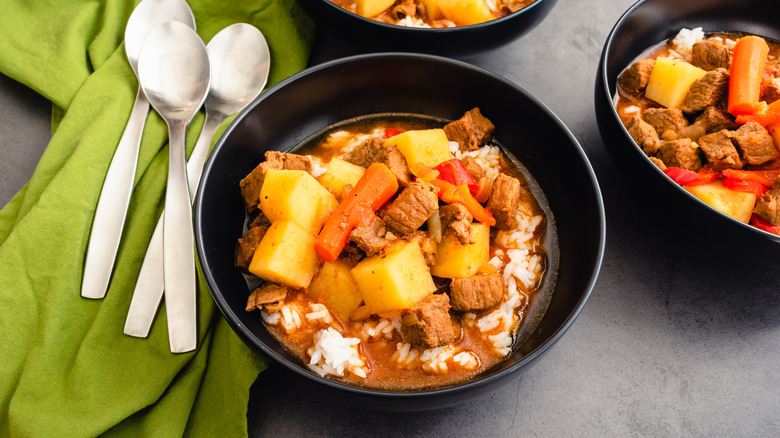
If your homemade beef stew isn't quite on point when it comes to savory flavor, consider elevating it in the Filipino way by adding a dash of soy sauce and some red bell peppers to the simmering pot. While soy sauce is a key seasoning in Chinese cuisine, it's also a mainstay in mechado, a Filipino beef stew made with a tomato base, fermented cane vinegar, and vegetables. Often employed to balance the tanginess of ingredients like vinegar or citrus juice and the warming heat of peppercorns, the meaty quality of soy sauce lends these meals a salty depth and complexity.
The savory personality of soy sauce comes from glutamate. This amino acid, also present in Parmesan, tomatoes, and mushrooms, is the main source of the condiment's rich umami-ness, which also has a slight sweetness to it that sets it apart from other sauces. Adding a splash of this fermented seasoning to Filipino beef stew suffuses the dish with a roundedness and malty aroma that can't be replicated with salt alone. Soy sauce also underscores the flavors of the other key ingredients, creating a yummy gravy that coats the meat. The addition of red bell peppers lends mechado a subtle, vegetal sweetness that marries well with the chunks of earthy potato simmered in the liquid, providing both aesthetic vibrancy and texture. As the peppers are cooked down in the stew, they don't retain their crispness. Instead, they become almost swollen with flavor.
How to make an umami-rich Filipino mechado

To make mechado, sear the meat until it develops some color before removing it from the pot. In the natural fat released by the beef, sauté aromatics, such as sliced onions and chopped garlic. Pour in the liquid ingredients, such as water, tomato paste, and of course the savory soy sauce, along with sugar and seasonings before returning the meat to the pan and clamping it shut with a lid. Once the meat is cooked through, toss in vegetables, including potatoes and bell peppers, and simmer until tender.
Some mechado recipes feature fish sauce as well, to boost that savory flavor even further. However, this isn't mandatory, as soy alone is often enough to bump up the tomatoey beef stew's umami character. Just bear in mind that soy sauce is naturally salty, so you may need to adjust the amount your regular recipe calls for (you can purchase low-sodium soy sauce or sub the soy for tamari if you're after a gluten-free alternative). Another unexpected ingredient that gives beef stew a punch of flavor is fruit chutney. A dollop of this sweet and tangy condiment gives meaty dishes some spiced mellow heat and an inviting aroma, which amplifies the savoriness of the beef. Much like using soy, the chutney complements the existing flavors to create a balanced profile that completes, or rounds off, each bite.