

If Your Parents Fed You This Soup, You Probably Grew Up In The South

Brunswick stew is the kind of dish that fogs up kitchen windows on cold days — thick, tomato-based, and loaded with vegetables, smoke, and memory. It's commonly mistaken for beef stew, but the difference is simple: Beef stew sticks to one meat, while Brunswick welcomes whatever's on hand. Chicken, pork, even rabbit or squirrel all find their way into the pot, slow-simmered until everything breaks down into a rich, smoky tangle of flavor.
Ask where it came from, and you'll start a fight that's lasted more than a century. In Brunswick County, Virginia, the story begins in 1828, when state legislator Dr. Creed Haskins supposedly called on a camp cook named Jimmy Matthews to whip up something hearty for a political rally. Matthews tossed squirrel, onions, and stale bread into a pot, and by the time the speeches ended, the crowd had found its new obsession. Seven decades later, Brunswick, Georgia, claimed the stew as its own — unveiling a 25-gallon iron pot engraved with "1898" like it was culinary scripture.
The truth may never be settled, but the rivalry itself helped define Brunswick stew as a regional dish you might not know about — one born from resourcefulness, community, and a little friendly competition.
A Southern soup, served two ways
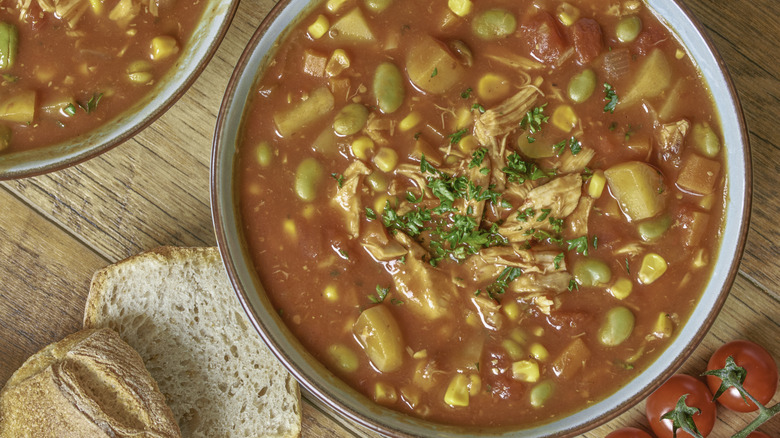
The Brunswick stew that simmers in Southern kitchens today looks a little different from the one Jimmy Matthews first stirred nearly two centuries ago. The squirrel and groundhog that once defined the dish have long been replaced by chicken and pork. The philosophy hasn't changed: Use what you have, stretch it as far as you can, and never take shortcuts. In much of the South, using canned vegetables is considered near sacrilege — a point of pride for cooks who see every fresh kernel of corn or diced tomato as a nod to their roots.
The long-standing rivalry between Virginia and Georgia now plays out in flavor. Virginians tend to keep their stew thick and mild, packed with chicken and vegetables until it's closer to mashed potatoes than soup. Georgians, meanwhile, lean into their barbecue culture, adding pulled pork and a bit of heat to give it a tangier edge. Both versions are tomato-heavy, smoky, and unapologetically Southern — the kind of food that blurs the line between stew and tradition.
Over time, it's become one of those classic Southern comfort foods that always seems to show up where people gather. A dish that shows a good story and a hot meal is always appreciated.