

10 Mistakes You're Probably Making With Your Rice Cooker
We may receive a commission on purchases made from links.
If you don't have a rice cooker, you're missing out. This ingenious appliance has made cooking rice at home a doddle for decades, with even the least competent home cook being able to rustle up a bowl of perfect grains instead of producing a bowl of starchy gloop. Rice cookers work by monitoring the temperature of the rice while it cooks, which rises as more water is absorbed. When it reaches the specific temperature required, the rice cooker knows that it's almost ready to eat, and it'll switch off automatically.
This process produces foolproof rice for millions of people across the world every day, but it doesn't mean that you can just throw your rice in, turn it on, and hope for the best. Contrary to popular belief, there are a lot of things that can go wrong when you're using a rice cooker, and the majority of them stem from user error. Mistakes like failing to rinse your rice, using the wrong water-to-rice ratio for the specific grain you're using, and overfilling your appliance can ruin your meal before you even switch your rice cooker on. Plus, there are some things a lot of people do once their rice is cooking that will destroy the end result. Let's end these mistakes, once and for all.
1. Overfilling your rice cooker
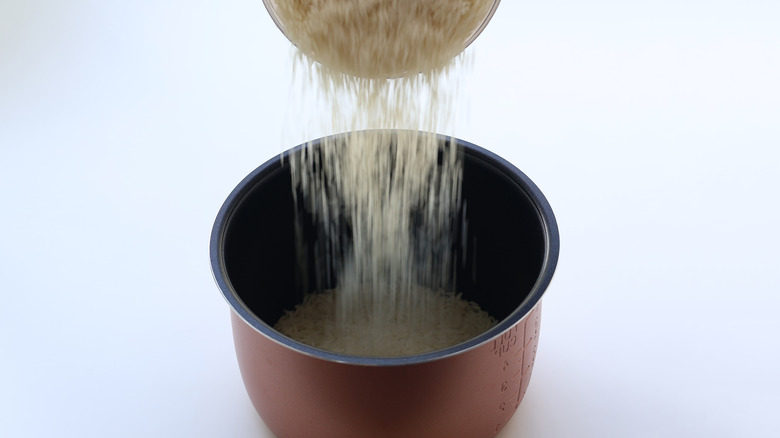
It's always pretty surprising how much rice can puff up as it cooks. You add a little bit of rice and a cup or two of water, and then somehow you have way more than the sum of your parts. Remembering this is key to using a rice cooker successfully, as adding too much rice and water can cause it to overflow as it cooks. It can also result in the water in your rice cooker bubbling up and through the lid, making a mess in your kitchen and leaving you having to clean starchy water off all of your surfaces.
To help avoid this, keep the capacity of your rice cooker in mind and don't bite off more than you can chew — if you need to cook your rice in batches, it's always better to do that. It's also important to follow the measures on the side. Most rice cookers come with built-in measuring marks in the pot that tell you where you should fill your water to, relative to the number of portions you want and the quantity of rice used. These markings aren't just to stop things from overspilling: They'll also make sure that your rice cooks perfectly. It should be said, however, that these measures are for standard white rice, and other types may require slightly more tailored amounts of water.
2. Forgetting to rinse your rice
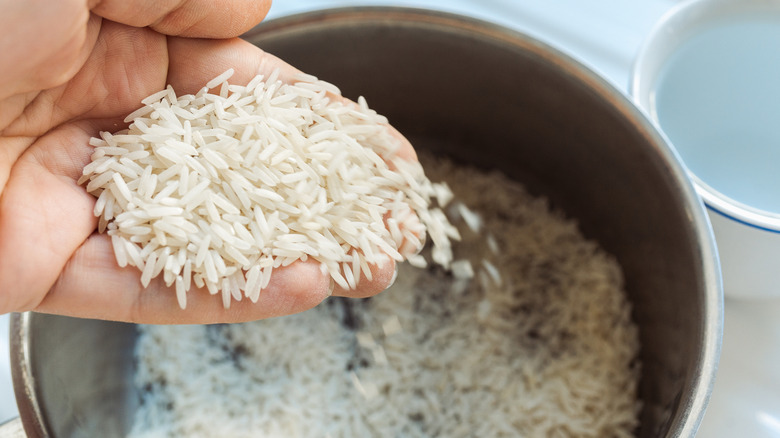
Rinsing your rice can feel like it's more trouble than it's worth, but there's a reason why it's a step that nearly all chefs take before using a rice cooker — and home chefs should do so too. Rinsing rice before cooking improves it in several ways and ensures that it cooks correctly. When uncooked, rice has a thin coating of starch on the outside of each grain, and if you don't rinse it before cooking, that starch will end up in the water. This gives your finished rice a gluey, gummy consistency and stops each grain from being plump and distinct. Additionally, in a rice cooker, the excess starch can cause the rice to scorch on the bottom, and it can also contribute to the water bubbling up and over the sides.
Rinsing rice will also help to slightly rehydrate each grain, which makes it fluffier. It will also get rid of any dust or debris that's left on the rice after the milling process, improving the quality of each eventual bowl. Remember, though, that you should rinse your rice really thoroughly to ensure that it's totally clean, and this can take longer than you think. Either rinse it in a mesh strainer until the water runs clear, or rinse it in a bowl, changing the water several times until there's no more cloudiness. It's not just white rice that needs rinsing, either: Unless you're following a specific recipe, every type of rice should be rinsed.
3. Using the wrong water-to-rice ratio
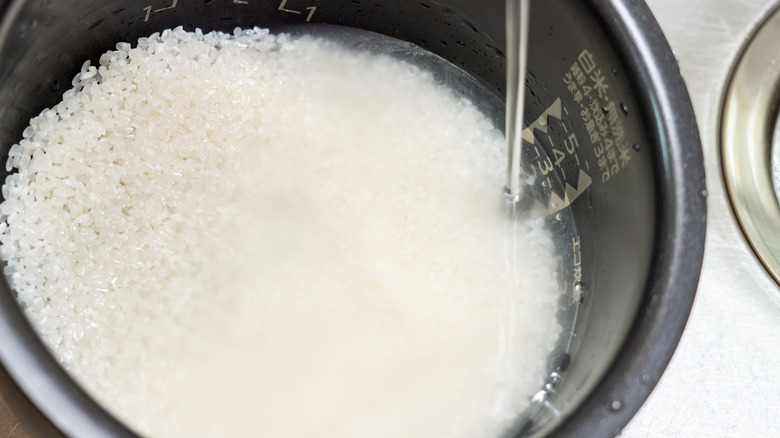
Rice cookers promise an easy life when it comes to cooking rice and perfectly cooked grains at the press of a button. However, that's only if you get your ratios right. To avoid having to strain your rice and make sure it's fluffy and well-steamed, you need to ensure that you're adding the right amount of water for your dried grains — but every type of rice needs a different ratio to get it just right. Rice cookers usually come with measures on the side that tell you how much water to add for each cup of rice, but that usually only applies to long-grain white rice. For anything else, you can end up with a real mess.
As such, it's good to get wise to your ratios, whether your rice cooker has markers or not. For long-grain white rice, aim for a 2:1 ratio of water to rice. For medium-grain rice, go for 1.5:1, and for short-grain rice, you should opt for 1.25:1. Brown long-grain rice requires a 2.25:1 ratio, while jasmine and basmati will both need a 1.5:1 ratio. You can use slightly less water than this if you like a chewier consistency, but we'd recommend not going lower than a quarter-cup more water than rice for each. It's very helpful to invest in a good set of cup measures, to ensure everything is as accurate as possible.
4. Completely trusting your timer
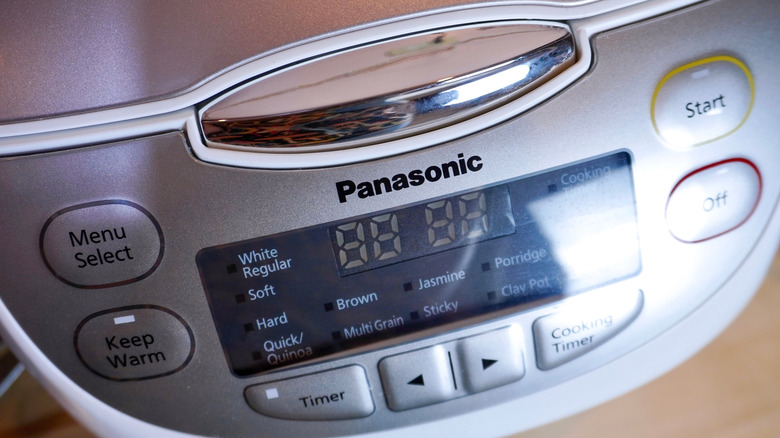
The timer on a rice cooker can be super useful. The earliest models (and some more basic ones today) didn't have timers and would simply snap off when the rice was done. However, some of the best modern rice cookers frequently have a timer that either gives you a full countdown of the cooking time, or the last 10 minutes of it. Given the high degree of accuracy that these appliances have, it's not unreasonable to assume that this would be correct each time. Well, it may not be.
While rice cooker timers are generally pretty good, they can get things wrong and leave you with a bowl of grains that are undercooked or overcooked. This is more likely to happen if you're cooking non-standard rice grains, but it can also happen with everyday white rice. Rice cookers with a timer for the last 10 minutes tend to be more accurate, but those with a full timer can be slightly hit-or-miss.
To best avoid anything going wrong, it's always a good idea to stick to ratios and to test the rice before you serve it up. If the rice cooker has slightly undershot things, you can still salvage it. If there's still liquid left in the cooker, you can usually just flick it back on and give it another quick blast of heat. If it's gone completely dry, simply add a touch more water and cook it for a few minutes more.
5. Opening the lid while it's cooking
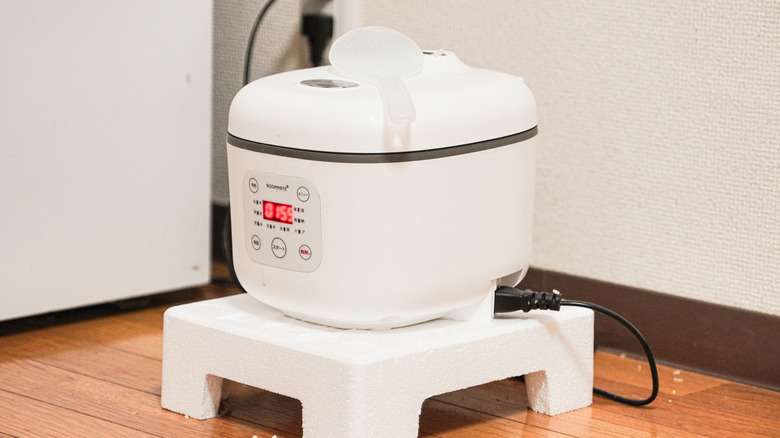
Look, we all enjoy peeking at our food while it's cooking, and the hands-on chefs among us like to double-check that everything's going to plan. When it comes to cooking rice, though — particularly with a rice cooker — you should keep your hands off. Rice cookers plump up your rice by turning the water in the pot into steam. Once a sufficient amount of steam has been produced, the rice cooker detects that everything's almost finished and switches itself off, with the rice finishing its process by steaming.
If, however, you open your rice cooker's lid before it's fully cooked, you let all of that steam out. Not only will you get a very hot blast of air to the face, but you'll also completely disrupt the buildup in your appliance. Your rice will cook unevenly, and you may end up having to add more water to finish things off, which can then overcook it. The way to stop any of this from happening? It's simple: Just leave your rice alone until it's ready.
6. Leaving your rice cooker on its keep warm function for too long
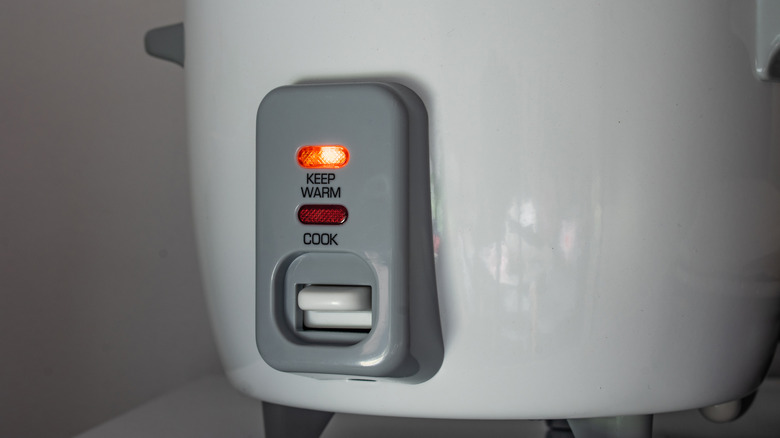
One of the best things about rice cookers is that once your rice is ready, it'll stay warm until you need it. Most rice cookers come with a "keep warm" function that, as the name suggests, keeps your rice nice and hot until you're ready to serve it. This means that you can cook the rice before the rest of the meal and simply leave it on the countertop until you're ready, instead of having to reheat it as you would if you cooked your rice on the stove.
However, some people take this to the extreme and use the keep warm function for way too long — and here's where things go wrong. If you keep your rice warm for extended periods, it will eventually dry out, leaving you with hard, crusty grains. It will also ruin its delicate flavor and eliminate the fragrance of rice like jasmine or basmati.
It's generally suggested that you keep your rice warm for a maximum of 12 hours, but it's always worth monitoring exactly how hot your keep warm function is. If it's especially toasty, you may want to aim for less time than this. If your rice does dry out, you can revive it with a splash of water, but bear in mind that doing this too many times will make it mushy.
7. Using quick-cook rice
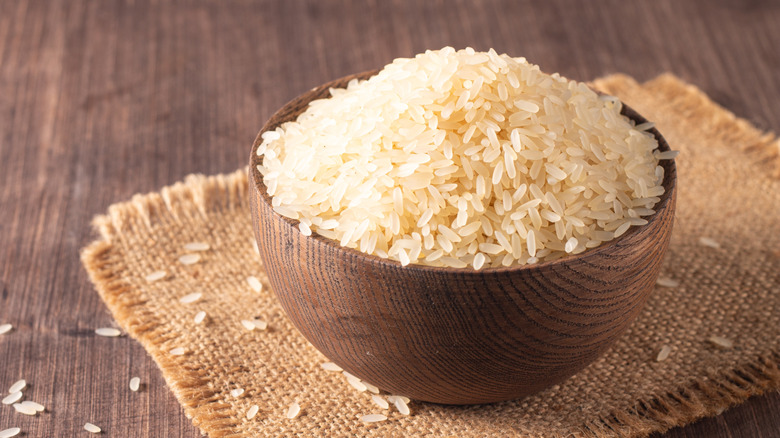
Using a rice cooker gives you perfect rice in no time, but for those especially busy people out there, opting for quick-cook instead of standard rice can feel like a smart shortcut. Rather than having to wait 15 to 20 minutes, you can just flick it on and have your rice ready in no time, right? Wrong.
Quick-cook rice (which is also variously known as easy-cook, parboiled, or converted rice) should not be used in a rice cooker, and instead should be cooked on the stove according to package instructions. Rice cookers are designed to cook rice from scratch, and using quick-cook rice in your appliance can, and likely will, result in it being overcooked. Although you just might be able to tweak your ratios for it to come out okay, it's really not worth the trouble. The same rule applies to fully cooked rice or microwaveable pouches, too. Don't bother cooking them in your rice cooker; instead, cook them according to the package instructions, to avoid any mishaps.
8. Only using your rice cooker for rice
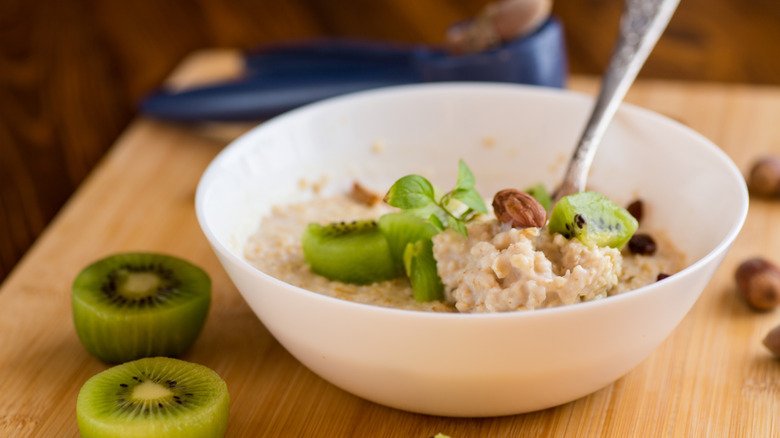
One of the main tragedies of having a rice cooker is when people feel as though they can only use it for its intended purpose. These are versatile appliances, and yet, so many people assume that it cooks rice and nothing else — which can then lead to a touch of resentment about how much space it takes up in your kitchen. It doesn't have to be that way, folks. Your rice cooker is a highly versatile machine that can cook way more things than you think, and using it can make your dinner a lot easier.
While rice is the primary grain that a rice cooker prepares, you can also use it to cook quinoa, barley, and oats. Smaller types of pasta, like orzo and ditalini, and legumes like lentils, can also be rustled up in no time. More broadly, you can use rice cookers to cook eggs, proof bread dough, or even make a quick and delicious cake, and they can even be used to create full-on meals with rice as a base, adding your toppings in and then letting the whole thing steam. Plus, remember that you can cook additional items alongside your rice by using the steaming tray that comes with your machine. Just place it over the top of your rice, and you can steam dumplings and vegetables to your heart's content.
9. Not letting your rice rest
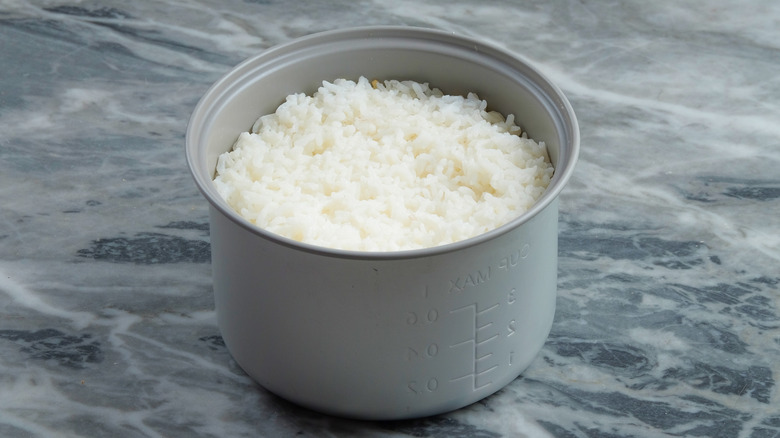
Resting rice is one of the most essential steps to its success, and yet so many people forget to do it. Weirdly, too, it's more likely to happen if you're using a rice cooker. It's easy to think that rice cookers build resting time into the cooking process, but a lot of them don't. As a result, when the timer goes off to tell you that your rice is done, it's very tempting to dive in immediately and end up with a bowl of unevenly cooked grains.
Resting rice after you cook it allows the moisture in the pot to redistribute. Much like resting meat, this ensures that every bite of food is as moist as the last, and simultaneously stops anything from being over-hydrated or soggy. Rice generally needs to rest for around five to 10 minutes, and that's the same when using a rice cooker. As such, once the timer goes off, leave it alone for a little while longer. Your taste buds will thank you once your meal's done.
10. Using a metal spatula to stir your rice
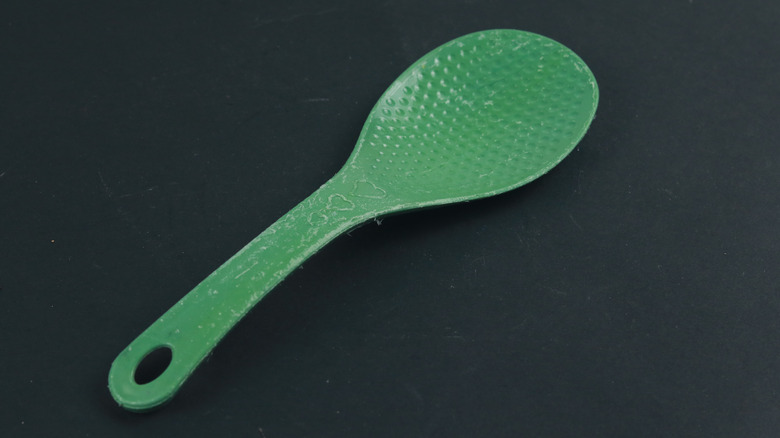
You know that paddle that came with your rice cooker? It can feel a bit pointless when you've already got a bunch of utensils in your kitchen, right? Well, believe it or not, you must use it instead of whatever metal spatula you have to hand. Those paddles are specially designed to fluff your rice properly without mushing it up, and they do so without scratching the inside of your pot. They're heatproof, too, and can withstand the scorching temperature of your just-cooked rice. If, however, you opt for a metal spatula, you will simultaneously crush your rice and scar the metal in your rice cooker, which can eventually reduce its lifespan.
We know it's tempting to throw that paddle away, but find a place for it — you'll be thankful you have it. If you've already thrown it out, though, never fear. You can grab a two-pack of new Plastic Rice Paddles on Amazon for under $10, and you'll have a spare in case you lose the other one.