

The Biggest Food Chain In America Is A Sandwich Shop (& It's Not Jimmy John's)
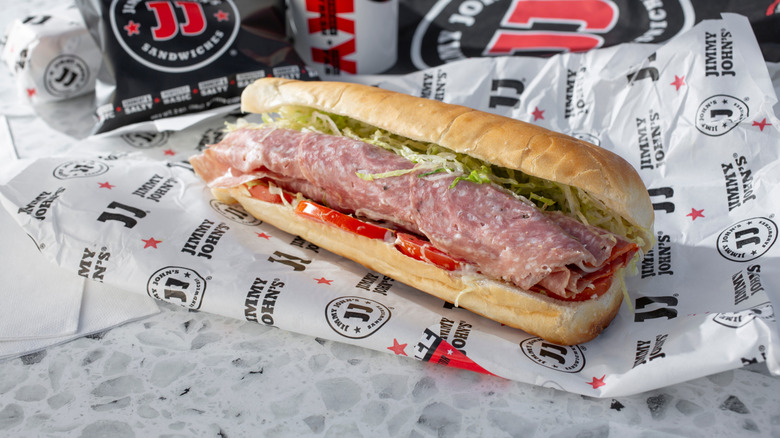
If you thought Jimmy John's was the largest food chain in the U.S., you are way off. The chain only has around 2,700 locations, a little less than a seventh of the total of the top American chain, Subway. Even though the once-beloved chain has lost its spot as America's favorite sandwich shop, it still reigns supreme with a whopping 20,378 shops all over the country as of 2025. Amazingly, this number has been dropping since 2014, when it had over 27,000 locations.
The current second-largest food chain is Starbucks, with over 17,000 locations, and the third is McDonald's, with over 13,000. Somehow, Subway crushes these competitors even with sandwich meat that we frankly found to be lacking.
All this from a shop started in Bridgeport, Connecticut, by a 17-year-old, Fred DeLuca. DeLuca borrowed $1,000 from a family friend, Dr. Peter Buck, and started his original sandwich shop, Pete's Super Submarines, as a way to make money to afford medical school.
How did Subway become the largest food chain in the U.S.?
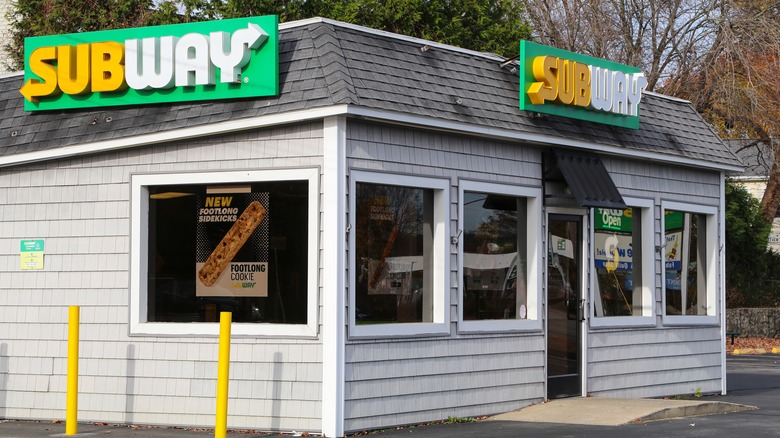
The two founders seemed eager to grow from the get-go. After changing the name of the original shop to Subway in 1968, it grew to 16 locations throughout Connecticut by 1974. In the next eight years, it expanded to 300 locations throughout the U.S.. DeLuca never ended up going to med school once he realized that was more his parents' dream than his, and that path didn't suit his personality.
It helps that Subway's franchising fees and startup costs are among the least expensive in the fast-food industry. Compared to McDonald's $45,000 franchise fee and as much as $2.2 million in startup costs, Subway's $15,000 fee and up to $263,000 in costs are much more affordable. Even though McDonald's tends to make more in revenue, the low barrier to entry makes Subway an easier shop to start.
Plus, Subway has an ethos of building shops anywhere. Shops opened up at rest areas, gas stations, and convenience stores, among other unconventional locations. The company kept floor plans flexible, and the space needed to make the sandwiches was minimal, so it could squeeze a shop into virtually any space. All this, combined with low prices and the ability to market itself as a healthy alternative to other fast foods, got the chain to where it is today.