

Here's The Reason Your Homemade Fudge Isn't Setting Properly

While the fact that some fudge recipes have as few as four ingredients might make you think it's easy to whip up, mastering the texture of the dessert is key to making it a great treat. Specifically, ensuring that your fudge cooks evenly throughout your pan is vital to making sure it sets properly. For this reason, it's widely recommended that you use a heavy saucepan to make fudge, as the heat in thicker pans spreads more equally, thus preventing uneven cooking and resulting in an overall better end result.
The reason why cooking fudge evenly is so essential is due to the fact that fudge is incredibly sensitive to heat, so there's a pretty narrow sweet spot that you need to nail. Because undercooked fudge doesn't set and overcooked fudge tastes bitter due to the sugar burning up over time, it's imperative that all your fudge is able to cook at the same pace to make sure no parts of it fall outside of that sweet spot.
Other mistakes to avoid when making homemade fudge
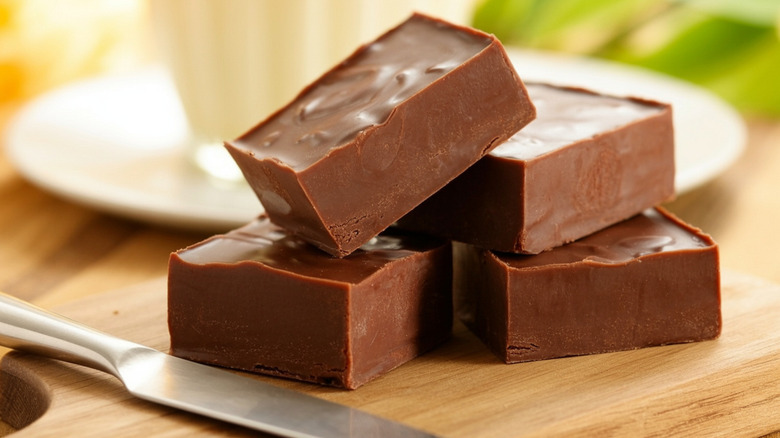
So, even in the event that you are streamlining your fudge's ingredients list — such as by using pudding mix to make things easier — you still need to be cognizant of the pan you use; ideally, using a thick stainless steel or cast iron pan should do the trick and lead to good results with your fudge. However, there are a few more areas where your fudge might fail beyond just cooking unevenly. For the most part, these mistakes come as a result of the multi-step nature of the fudge-making process, which offers more opportunities for steps or ingredients to be forgotten.
A great example of this is when fudge ends up having a grainy texture to it due to undissolved sugar crystals, something that occurs when the dessert hasn't been cooled and beaten correctly after it's done cooking. While it's hard to decipher which method of beating your fudge will work best for you and your recipe without prior experience, using an electric mixer and stopping to check on the fudge's consistency — which will be in the elusive "ribbon stage" when the beating step is complete — is typically the best course of action.