

10 Old-School Sandwiches Everyone Loved, But You Rarely See Today
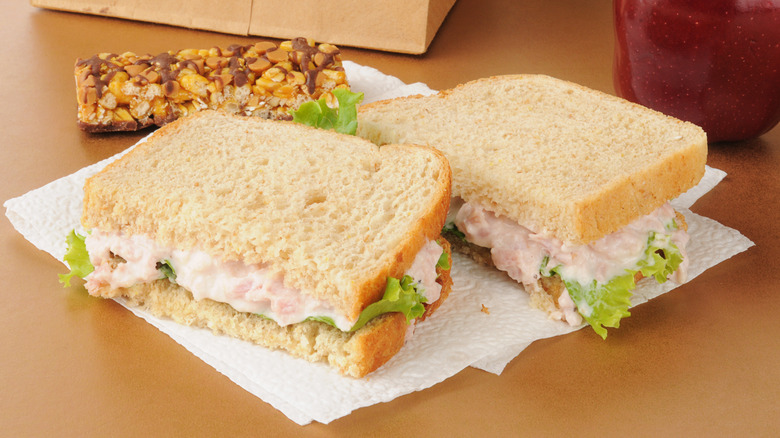
Most people love sandwiches. It's hard to deny the pleasure of your favorite ingredients shoved between two pieces of bread (or in a lettuce wrap, because a sandwich can be what you make it), which you can eat on the go or in the comfort of your own home. Plus, one of the best things about sandwiches is that you can put almost anything in them, as long as it's delicious. Over the decades, there have been countless sandwiches worthy of dinner tables. Some sandwiches, however, don't stand the test of time.
Because tastes and economic situations change over the years, there are plenty of old-school sandwiches that were once popular, but now might raise an eyebrow. Many of these sandwiches opted for fillings like deviled ham or head cheese that feel outdated today, or which can be replaced with fresher options. Others, like the extravagant sandwich loaf, feel like a product of another era. Here's some old-school sandwiches many people once enjoyed but you don't see too much of anymore.
Olive loaf sandwich
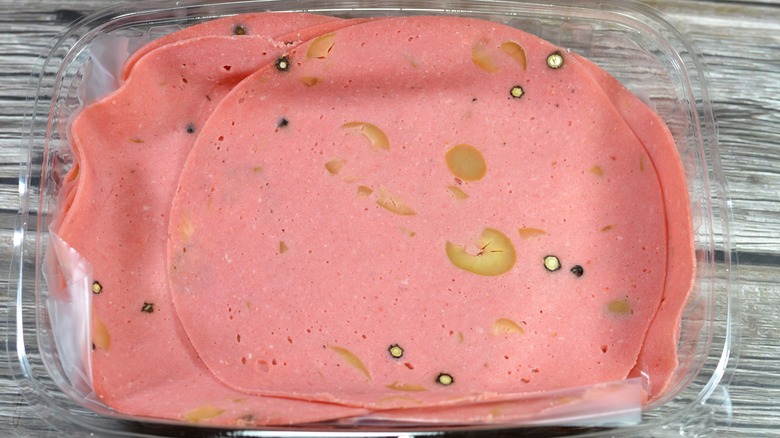
Anyone who's ever spied olive loaf in a supermarket will have been lucky to do so: These days, it's somewhat of a rarity. We can understand why, to be honest. The combination of olive and deli meat may be tasty, but it looks a little strange and, dare we say, gross. That combo of pink and green doesn't exactly lend itself to Instagram-ready snaps, after all.
Nonetheless, it wasn't always this way, and there was a time when olive loaf sandwiches were way more popular than they are now. It was a lunchbox favorite for plenty of folks back in the day, and particularly in the late 1960s and early '70s. During these years, supermarket delis began to grow in popularity, and olive loaf was one of the standout offerings in this newfangled way of getting meat.
Over time, it seems as though tastes drifted away from olive loaf and toward less processed forms of deli meat. That doesn't stop scores of people online fondly remembering and commenting on the days when their parents would tuck a few slices between some bread and send them off to school. Olive loaf is truly the stuff of old-school sandwiches.
Banana and mayonnaise sandwich
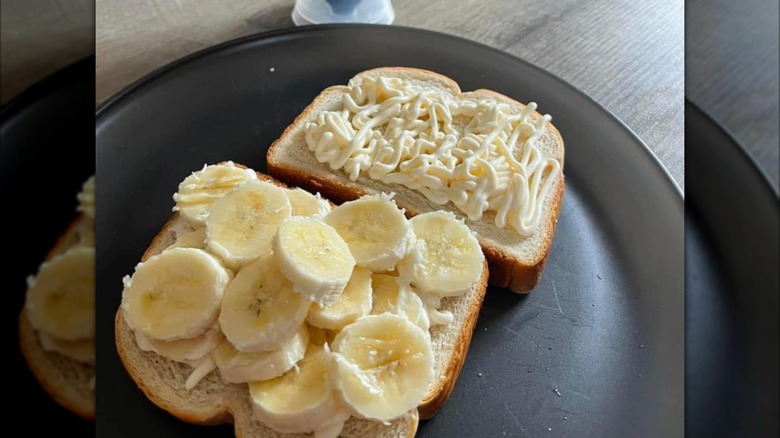
The banana and mayonnaise sandwich is one of those things that you feel can't be true, but is — and at one time it was way more popular than you probably think. Banana and mayo sandwiches were born at some point before the Great Depression, but it was during this period they became especially appealing. Both bananas and mayo were relatively affordable in the cash-strapped, struggling economy, and the bananas offered a source of nutrition while the mayo added some much-needed richness. The balance of saltiness and sweetness was also surprisingly effective.
Banana and mayonnaise sandwiches were especially popular in the South, and in some enclaves of Southern states they're still eaten to this day. However, it's fair to say these sandwiches are now relatively few and far between. It doesn't help that they've become sort of a joke on the Internet, and renowned for their apparent weirdness: In 2016, GQ conducted a poll on X to ask whether people would try these sandwiches, and a whopping 56.6% people responded with a resounding "not on your life."
Pimento cheese sandwich
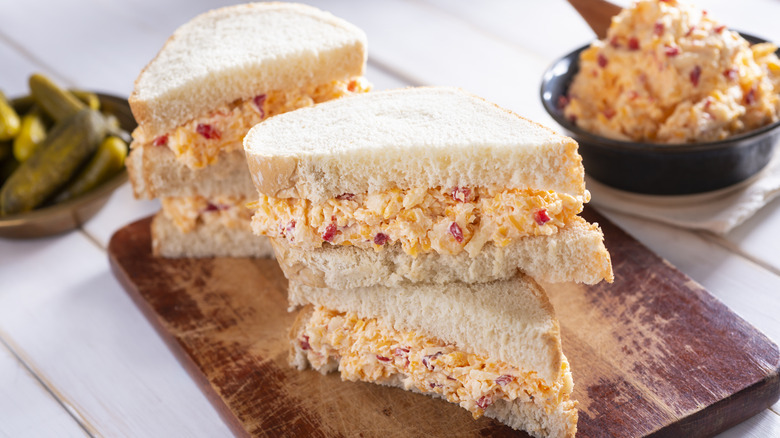
Pimento cheese sandwiches used to be a much bigger deal than they are today. In the early 20th century this sandwich was all the rage, thanks to the rise of the homegrown pimento industry and the development of modern-day cream cheese. It was especially popular across the country prior to World War II, and after the war it was reclaimed by the Southern states as their own. Pimento cheese sandwich recipes started appearing as early as 1908 in magazines, and sandwich shops began specializing in selling options with the trendy ingredient inside.
Pimento cheese sandwiches remained popular throughout the mid-20th century, and they received a further boost when they were adopted as a meal served at concession stands during the famous Masters golf championships. However, as the century began to come to a close, the tide began to turn on pimento cheese. It started to be viewed as a retro ingredient, and people began to look elsewhere for sandwich fillings. The Masters itself discontinued its contract with its pimento cheese vendor, and although it's managed to remain available to this day, it's one of the only places you'll find these sandwiches in the wild. It's unlikely you'll find it as an ingredient in regular sandwich shops.
Beef tongue sandwich
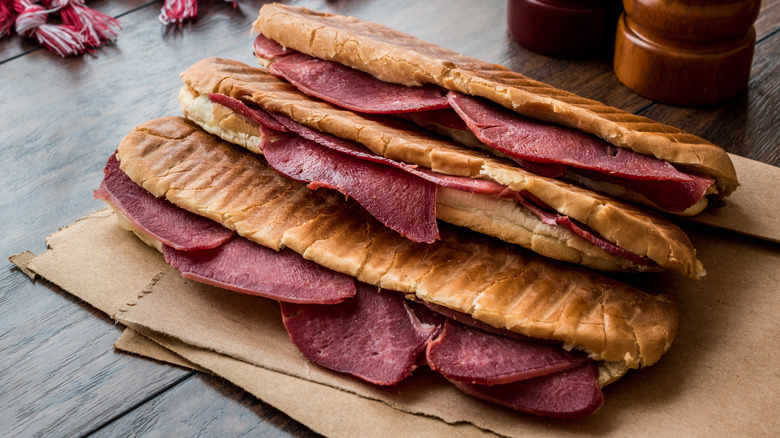
It's probably not a huge shock that the beef tongue sandwich isn't particularly popular these days. After all, the use of this cut stemmed from times when people used to find ways to feed their families without access to cheap, reliable pieces of meat from their local supermarkets, and had to be a little smarter about food waste. Nonetheless, there was a time when beef tongue sandwiches were a thing — and a pretty desirable one. The delicacy of beef tongue sandwiches emerged in the late 19th century as a teatime staple, in which the tongue was prepared in a pressure cooker before being sliced thinly. As beef tongue is a tough cut of meat, both steps were essential to ensure it was edible.
Beef tongue sandwiches are also important in Jewish food culture, and it can still be found in more traditional delis. For the most part, though, this sandwich died out when people gained access to more easily prepared meat fillings. Unless you're willing to hunt it down or prepare the beef tongue yourself (which can take a while), it's possible you might not ever try it.
Prosperity sandwich
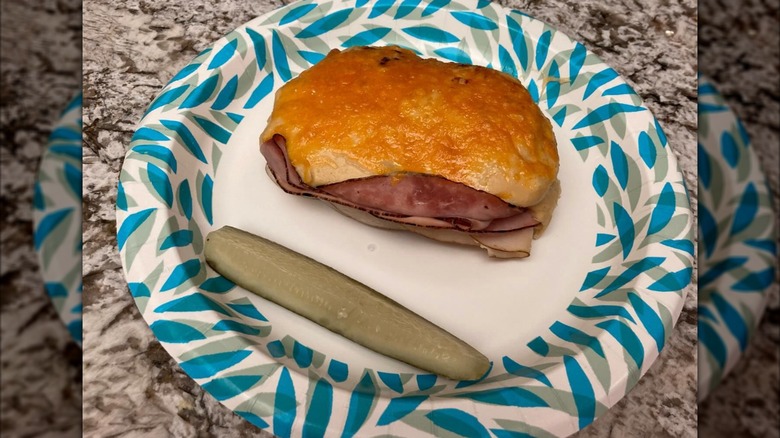
If you were in St. Louis at any point during the 1920s (and if you were, then we want to know the secret to long life!), you may well have eaten a Prosperity sandwich. This sandwich was prosperous both in name and nature: A hearty affair, it was made of smoked ham and turkey breast placed between doubled-up slices of bread, and then topped with a cheese sauce and broiled. Originally served at the Mayfair Hotel, the Prosperity sandwich was pretty similar to the Hot Brown, another type of sandwich commonly prepared and eaten in Louisville.
The name of this sandwich may indicate that it was rich and indulgent, but where it actually came from has a sly and ironic story to it. Prosperity sandwiches are allegedly named after Henry Hoover's repeated claims that prosperity was just around the corner for the nation, just before the Great Depression hit in full and the country was plunged into economic turmoil. As this sandwich was apparently created before the Great Depression hit, its name may well have got its resonance retrospectively (or it may have been renamed after the fact). Either way, it's a sandwich you'll rarely see nowadays.
Head cheese sandwich
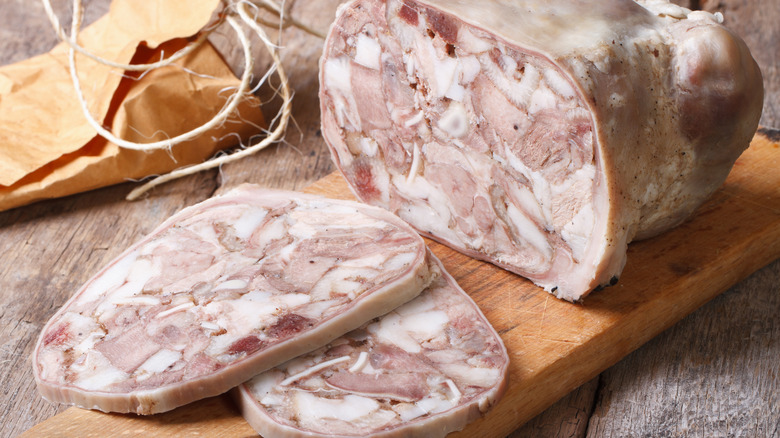
Prepare yourself ... because we're going to talk about head cheese. This meat spread has one of the most unfortunate names out there, and its composition isn't much better: It's traditionally made by boiling the head meat of pigs (think tongues and brains) in a broth with their feet, until it all binds together in a gelatinous mass. It's hardly a recipe for a delicious sandwich filling, and yet there was a time when it was considered so. It's been favored by various communities, from British high society to enslaved people in the American South — and it has been a common ingredient in po'boys as well as serving as a filling on its own.
However, it's probably no surprise that as time went on, people began to realize head cheese was a little less appealing than alternatives. Head cheese was largely born out of resourcefulness and necessity, but as more options became available and different meat spreads took over, it began to take a back seat. You can still purchase head cheese today, and retailers like Boar's Head sell it in large packs. Just make sure you like it before you buy it: If you don't, you might have a lot to get through.
Sandwich loaf
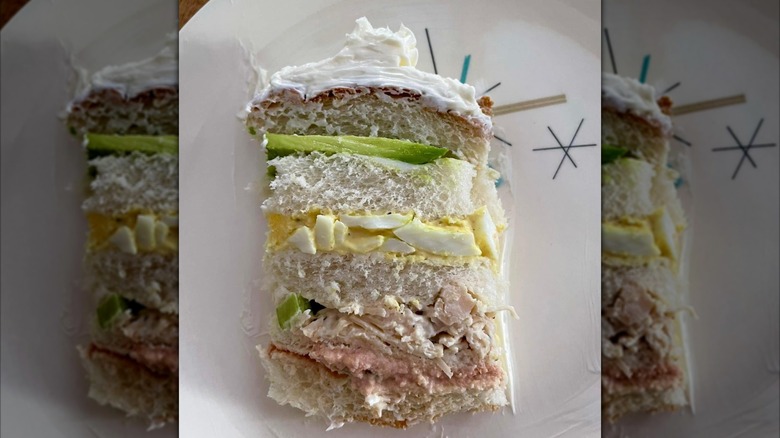
We make no secret of the fact that we love mid-century cooking. This was a period when anything went, and how a dish looked was arguably way more important than how it tasted (or, indeed, the sheer practicality of eating it). If you want proof of this in action, look no further than the sandwich loaf. This was a frankly astonishing take on the sandwich popular in the 1960s, which turned it into a kind of multi-layered cake. To prepare it, slices of bread were packed into a loaf tin, and between each layer was a different filling, with curried egg, ham-pickle, chicken salad, and tomatoes all being shoved in. Oh, and then the whole thing was "frosted" with a combination of cream cheese, mayonnaise, and cream, and then cut into slices.
Let's be honest: We can see exactly why this didn't stand the test of time. Sandwich loaves were gaudy, took ages to prepare, and fooled your guests into thinking that they were going to have a delicious slice of cake, before hitting them with a mouthful of clashing savory flavors. It's no wonder that they died out, and while the concept of a multi-layered sandwich has remained popular, the sandwich loaf is long gone.
Emergency sandwich
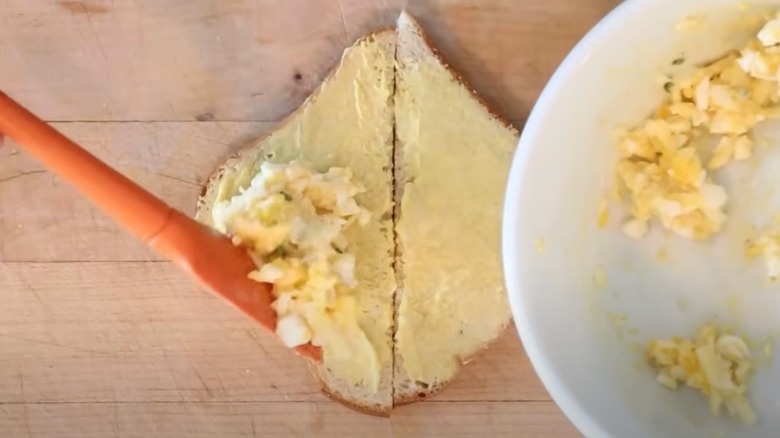
After a sandwich with a wildly dramatic name? The emergency sandwich is the one for you. This little-known lunchtime treat appeared in "The Calendar of Sandwiches and Beverages," a 1920 text by Elizabeth O. Hiller that gave you a different sandwich to try every day of the year. If you were following it to the letter, on January 29 you were instructed to make an emergency sandwich, and you may well have regretted doing so. It's kind of a strange concoction, and we'd imagine it got its name from folks needing to make a sandwich when there's nothing but scraps of food left.
To create an emergency sandwich, Hiller instructed her readers to combine stale grated cheese, chopped hard-boiled eggs, chives and onions, and spices like cayenne and paprika. Then, it was all bound together with mayo or cream, and then piled into white bread spread with mustard butter. Modern-day cooks that have recreated the sandwich have praised its flavor (a fact we find slightly surprising, given the stale cheese and all), and the combo of taste and thriftiness would have no doubt made it popular during cash-strapped times like the Great Depression. Now, however, it's way easier to find sandwich ingredients that are, you know, fresher.
Broiled soup sandwich
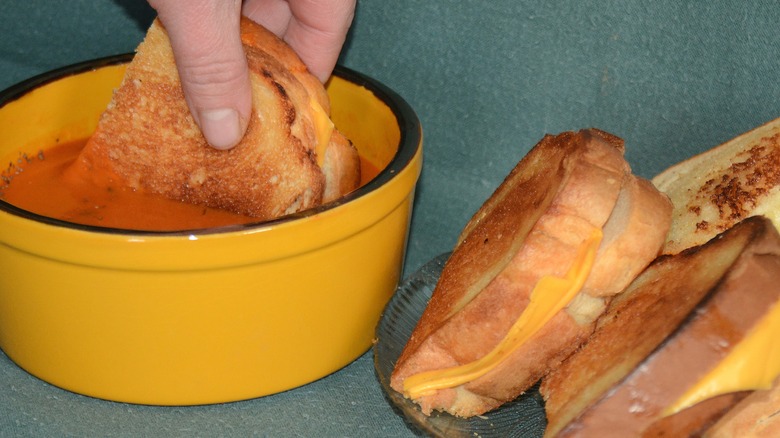
We love it when we discover a recipe that's, well, totally bananas. So you can imagine how pleased we were when we found out about the broiled soup sandwich, a bizarre creation from Campbell's that its recipe developers created to plug its soup to the masses. The broiled soup sandwich was, in fact, an open-faced affair. In its recipes (and there were more than one), Campbell's instructed people to first pile pieces of buttered toast with all sorts of toppings, before pouring a can of Campbell's soup over the top. The concoction was then broiled until the soup was hot and bubbling.
Campbell's managed to find a way of incorporating a lot of its soup flavors into these recipes: The bacon-tomato broiled soup sandwich, for instance, topped the titular ingredients with cream of mushroom, while its tuna-egg broiled soup sandwich used cream of celery. However, there's no getting around the fact that this was clearly a sandwich that would have been unbelievably wet and impractical to eat. It's little surprise, then, that it's not around these days.
Deviled ham sandwich
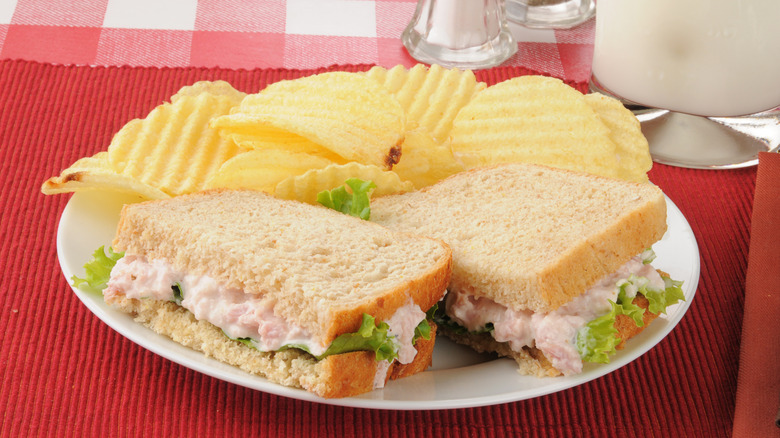
Fresh meat wasn't always easy to store: In the days before everyone had a refrigerator and easy access to supermarkets, it was the kind of thing you had to consume quickly. So it's no wonder that people began to find ways to process and preserve meat so it could last for months in the pantry, and thus, deviled ham was born. Deviled ham was first created in 1868 in New England by the William Underwood Company. It was (and is) made by grinding ham into a rough paste, and then combining it with spices, mustard, and vinegar to give it a serious kick.
The all-in-one nature of deviled ham meant that it quickly became an easy sandwich filling: It was a quick way to deliver both protein and flavor, and could be relied on during times when there was little by way of fresh food. However, deviled ham started to die down in popularity toward the end of the 20th century, perhaps because consumers realized they wanted a little more control over how they season their sandwiches. Now, most people just stick to regular deli meat in their sammies.