
10 Luxury Fall Grocery Items Worth The Splurge
You know fall is upon us when the air cools down, the leaves change, and pumpkin spice lattes are popping up on menus everywhere. There's so much more to autumn than pumpkin, though. Fall is a fantastic season for eating, thanks to the special ingredients that come around or peak during this time of year.
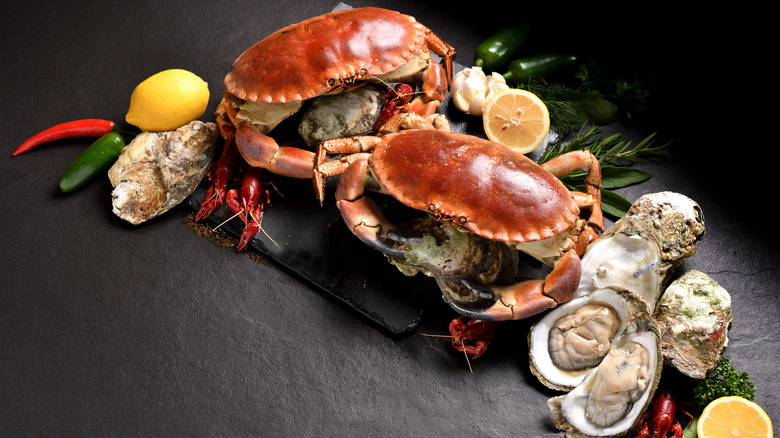
Not only do restaurants and coffee shops offer fall menu items, but there are fruits and vegetables that you can only find during the season. Some food lovers (this writer included) wait year-round for the arrival of persimmon season. There are also certain types of seafood that taste the best in the fall, when they're the most plump and flavorful. Our taste for cheese also changes with the weather.
Some of the specialty grocery items you find during the fall season are quite luxurious, from truffles to oysters, and if you want to splurge on these items, this is the time to do so. Gourmands around the country seek out certain foods during their peak season for a reason. If you want to know what they are all about, here are the ten luxury grocery items that are worth splurging on in the fall.
1. Oysters
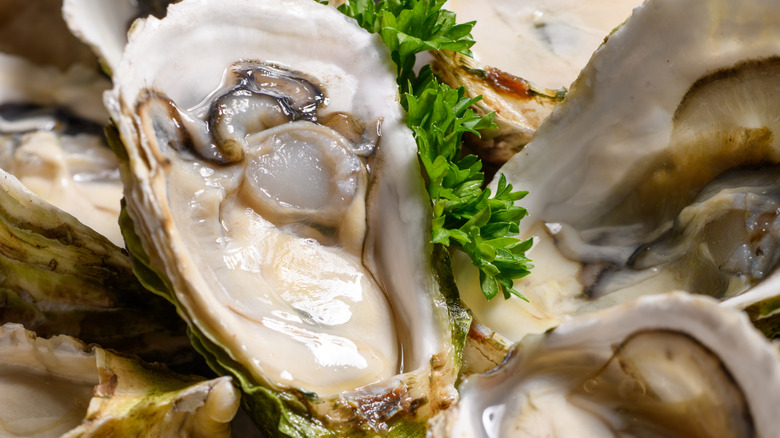
Most people know the "R" month rule for eating oysters, especially when enjoying them raw. It's an old rule that stemmed from the fact that bacterial growth was more likely in the warmer summer months. Although, with modern farming techniques and refrigeration, this is not as much of an issue anymore, there was indeed some truth to the saying. Well, not only are all the fall months an "R" month, but fall is also the best time to eat oysters for other reasons.
Oysters start to store up energy in preparation for winter hibernation, which is stored as glycogen. That's why oysters harvested in the fall are plumper and sweeter. They have a richer flavor this time of year, and this is especially true for oysters from the northern part of the country. Oysters are said to taste best out of cold water, which means you should wait for the winter to enjoy oysters from the south.
In certain parts of the country, fall also leads to a higher salinity level in the waters because of lower rainfall through the summer, which give the oysters a stronger briny flavor that oyster lovers are fond of. These shellfish are certainly a luxury item, especially when you're enjoying them at a restaurant. Oysters can cost $4 or more each, and bigger oysters aren't necessarily better. If you want to splurge on these mollusks, you might as well do so when they're at their best.
2. Blue crab
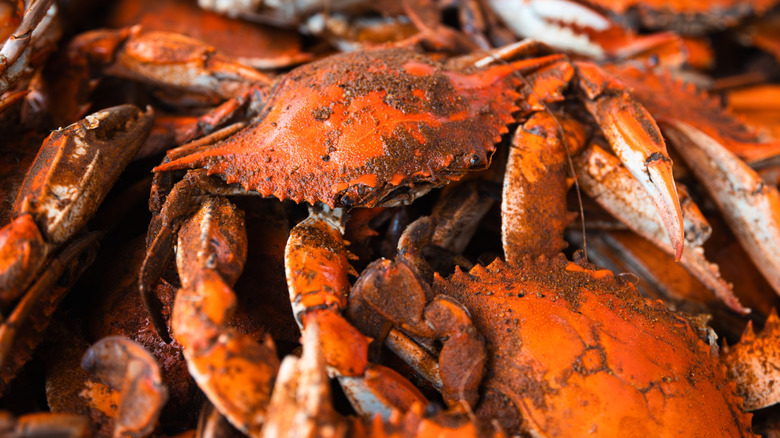
Different types of crab come from different locations and thus have different peak seasons. Autumn, though, is the season for Maryland blue crab. Blue crab gets its name from its blue to olive green shell (that turns orange when cooked). This crustacean is fairly small (especially compared to king crab) as it can be harvested when it's around 5 inches in width. Seafood lovers are especially fond of blue crab because the meat is sweet and buttery.
While not all blue crab comes from Maryland, the state has certainly become synonymous with this shellfish, which is officially designated as Maryland's "state crustacean." Over a third of the blue crabs in the U.S are caught in Chesapeake Bay. In Maryland, blue crab is typically enjoyed in a crab boil, in which crabs are steamed and seasoned with Old Bay seasoning. They're usually served with potato, corn, and Andouille sausage.
Maryland blue crab is generally available from April to November, but fall is actually the best season to enjoy this shellfish. That's because these blue crabs have had the chance to fatten themselves up throughout the summer, so they're bigger and heavier in the fall. This gives you more bang for your cracking efforts. If you aren't used to it, crab takes a lot of effort to crack open, after all. That's why, before you embark on your crab feast this fall, you should read up on how to pick and eat blue crab.
3. Royal Riviera pears
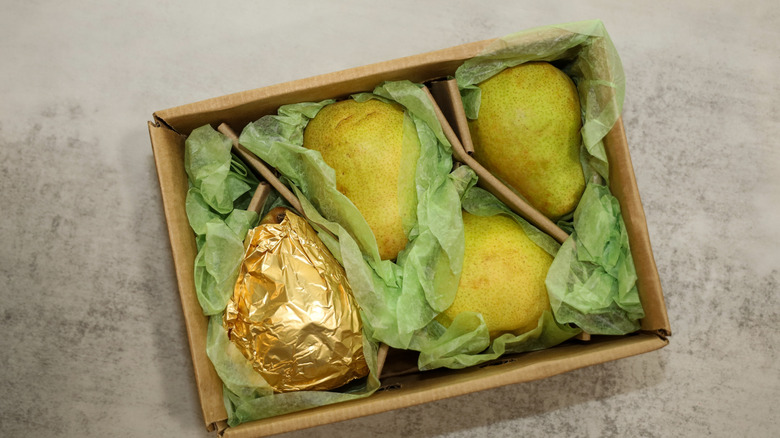
For gourmet pears that are worthy of gifting, there isn't one more famous than Harry & David's Royal Riviera pears — the trademarked name of the comice pears that made Harry & David the company that it is today. This particular type of pear was first propagated in France in 1856, and was later introduced to Southern Oregon, as it's one of the few regions of the world that has the right soil and climate for these pears to thrive.
Brothers Harry and David Rosenberg had been cultivating and marketing these pears in the 1920s, but after the Great Depression, the two pivoted into a gift company, encouraging people to send boxes of Royal Riviera pears as gifts. The idea took off. Today, Harry & David owns 2000 acres of pear orchards near the company's headquarters in Medford, Oregon. These pears are harvested in August, but the company's cold storage makes them perfect to ship in October.
Royal Riviera pears are known to be especially large and juicy. The company's tagline is that these pears are "so big and juicy, you can eat them with a spoon®." They're certainly a luxury at $39.99 for a 5-lb box, but it's worth the splurge. Note that Harry & David these days also sell other comice pears that are cheaper. Those are still good, but they're no Royal Riviera. Just remember to let the pears ripen before you dig in.
4. White truffles
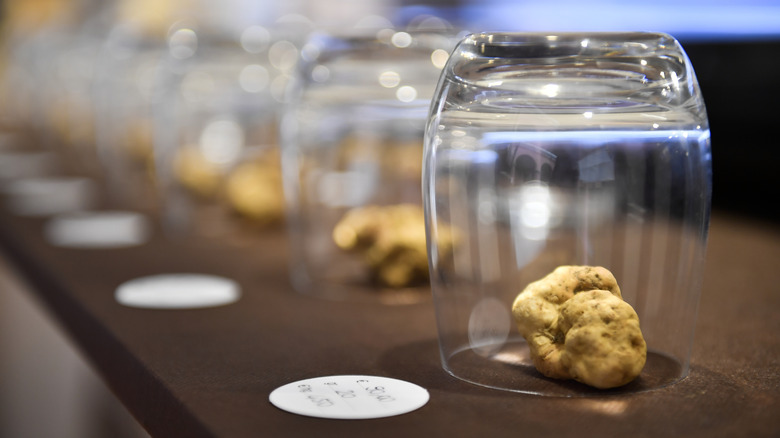
Truffles are considered to be some of the most luxurious ingredients out there. When available fresh, this specialty fungus is usually shaved on top of dishes to add a distinctly earthy, savory aroma. It can also be infused into oil and butter. There are two main types of truffles, black and white, but there are also different varieties based on where they grow, such as Italy or France. There are also truffles that you can harvest in the summer and winter, but fall is the start of the season for the most special truffle out there: Alba white truffles.
White truffles are a lot more expensive than black truffles, but true truffle lovers know it's worth paying the difference. The most famous white truffles are the ones foraged in the wild from Alba in Italy's Piedmont region. Alba white truffles are highly sought after as they're known to have a particularly deep aroma and taste. These truffles can cost up to $500 per oz. Given the price, it's perhaps a good thing that it's only available for one season each year.
Fall is the time of year to splurge on freshly shaved white truffles at fine dining restaurants around the world, as these truffles typically grow in September to December. Alba also holds an International White Truffle Fair every year starting in October, with a schedule packed with cooking classes, special dinners, and more. It's a bucket list event for traveling food lovers.
5. Sugarcone cabbage
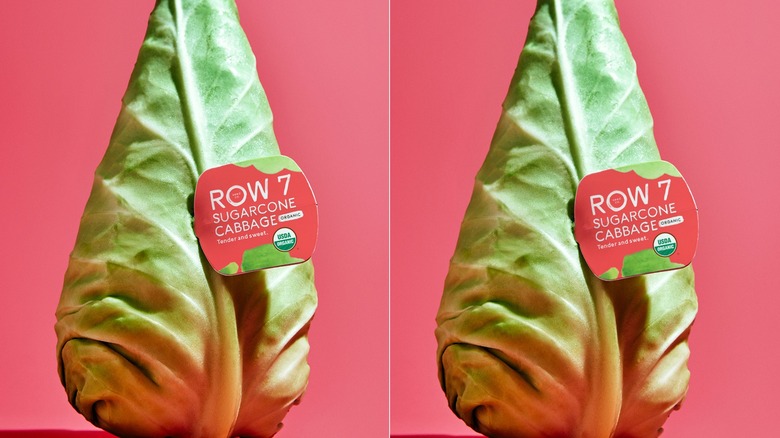
Cabbage on a luxury grocery list? Yes, but the sugarcone cabbage is no regular cabbage. The sugarcone cabbage is a brand new variety of cabbage, specially developed by Row 7 Seed Company, a company that focuses on breeding organic vegetable varieties that focus on taste. Unlike the round green cabbage we're most familiar with, the sugarcone cabbage is conical in shape.
Chef and Row 7 co-founder Dan Barber says that the cabbage we know has been bred for storage and transport. After all, compact and round vegetables are easier to store and pack. On the other hand, the pointed sugarcone cabbage is less compact, but the leaves are tender and sweet, with a flavor and texture supposedly more akin to lettuce than cabbage. The company also says that this cabbage doesn't have that "sulfury cabbage bite."
This cabbage is available only in the fall (from September to November) at Whole Foods Market locations in certain parts of the country, including California, Texas, the Northeast, and Mid-Atlantic. Not only has this cabbage been developed specifically for taste, but it's also organic, so it does cost a premium. Available at Whole Foods Market, the sugarcone cabbage costs noticeably more than the price of a conventional green cabbage, but given the superior taste, it's worth the splurge to try it while it's in season.
6. Honeypatch squash
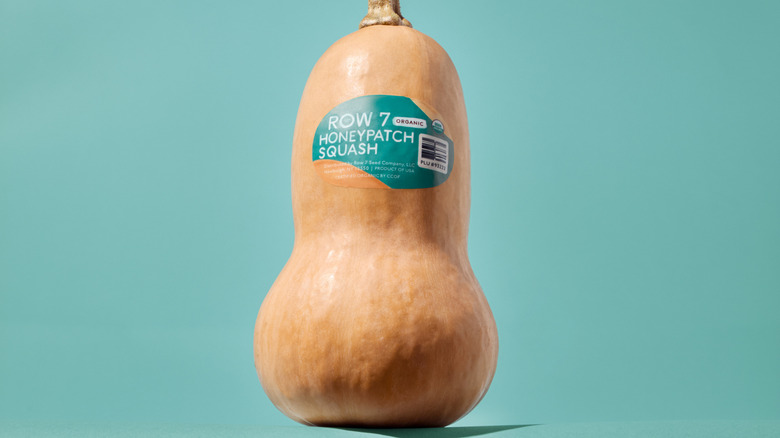
The honeypatch squash also comes from Row 7 Seeds, and it was selected by vegetable breeder and Cornell University Associate Professor, Michael Mazourek. This squash, also known as 898 squash, has a more concentrated sweetness compared to other squashes.
Honeypatch squash was developed as a better version of butternut squash, so you can use this squash for the same recipes, to give them a richer and sweeter flavor. It's best suited for roasting, though. The honeypatch squash is said to be so sweet when it's roasted that you do not need to add any of the usual sweeteners like maple syrup or brown sugar. In fact, the company publishes a recipe for roasted honeypatch squash on its website that only calls for olive oil, salt, and pepper.
It's also smaller (Row 7's website calls it a "single-serving squash"), which makes it good to cook for individuals or couples. This squash is available from September to December, and when it's in season, you can find it at Whole Foods Market locations as well as select retailers. While it's developed by Row 7, the company partners with organic farmers and growers around the country, who will then ship them to the regional Whole Foods, so you know your squash isn't coming from too far away.
7. Grass-fed beef
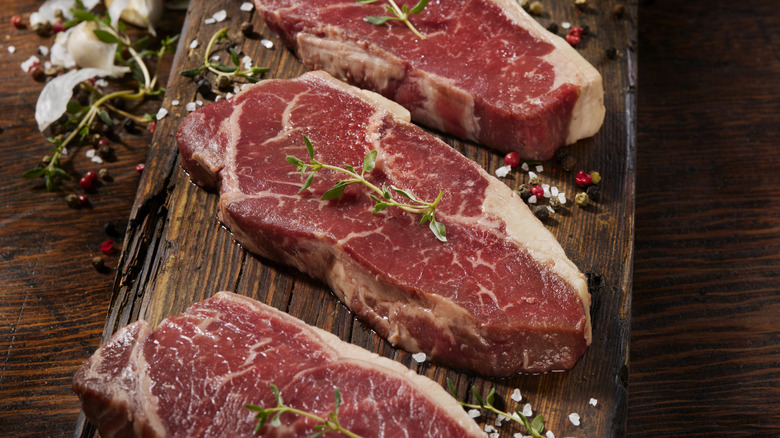
While beef is available year-round, fall is said to be the best time to buy grass-fed beef. That's because the cattle have been eating plenty of grass in the spring and summer to build up their fat reserves, gearing up for the winter ahead. Because of this, grass-fed beef is at its fattiest (and therefore tastiest) in the fall. This is true for grass-fed beef, in particular, because the cattle naturally graze on the land.
On the other hand, a grain-based diet makes cattle gain weight and fat much more quickly. It takes less time to make grain-fed cows ready for slaughter, which is why this is the most common beef we'd find in the market. This is especially true of feedlots, where cattle are fattened up quickly year-round. That's why grass-fed beef has lower fat content than grain-fed beef. It also has more vitamins, and many prefer its richer flavor.
Note that grass-fed beef is not the same as organic beef. For organic beef, the cattle don't need to be fed with grass but can be fed any type of grain, as long as it's organic. It takes more land to raise grass-fed beef compared to grain-fed beef, especially those from feedlots, so grass-fed beef certainly costs a premium over your standard beef. Given the flavor difference and the health benefits, it's worth the price every now and then, especially when you're enjoying a steak.
8. Wild mushrooms
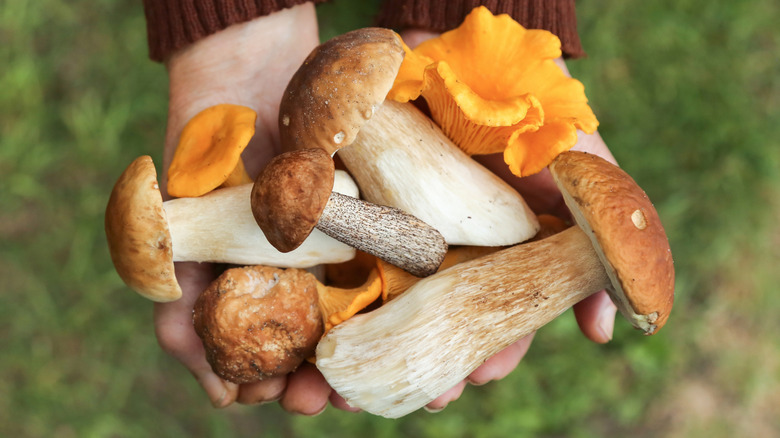
There's a world of difference between the button mushrooms you'd commonly find at grocery stores and wild mushrooms. Wild mushrooms are foraged in the forests, and fall is the time to find these delicious fungi. Mushrooms thrive when it's moist, so they often appear on the forest floor after it rains. Autumn marks the start of rainy days after a dry summer, which is why this is also the season to start foraging for mushrooms. Of course, there are many different types of mushrooms, and the timing can vary depending on the climate of the region, and certain varieties, like morels, grow in the spring instead.
Some of the wild mushrooms you should look out for during the fall season include chanterelles from the Pacific Northwest and oyster mushrooms. In the northeastern part of the United States, this is the season for lion's mane, hen of the woods, and lobster mushrooms. These mushrooms taste quite different from each other, and it's fun to explore all the different ones.
There are many ways to enjoy these fungi, such as making pasta with wild mushrooms. At one plant-based restaurant, Crossroads Kitchen in Los Angeles, lion's mane is used to mimic grilled steak. Wild mushrooms are pricier than mass-cultivated mushrooms and harder to find. You can buy wild mushrooms at your local farmers markets or specialty grocery stores. Some foragers also sell wild mushrooms online.
9. Persimmons
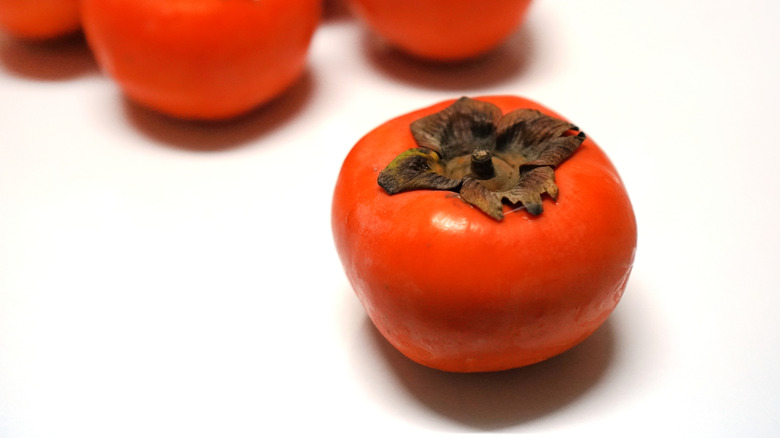
The orange-colored persimmon is a popular fruit in Asia (especially in China, Korea, and Japan), but it's still highly underrated in the United States. It's not yet commonly found in regular grocery stores, although persimmons are now grown in California, Florida, and Texas, and chefs around the country love using this fruit in various dishes. There are two varieties of persimmons that are most commonly grown in the U.S., hachiya and fuyu, although there are other types of persimmons you may find at your local farmers markets.
Fuyu persimmons have a flat bottom, while hachiya persimmons have a pointed bottom. Hachiyas are more astringent, so they're mostly only eaten when they're very ripe and soft, while fuyus can be eaten while still firm. When soft, a persimmon's texture is almost like custard, and you can eat it with a spoon. You can use this fruit in salads, incorporate it into desserts, or just enjoy it on its own.
Generally, the peak season for all persimmons is the fall season, and some people wait all year for them. Because there's still limited availability in the U.S., and the season is short, persimmons are relatively expensive, as far as fruits go. In Japan and Korea, persimmons are dried at the end of the season so they can be enjoyed year-round, and you can find dried persimmons at Japanese and Korean markets.
10. Strong-flavored cheeses
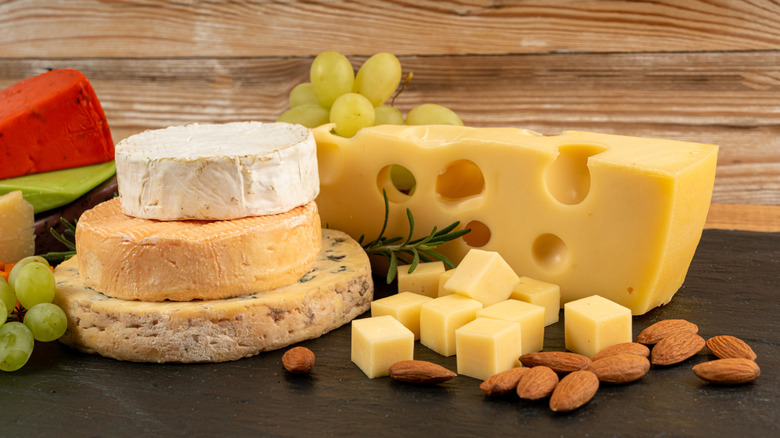
If hot summer weather makes you crave lighter cheeses like mozzarella and burrata, the cooler fall temperature calls for cheese with stronger flavor profiles. Think things like Cheddar, Gouda, or blue cheese. While these cheeses are available year-round, the bold flavors of these types of cheeses pair better with heartier, fall dishes. For example, comforting French onion soup is typically topped with melted Gruyère cheese, while sharp Cheddar pairs well with a lot of foods we associate with fall, such as caramel apples and chanterelle mushrooms.
Fall is the season to splurge on artisanal cheeses that have bold flavors, whether you're making a cheesy pasta or building a charcuterie board for your autumn dinner party. Rich, nutty cheeses pair well with fruits that are in season during autumn, so using these types of cheeses will help build the perfect, seasonal board. Aged Gouda pairs with apples and pears, while blue cheese goes well with caramelized pecans.
There's a range of prices that come with these cheeses. Some love the affordable 1000-day aged Gouda from Aldi, and there are creameries in Wisconsin and Vermont that make great Cheddars you can easily find at grocery stores around the country. At the other end of the scale, you can look for some award-winning cheeses like Urs Leuenberger's Le Gruyère AOP Réserve or Rogue River Blue Cheese from Oregon at specialty cheese stores or higher-end grocery stores.