

This Depression-Era Sandwich Was A Staple In The White House
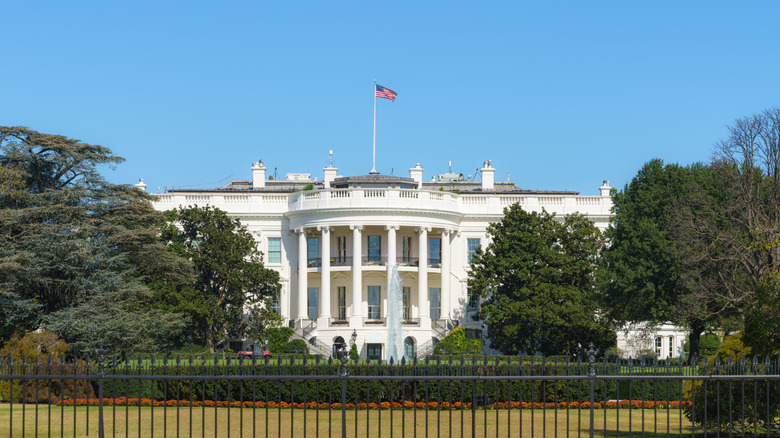
During the 1930s, even the White House was pared down to the basics. Lunch at Franklin D. Roosevelt's table might be as simple as a bread and butter sandwich, a meal that reflected not only the hardships of the Great Depression but the first lady's deliberate message to the country. This was the White House stripped of ceremony, echoing the reality that Americans everywhere were learning to get by with less.
The era saw the origin of the peanut butter and pickle sandwich, when cheap staples defined the American diet, and bread with butter was as dependable as it was unremarkable. Eleanor Roosevelt, who had little personal interest in food, understood its political weight. By embracing such humble fare, she made it clear the first family would not eat in excess while millions struggled.
Guests expecting indulgence quickly learned that the nation's most prestigious kitchen had become a model of austerity. Bread and butter, once considered an afterthought, now carried symbolic weight as the kind of food meant to reassure a nation in crisis: Plain, inexpensive, and universally recognizable.
Affordable and symbolic, bread and butter became a staple

At the Roosevelt table, nothing was served by accident. Dishes like prune pudding – one of the foods that made their mark during the Great Depression — or gelatin salads signaled restraint, but even something as plain as a bread and butter sandwich carried meaning. By elevating what most families treated as filler food, Eleanor Roosevelt showed that thrift belonged not just in struggling households but in the highest office of the land.
Bread, at least, was affordable — a loaf in 1931 cost about 8 cents. Butter ran closer to 37 cents per pound, which turned it into a luxury on some tables, causing many to make their own. Margarine cost less, often just over 20 cents per pound, so others used it instead of butter. Margarine goes all the way back to Napoleon, but during the Depression, it was promoted as a thrifty stand-in for butter.
Dreary as the food may have been, the message was unmistakable. The first family would eat as the nation ate — and something as ordinary as bread and butter became a symbol of solidarity in lean times.