

The Final Location Of This Beloved 1920s Diner Is Making A California Comeback
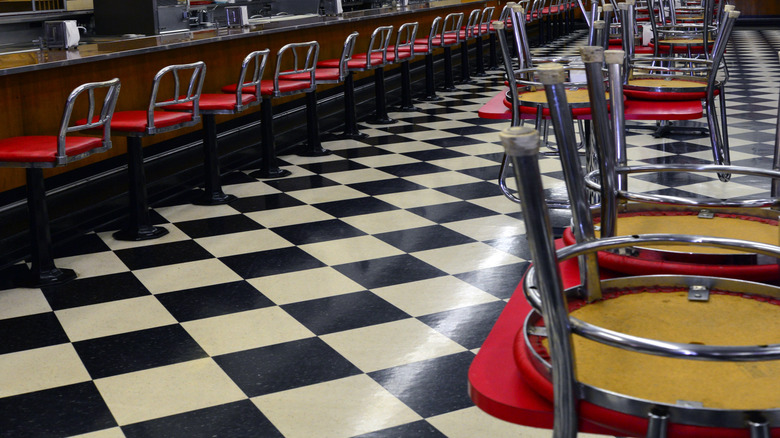
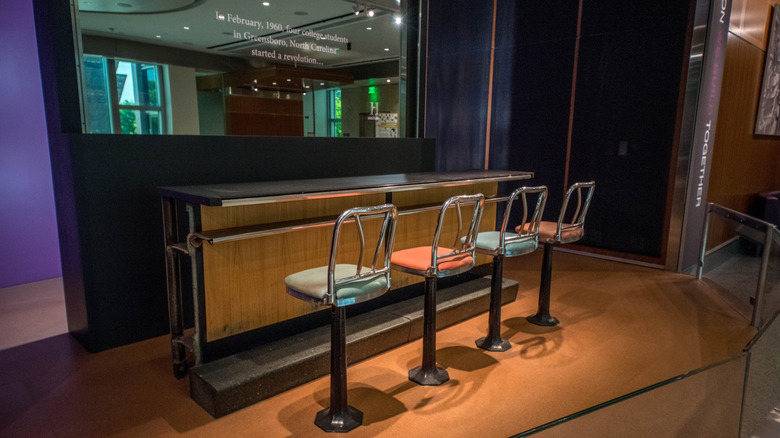
The lunch counters at Woolworth's department stores hold a significant place in American history. Though they first emerged around 1923 in New Albany, Indiana, Woolworth luncheonettes are perhaps most remembered for a sit-in protest at the Greensboro, North Carolina, location during the Civil Rights movement. A segment of that counter is now part of the Smithsonian National Museum of American History's collection, and while most other examples are lost, one endured whole and will soon reopen.
Although Bakersfield, California, lost its Woolworth's way back in 1994, the attached luncheonette still exists. It likely opened with the entire store in 1950, and survived the store's closure for decades after as an independent restaurant attached to an antique mall.
In 2022, however, the luncheonette closed while the building's new owners renovated the structure. But they always intended on keeping the restaurant, which will is slated to reopen in September 2025 with nearly all of its original features intact — and a new focus on Woolworth luncheonettes' pivotal place in Civil Rights history.
Woolworth's lunch counters and the Civil Rights movement
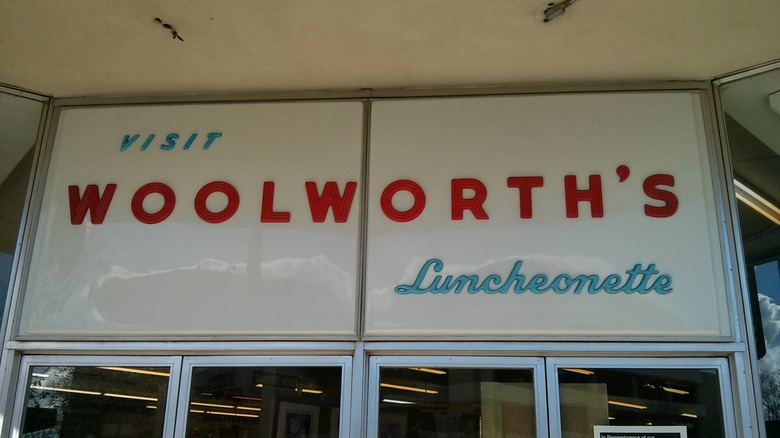
As a business, Woolworth's was built on affordability. It was one of the first and largest five-and-dimes, a term for stores that sold assorted household goods at low prices; originally, everything cost either five or 10 cents. In the early 20th century, Woolworth's began adding small restaurants to its stores. These luncheonettes and their quick, cheap meals are often seen as a precursor to the fast food industry, which ultimately replaced them.
By the 1950s, though, Woolworth's was booming, and its lunch counters were popular places to eat and congregate in many American cities. Unfortunately, not everyone was always welcome at every counter. In states where racial segregation was the law, Woolworth's and other businesses could refuse to serve Black Americans because of their race.
In 1960, Civil Rights organizers in segregated North Carolina staged a protest at the Greensboro Woolworth luncheonette by sitting at the whites-only counter and refusing to leave until served. The sit-in, and the hostile response from local segregationists, inspired similar protests and became a media spectacle. The sit-in movement is commonly recognized as a major step toward desegregation — and it unintentionally immortalized Woolworth's lunch counters.
The last Woolworth's lunch counter looks to the future
Although the Bakersfield luncheonette was never the site of a Civil Rights sit-in, the soon-to-reopen restaurant will reflect that history. The walls feature historical photos of various sit-in protests, and also serve as an informal art gallery for notable artists of color. But these won't just be historical works, as artists from the 1930s to today are included.
The new owners have preserved much of the interior, restored the original bar stools to their first color scheme, and revealed vintage terrazzo underneath an old laminate floor. Even the kitchen equipment is original, going a step further than other vintage dining experiences like the 1930s-era Oakley Diner in Utah, or Ben's Chili Bowl in Washington, D.C.
Chef Richard Yoshimura will be in charge of the menu for Bakersfield's soon-to-reopen Woolworth lunch counter. While it will reflect the counter's well-preserved history by serving American classics like burgers and no-bake lemon icebox cheesecake, Yoshimura plans on giving the dishes a modern update. It remains to be seen whether the menu will include a seafoam salad, a former Woolworth's staple and one of the great forgotten vintage salads.