

The Bougie Steakhouse Chain That Ages Its Beef For Over A Month
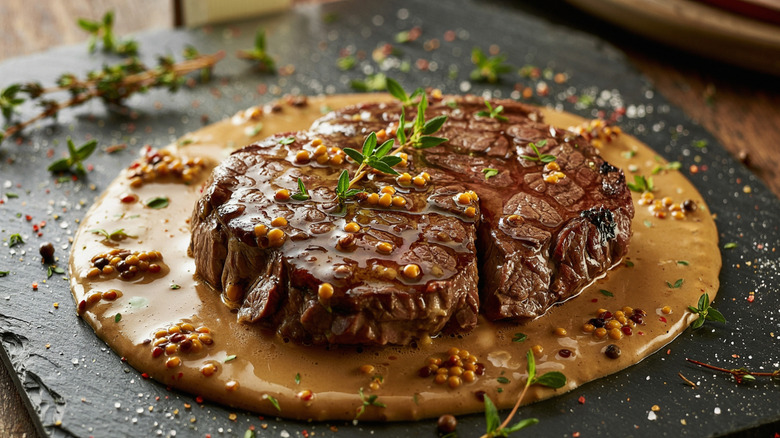
Adore the vibe of a fancy restaurant and love a good steak? Then, a visit to a bougie chain that uses the highest quality steaks needs to be on your bucket list. The Palm Restaurant is a luxurious eatery (with 17 branches across the U.S. and Mexico) that ages all of its USDA prime beef for at least 35 days. This lends it a concentrated flavor and savory character.
The first Palm restaurant opened in 1926 in New York City, and others were launched over the years in West Hollywood, Washington, and beyond. The expansion was driven by the original eatery's success and commitment to producing quality steak dishes. Nowadays, the Palm is still lauded for its aged steaks and luxe atmosphere, but interestingly, according to the restaurant's factsheet, the restaurant did not originally serve steaks. If a customer ordered one, co-founder John Ganzi would head up Second Avenue to a butcher and pick up a steak to cook. When more guests wanted beef, the restaurant added steak to the menu.
Beef can be dry-aged for up to 120 days, but The Palm uses beef aged for 35 days for its steaks because it's just long enough for the meat to develop maximum flavor without it becoming overpowering or shrinking too much. Some of the other USDA prime cuts on the menu are wet-aged. Today, the dinner menu includes Prime ribeye, center-cut filet, and New York strip.
Wet-aged vs dry-aged beef
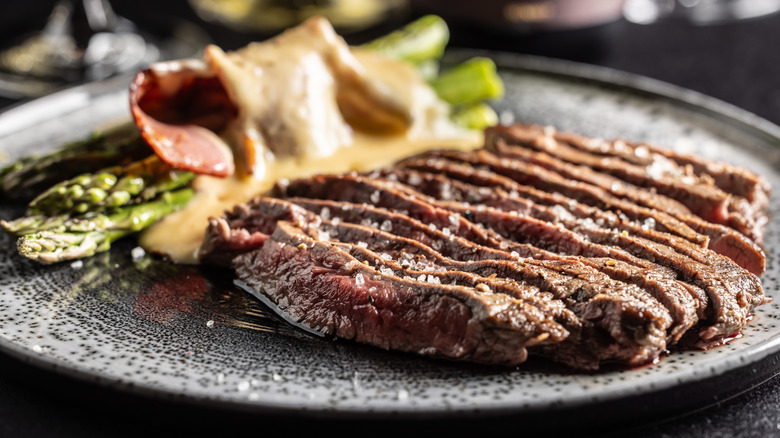
Beef can be aged via dry-aging or wet-aging to improve its taste and texture. With dry aging, the meat is hung out and exposed to the air so that the enzymes inside break down some of its muscle fibers, making it more tender. The meat dehydrates, concentrating the flavor, and a crust of fungus, like that on blue cheese, develops on the outer layer of the beef, which is trimmed off before it's packed and sent off to the commercial kitchens and grocery stores. The internal flavor profile of the meat is rich and intense.
In contrast, wet-aged beef is vacuum sealed and sits in its juices in the refrigerator so it can develop flavor over time. As no evaporation occurs, wet-aged meat doesn't lose its volume like dry-aged beef. One of the reasons you should avoid dry-aging smaller cuts of meat is that the process reduces the size of the steak via moisture loss. The layer on the outer surface, known as the pellicle, also needs to be removed prior to cooking, much like a cheese rind. The Palm may prefer the wet aging method when it comes to smaller cuts, like filet mignon and flat-iron steak, as virtually no meat is lost. The way to tell if you're eating a cheap versus an expensive steak, no matter whether it's wet or dry-aged, rests on its texture. A succulent cut that has more marbling will cost more than a gristly one.