

The Vintage Cookie Jar Brand Worth Hunting Down For Collectors
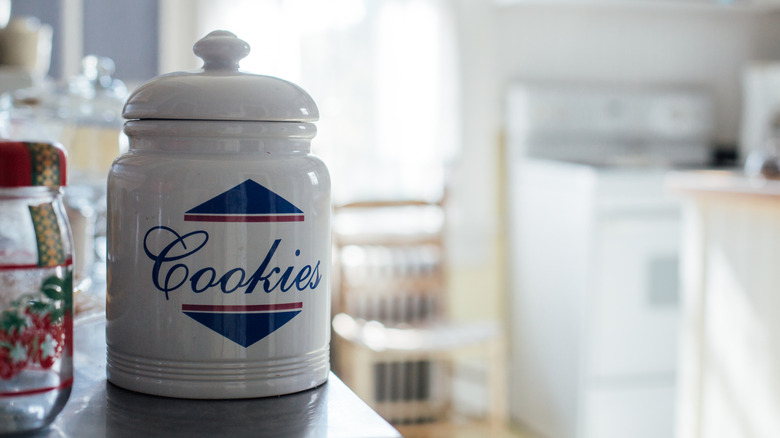
Some vintage cookie jars are merely made to hold treats, but others are collectible treasures that feel like you've stumbled upon a pot of gold. Nelson McCoy jars fall firmly into the latter category. The Ohio-based company helped shape America's love affair with decorative pottery and cookie jars throughout the 20th century. And while the company's iconic cookie jars fetch thousands online, you don't have to spend a fortune to get your hands on one. Thrift stores are a goldmine for vintage cookie jars, and any avid collector or pottery enthusiast will tell you that if you're lucky and determined, you can find a sweet deal on a Nelson McCoy cookie jar.
The history behind these jars is as sticky and rich as these molasses cookies. The McCoy family's legacy first began when Nelson's father, William Nelson McCoy, built a pottery factory in Ohio in 1848. Nelson's brother, J. W., moved to the area soon after, and the two opened their own business. Nelson wouldn't branch out on his own until 1910 with Nelson McCoy Pottery. He wanted to make more decorative, colorful planters and other kitchenware, and in the '30s, the business began making playful, whimsical cookie jars shaped like fruit, animals, and lifelike household objects. By the '50s, the company produced some of the country's most in-demand jars. To the delight of many collectors and cookie lovers, that's only half of this delicious story.
A batch of vintage charm
While Nelson McCoy was carving out a name for himself in the cookie jar market, George Brush was also earning a reputation in the pottery industry. The two actually first started working together when Brush joined J.W. McCoy Pottery in 1909. Brush had worked in pottery before that, and in 1911, the business name changed to Brush-McCoy Pottery. In 1925, Brush separated from the McCoy family, who sold off their interests, and started Brush Pottery. He is credited with producing one of the first American ceramic cookie jars. Until his business closed in the '80s, Brush made over 50 jar designs, including teddy bears, clowns, and pandas.
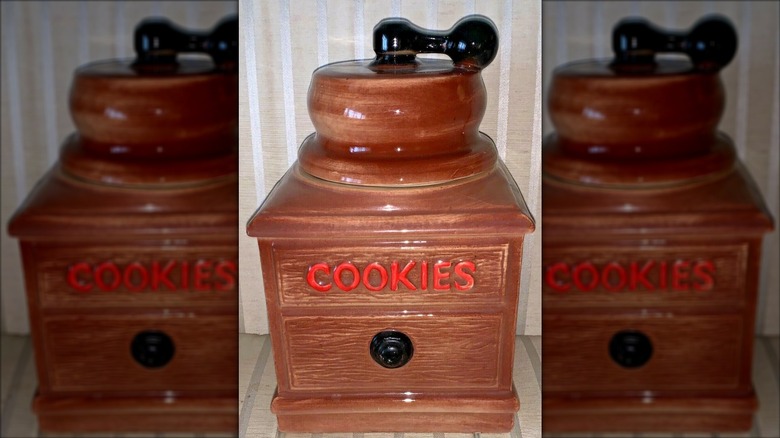
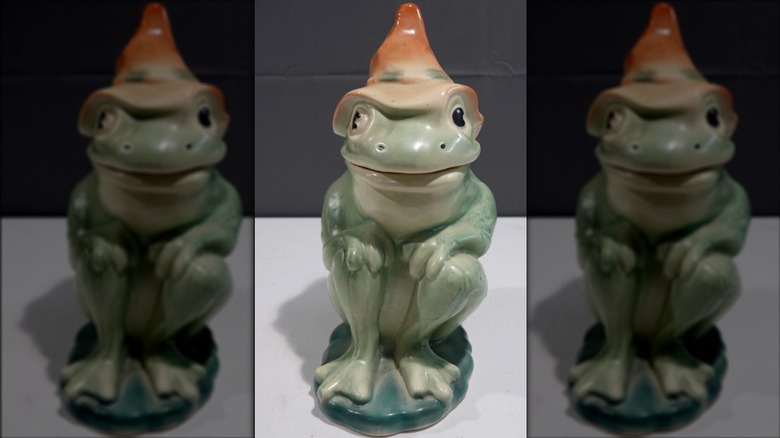
Brush definitely baked his reputation into the pottery industry, but Nelson McCoy Pottery made hundreds of designs and reissues and remained a more popular manufacturer until its demise in 1990. Collectors will pay a pretty penny for a Brush or McCoy jar. This McCoy one, resembling an antique coffee grinder, is listed on eBay for $1,500. And this hillbilly frog jar by Brush Pottery is listed for $4,500 on eBay. In 2018, part of a private McCoy Pottery collection was sold off, and a hillbilly bear cookie jar went for $25,000, the highest in history. For those who prefer not to empty their piggy bank and love a good treasure hunt, you can find both brands at thrift stores. However, differentiating the real deal from fakes can be tricky.
Finding the real McCoy...cookie jar
Thrifters have had success scoring a McCoy or Brush cookie jar out in the wild for less than a batch of cookies costs. One Reddit user claims to have found the pot belly stove cookie jar for $5 while thrifting. This lucky thrifter may have hit the cookie jar jackpot, stumbling upon 10 McCoy cookie jars, including three that resemble the coffee grinder, for $5 each at their local thrift store.
With these pottery entrepreneurs having intertwined businesses, it can be hard to tell which brand of cookie jar you have. Many reproductions are also floating around that look very similar to the originals. To ensure authenticity, there are several factors to consider first. No authentic Brush-McCoy cookie jars exist. That business only made planters, vases, etc. Raised "Brush McCoy" marks on the bottom of jars are considered fakes. Freelance designers Ross and Don Winton made most Brush Pottery cookie jars, so many will have a "W," a design number, and "Brush USA" etched on the bottom. However, not all are marked. This guide has a list of all the jar designs Brush made.
For authentic McCoy pieces, look for "McCoy USA" or "McCoy" on the bottom. Sometimes, pieces have the design number on the bottom. Many McCoy pieces are also unmarked. This reference guide lists all of the McCoy cookie jar designs and years. Reproductions are always way smaller than the originals, so that's another way to tell them apart.