

The Difference Between Butternut Squash And Pumpkin
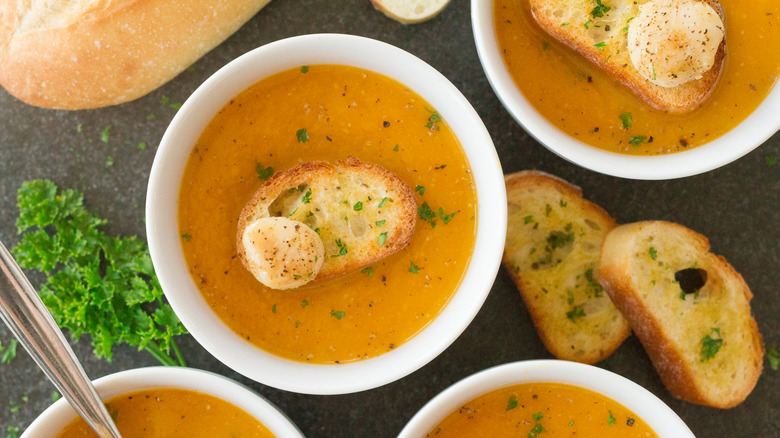
Is it pumpkin or is it butternut squash? These two plants often taste so similar in pies, soups, and more that they're thought to be interchangeable. Some people even (incorrectly) swear that pumpkin puree sold in grocery stores is secretly butternut squash, in part or in whole. In reality, these two gourds are not the same, nor are they always interchangeable — but they sometimes have a similar taste because they are very closely related.
All pumpkins and squashes are members of the Cucurbitaceae family, along with all cucumbers, watermelons, and cantaloupes. However, butternut squash is a single variety of Cucurbita moschata, first cultivated in early 1940s Massachusetts. "Pumpkin" is a non-botanical term that covers cultivars from four different species. Most of the ones we eat are known as either Dickinson pumpkins or sugar pumpkins, varieties of Cucurbita moschata and Cucurbita pepo (respectively), two species cultivated by indigenous Americans for thousands of years before European contact.
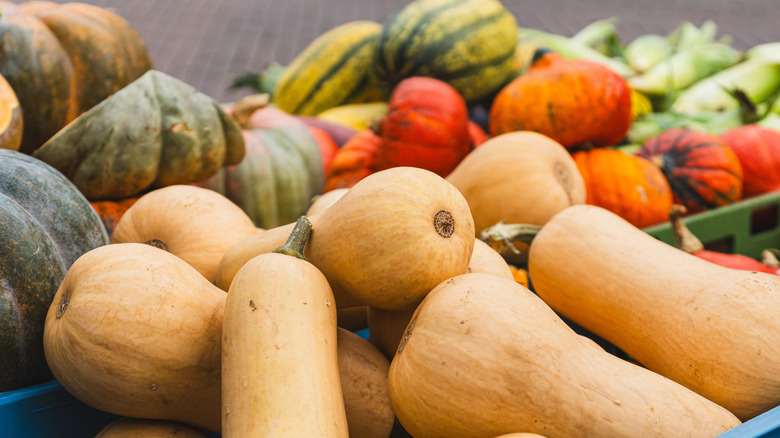
Decorative pumpkins have many differences from butternut squash, whose firm, sweet, smooth, bright orange flesh is is more similar to these two Cucurbita species. But butternut squash also has smooth skin whereas pumpkins are ribbed, and butternut squash grows tall and vaguely pear-shaped versus more squat and rounded pumpkins. And these differences and more may affect how you use each gourd.
To eat or to carve?
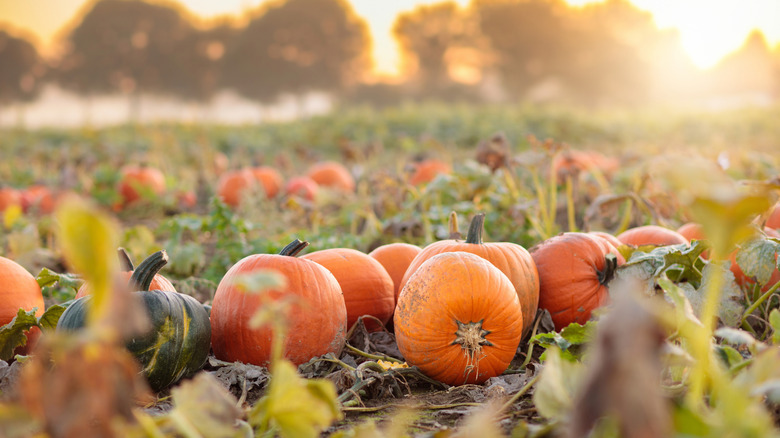
Butternut squash is a bit sweeter than Dickinson pumpkins, which are also a bit sweeter than sugar pumpkins. Their availability varies, too: butternut squash is commonly seen at grocery stores, as are sugar pumpkins — the smaller round orange ones seasonally sold in the produce section. But you'll almost never see a Dickinson pumpkin there.
Dickinsons are almost entirely grown for canned pumpkin puree, mostly in Morton, Illinois, where a farmer named Elijah Dickinson brought his new seed from Kentucky to establish a business in 1835. The farm grew into a cannery, bought by the Libby company in 1929 to begin making America's best-selling brand of canned pumpkin puree. Today it uses its own cultivar, Libby's Select Dickinson, that accounts for the overwhelming majority of canned pumpkin in the U.S.
Carving pumpkins have many differences from pie pumpkins, as well as butternut squash. Pumpkins for carving and other decorative uses tend to have a bland taste with stringy flesh, but relatively thin skin that's easy to cut. Butternut squash is the opposite: very firm raw flesh, and too much culinary potential to squander on a squash-o-lantern. Dickinson or sugar pumpkins can be used for carving, as their flesh is less firm than the squash, but it will still be more difficult than it needs to be.
To swap or not to swap?
Owing to similar flavor and texture, butternut squash and pumpkin can easily be swapped in most recipes, which sometimes call for the gourds to be pre-cooked. This is usually done by simply roasting butternut squash or pumpkin until the flesh is easy to cut, mash, or often puree. A puree of either one is easy to add to baked goods, frozen desserts, soups, and more — and both are easier to buy canned.
In some cases, it may be beneficial to replace pumpkin with butternut squash. If you're foregoing canned puree, making a "pumpkin" pie with fresh squash is generally easier than with an actual sugar pumpkin. But even if you're using canned puree, people sometimes prefer the naturally sweeter butternut squash.
But one key part of pumpkin-flavored foods, regardless of gourd, is the seasoning. And the pumpkin flavor we associate with foods is actually pumpkin pie spice. The blend typically contains ground cinnamon, nutmeg, ginger, cloves, and/or allspice. It's named not for containing any pumpkin, but for being such an exceptional match with it. But it's an equally good match for butternut squash, and can help put vegetable-swapping skeptics at ease.