

5 Best Materials For Wrapping Vintage China
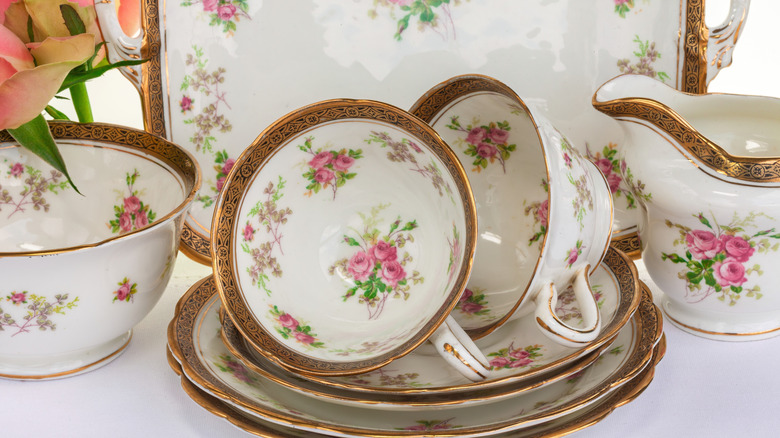
Say you've come across some rare vintage china pieces at the thrift store, and now you want to pack and store them correctly. After all, protecting your vintage china is instrumental in preventing chips, hairline cracks, scuffs, and scratches. Unlike today's modern mass-produced ceramics formulated for durability, a downside to using vintage bone china and porcelain is that though strong, they are delicate and must be treated with extra care. These pieces often feature delicate glazes, intricate hand-painted motifs, and fragile metallic trims that can easily scratch, flake, or chip off when exposed to rough textures, trapped moisture, or harsh cleaning chemicals. And whether you are preparing to move your collection into a new home, reorganizing your crowded china cabinet, or packing family heirlooms away into longer-term storage, selecting proper protective wrapping for these valuable treasures is one of the most essential steps (if not the most important) in keeping your collection intact.
Believe it or not, many everyday household packing supplies are actually too abrasive or chemically reactive for aged ceramics, meaning that your chosen packing material can actually cause permanent damage even if you haven't dropped or roughly handled your vintage pieces. By using non-abrasive materials and layering your wrapped pieces carefully, you can minimize chances of damage to your china.
But which wrapping material is the best for vintage china? From thin sheets that minimize chemical discoloration to thickly padded layers that absorb any sudden bumps or jostling in transit, picking out the material is essential to the preservation of your antiques. We've put together a list of the five best wrappings to protect your vintage china — and a few of these materials you might actually already have at home.
Felt
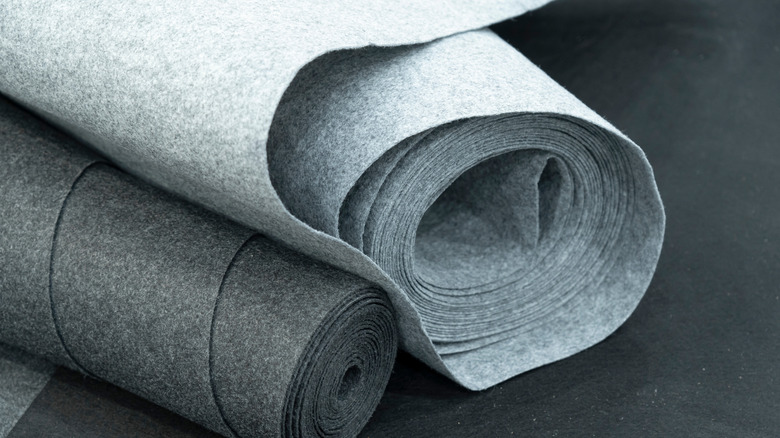
Felt is an exceptional material for wrapping antique tableware. Preventing surface friction and glaze damage (especially when stacking flatware such as dinner plates, salad plates, and saucers), this soft material acts as a barrier between layers when you wrap your china. Because felt tends to be dense, soft, and cushion-y, this non-abrasive material creates a reliable buffer between each dish, stopping ceramic surfaces from unnecessarily grinding against one another. With vintage china, even minor bumps and scrapes inside a moving vehicle or shifting weight inside a kitchen cabinet can cause tiny scratches that will damage delicate glazes over time. Felt absorbs that impact, stopping any abrasive movement before wear occurs on the surface of the china.
Beyond its cushioning properties, felt is extremely versatile and easy to cut for uniquely shaped breakables. You can purchase pre-cut felt plate dividers in standard dinnerware sizes, or buy sheets by the yard and trim them to wrap around scalloped edges, decorative corners, and unusually shaped dishware. Another major advantage of felt is that it is both durable and reusable. While single-use paper or plastic may not be easily recycled for another use, felt pads don't tear easily or lose their cushioning properties after just one move. So while felt is a great choice for transit, this material can also be re-utilized in long-term storage. It should be noted that when choosing felt for vintage china, you should use neutral, undyed varieties — like white, cream, or light gray — to eliminate risk of any dye transfer.
Packing paper
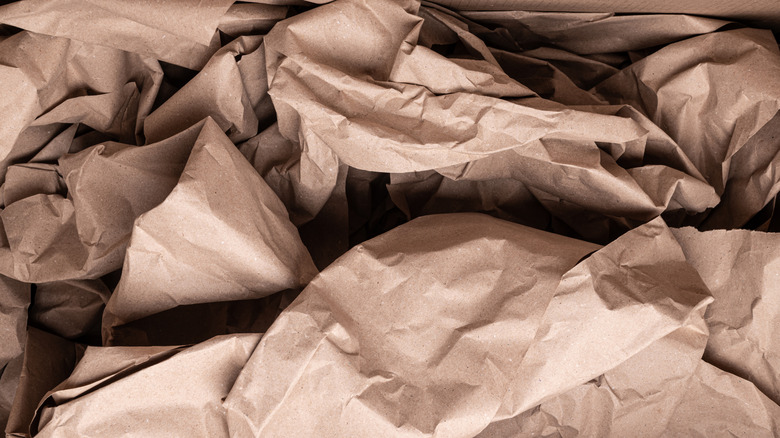
Ink-free packing paper is another great material to wrap individual pieces of vintage china. Oftentimes, people reach for old newspapers when packing up their dishes; however, that may not be the best thing for your plates and bowls, especially as it pertains to vintage tableware. Standard newsprint is often coated in ink that can easily rub off onto the porous surface of ceramics, leaving behind unwanted ink smudges that can be extremely hard to remove without damaging the piece further. Using unprinted packing paper eliminates this problem, and these lightweight, flexible sheets will work great when wrapping items like teacups, gravy boats, sugar bowls, and even ornate handles.
Plus, because paper has the capability to hold its shape when folded, tucking and folding packing paper neatly inside bowls and teapots can help reinforce your china's outer rims from the inside. Packing paper also doubles as an effective material to fill hollow spaces in the larger container you may be packing or storing your china in. Crumpling sheets of paper into loose balls allows you to line the bottom of your moving boxes and pack tight spaces around wrapped china so nothing shifts around during a bumpy transit.
When trying to wrap especially delicate items, layering two or three sheets of packing paper can create a tear-resistant barrier that provides protection without adding extra bulky cushioning. After all, you want your china pieces to fit into as few storage boxes as possible in order to minimize the need for excess trips back and forth as you move. Packing paper is also relatively cheap and recyclable. Overall, ink-free packing paper provides the cushion and structure needed for an effective wrapping job.
Bubble wrap
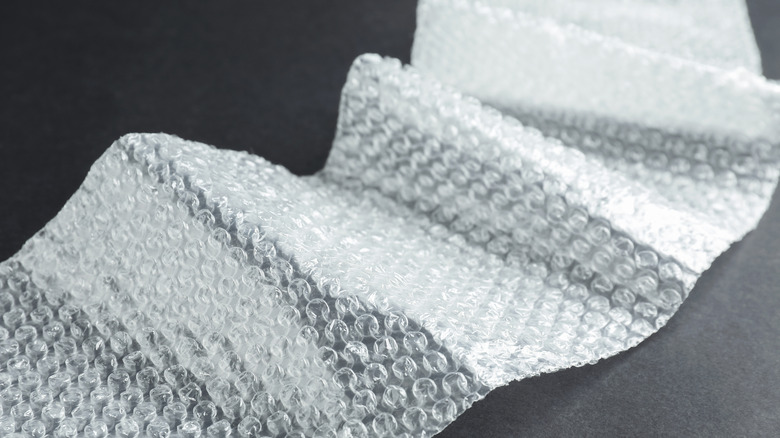
Yet another material suitable for wrapping vintage china, bubble wrap's benefits include shock absorption and added flexibility. As an outer layer for dishes that are being transported in vehicles or shipped across long distances, bubble wrap minimizes forceful impact on each dish. Bubble wrap is made up of tiny pockets of air; this plastic cushioning acts to disperse the energy and physical force from accidental drops, small bumps, and the continual vibrations from moving vehicles that can crack fragile porcelain surfaces. Bubble wrap also comes in a variety of shapes and sizes. For vintage tableware in particular, small bubble wrap should be favored over large varieties. And because each air pocket is tighter and more densely spaced together, compact sheets of bubble wrap are able to conform to curved shapes, narrow stems of glasses, spouts, and handles without leaving gaps where the china is unprotected.
But proper technique is necessary for using bubble wrap on antique pieces. Plastic should never come into direct contact with each piece of dishware. Over time, the plastic film can trap condensation against the surface of the china and leave unwanted imprints on older finishes (this is exacerbated when dishware is transferred and stored in humid environments). To avoid this issue, always wrap your china first in a smooth layer of packing paper or tissue, then wrap the whole bundle in bubble wrap with the bubbles facing inward (inward-facing bubble wrap is key, because this is how you can maximize its shock absorption). You can then seal the exterior with packing tape, making sure that the material is securely fastened to each piece of china's exterior surface. This should keep your vintage pieces safe during their journey.
Acid-free tissue paper
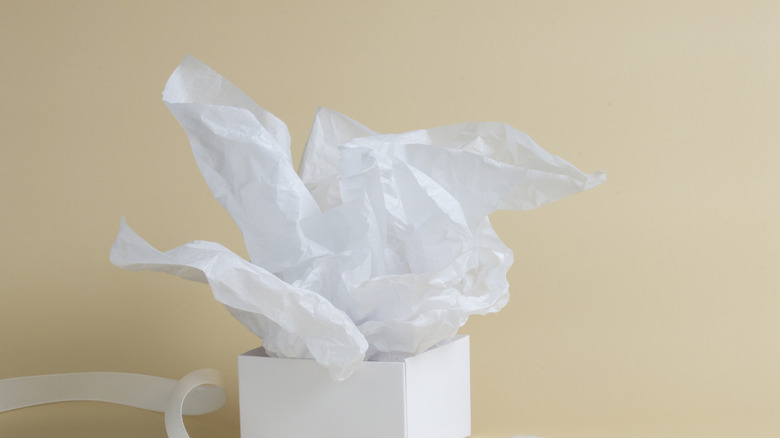
Acid-free tissue paper is also a great option for wrapping vintage china, especially when you plan to store your vintage pieces long-term. But does the tissue paper really have to be acid-free? Well, commercial tissue paper typically used for wrapping presents or stuffing a gift bag is manufactured using wood pulp. This wood pulp contains natural acids; when kept for long periods of time, both compounds gradually break down, causing the paper to turn yellow and become brittle. Old tissue paper transfers acidity onto whatever it touches, which could damage vintage china over time. On antique porcelain, acid migration can dull glazes and porcelain finishes, as well as tarnish or corrode real gold and silver leaf trim.
On the other hand, acid-free tissue paper (a recommended choice by museum conservators) is chemically neutral, meaning that this type of paper wrapping will never react with sensitive ceramics even after decades of use. Besides its chemical stability, acid-free tissue is both lightweight and soft, allowing this material to smoothly cover and protect raised patterns and hand-painted florals on your dishware without a risk of snagging. Because tissue paper is so thin and flexible, you can easily crumple small sheets to also stuff the interiors of your teacups, milk pitchers, and lidded tureens for some added support from within. Long story short: Wrapping delicate pieces in acid-free tissue paper before adding external layers of padding when packing your vintage china will guarantee long-term preservation without the risk of damage from chemical reactions between the wrapping material and your antique dishware's fragile glaze.
White cotton cloth
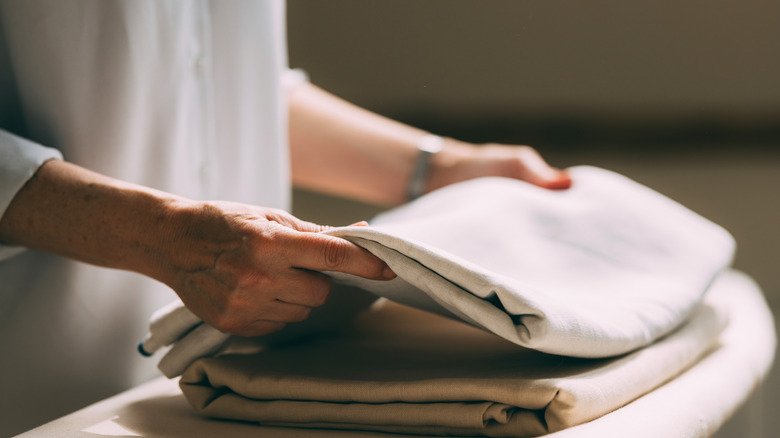
Lastly, cotton cloth like lint-free tea towels, washed muslin, or soft cotton sheets provide a breathable, eco-friendly, and gentle wrapping option for vintage china. Unlike synthetic plastics that can trap moisture and foster the growth of mildew, natural cotton fibers allow air to circulate freely around stored ceramics while keeping dust and light off of the surface. Make sure that you use unbleached or undyed cotton when packing vintage china, because colored dyes can bleed onto antique porcelain, especially if exposed to dampness or prolonged pressure.
Cotton cloth will work particularly well for wrapping dishware because it is thin enough to fold around plates and bowls without creating bulbously unstable bundles, but strong enough to protect the edges of your dishes from minor knocks that might occur during moving. You can layer stacks of plates with just one long strip of cotton cloth by placing a dish in the center, folding the corner over the top, setting the next plate on the fabric, and repeating until the bundle is safely wrapped around each piece of dishware. Just remember that while stacking plates vertically may be a short-term solution when moving, it shouldn't be stored that way permanently in your cabinet.
Besides their flexibility, white cotton cloths are reusable and zero-waste, just like the felt mentioned above. Once you finish moving or unpacking your antique tableware, you can toss the fabrics into the washing machine and put them right back to work in your kitchen or linen closet. Chances are, you already have cotton linens at home — that's a game changer, especially when you don't have time to order packing materials for your china ahead of time.