

4 Downsides Of Using Cooking Spray
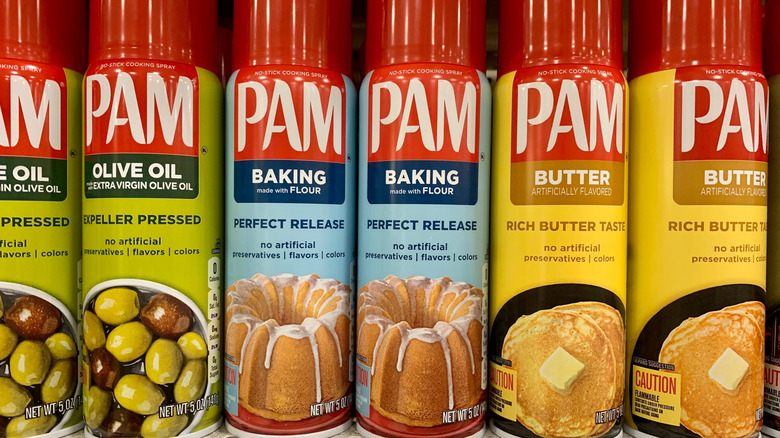
Cooking spray is a kitchen staple that makes life a little bit easier. A quick spritz can keep eggs from sticking to a skillet, help vegetables roast without clinging to a baking sheet, and save you the trouble — and mess — of greasing a baking dish with butter or oil. It's convenient, inexpensive, and saves you from having to pour oil out of a bottle when you only need a thin coating.
As useful as cooking spray can be, it isn't always the best choice for every kitchen task. Cooking spray can leave residue on cookware, cause baked goods to get stuck, and even pose a fire hazard if sprayed to close to a heat source, like a lit burner. And while cooking spray is often marketed as a zero-calorie alternative to regular oil, the nutrition label doesn't reflect how much oil — and how many calories — you're actually using.
Before you toss your cooking spray in the trash and give up its spot in the cabinet, know that there are times when cooking spray can certainly come in handy. But knowing when to reach for the can — and when you're better off using something else — can save you a few headaches (and streaks of oil to clean up) in the kitchen.
Cooking spray can leave a sticky residue on nonstick cookware
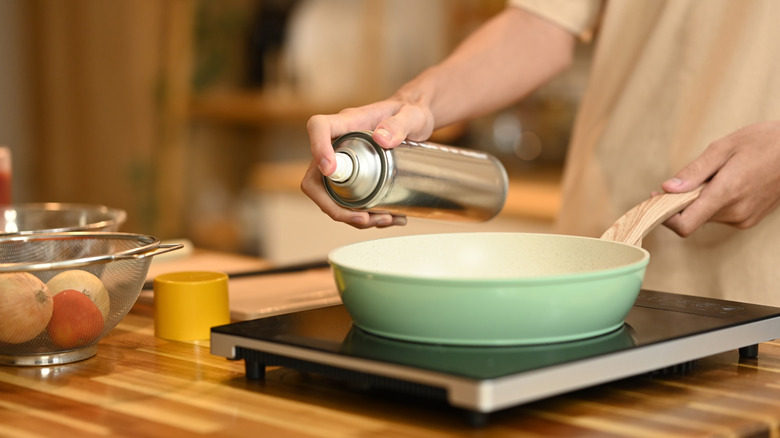
Nonstick pans are supposed to save you from scrubbing food residue off by hand, but using cooking spray on them can sometimes make cooking and cleanup harder instead. Certain sprays contain lecithin, an emulsifier that helps keep the ingredients mixed and contributes to the spray's nonstick properties. Although useful for cooking, lecithin-containing sprays can leave behind a sticky residue that gradually builds up on the nonstick surface of your cookware.
Not only can this residue be stubborn and hard to remove, but using cooking spray on nonstick pans can make them less effective at keeping food from sticking. Even if you're diligent about washing your cookware, the residue can be hard to remove and you might find yourself scraping scrambled eggs off a pan whose coating was supposed to make cleanup easier. Some cookware brands specifically advise against using aerosol cooking sprays on nonstick cookware because of the residue they can leave behind.
This doesn't mean every cooking spray will damage every nonstick surface. Formulations vary, and cookware manufacturers have different instructions for what to use on your pots and pans. If cooking spray isn't an option for your cookware, try applying a small amount of regular oil with a brush of paper towel. Or, for the same convenience of a cooking spray — but without the additives — use a refillable spray bottle filled with plain cooking oil for the same thin, even coating.
Zero-calorie cooking spray isn't necessarily calorie-free
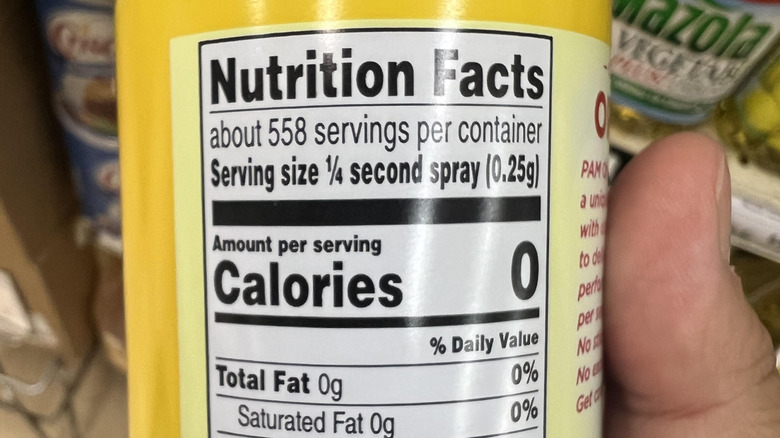
One of cooking spray's biggest selling points is that it provides a thin coating of oil without adding many calories. Some products advertise zero calories per serving on the Nutrition Facts Label, which might make them seem like a calorie-free alternative to pouring oil into a pan. But there's a catch: FDA labeling rules don't require a product to actually have zero calories in order to write a zero on the label.
PAM Original Cooking Spray lists zero calories per serving, but one serving is just 0.25 grams. That's roughly 1/18th of a teaspoon or a quarter-second spray, much less than what someone might use to coat a large pan or baking sheet. Under FDA regulations, products containing fewer than five calories per serving can round down to zero. In other words, a zero-calorie label doesn't mean the product is calorie-free, especially if you're spraying for longer than the listed serving size.
Cooking sprays are still made primarily from oil, which contains fat and calories. For context, a serving of olive oil is one tablespoon, which contains 120 calories. If you're wondering how many calories are really in a spray of oil, the answer depends on how long you spray. This can make it hard to know exactly how much oil you're using, so if you need a specific amount for a recipe or simply prefer to measure your oil, using a measuring spoon might be more practical.
Aerosol cooking sprays can pose a fire hazard
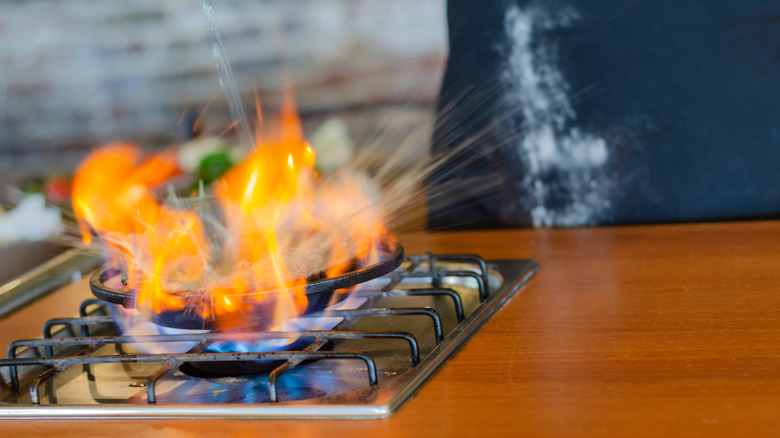
Cooking with oil already requires some caution around heat, but aerosol cooking sprays introduce another risk: Many contain flammable propellants that help push the oil out of the can in a fine mist. While convenient for coating a pan, the mist can ignite if it comes into contact with an open flame or another ignition source.
PAM Original warns against spraying its contents near an oven, onto heated cookware, or near an open flame. The last warning is especially important if you're cooking on a gas stove; giving your skillet another quick spritz while it's sitting over a lit burner might seem harmless, but the aerosol mist can ignite if it reaches the flame below. Instead, apply cooking spray to a cool pan away from the burner, then move the pan to the stove.
Beyond its contents, the can itself needs to be stored safely. Aerosol sprays come in pressurized containers, and exposure to excessive heat can cause the can to burst. Not only will this make a mess in your kitchen, but it also increases the risk of fire, burns, and other injuries. Of course, this doesn't mean cooking spray is going to explode just because it's in your kitchen. These risks are associated with improper use, not simply having it in your cabinet. If you'd like to avoid the aerosol-related hazards altogether, brushing oil onto cookware or using a non-aerosol oil dispenser are two alternatives.
Regular cooking spray isn't always the best choice for baking
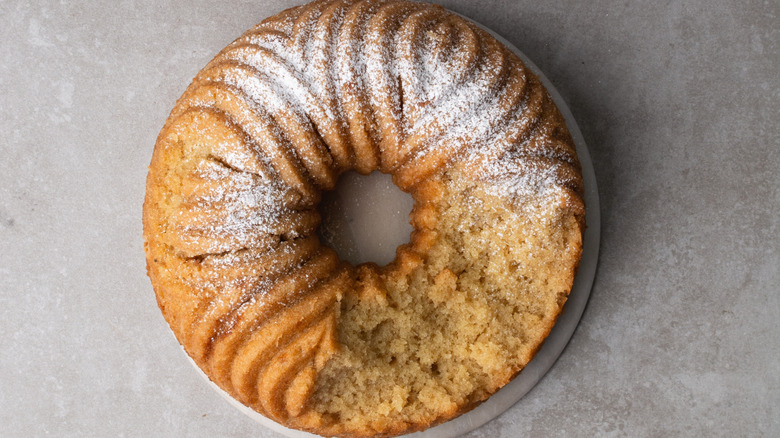
Most bakers are familiar with that tense moment of flipping a cake pan over, hoping the cake comes out in one piece instead of leaving half of it stuck to the pan. You might assume a generous coating of cooking spray would be enough to prevent that from happening, but depending on what you're baking, it might leave you wishing you'd greased the pan with something else.
Regular cooking spray works well for general baking, including greasing muffin tins or keeping parchment paper in place. However, there's a difference between cooking and baking spray that's important to know when you're using detailed molds, like Bundt pans. While regular cooking spray coats the pan with oil, the added flour creates another barrier between the batter and the pan, helping the cake release cleanly. This can be helpful for Bundt cakes, where all of those crevices can make getting the cake out in one piece a challenge.
And remember that residue cooking spray can leave on nonstick cookware? It can be a problem for nonstick bakeware, too. Lecithin-containing sprays can bake onto the surface over time and interfere with the pan's nonstick performance, making it harder to release your baked goods. Before baking your next cake, check your pan's instructions. Taking an extra minute to decide whether your cooking spray is up for the task might save you from having to piece your dessert back together.