

The Old-Fashioned Highball Glasses To Look For At Thrift Stores

We may receive a commission on purchases made from links.
Midcentury modern design has enjoyed a years-long revival, one that also encompasses the era's striking drinkware. Glasses adorned with colorful designs and real gold accents defined the high-end midcentury look, and today these art pieces can be worth many hundreds of dollars. But if you find some at a thrift store, they could be shockingly affordable.
Gilded midcentury glassware holds an obvious appeal — and commands high prices — for its age, striking visuals, and high-quality craftsmanship. Highballs are perhaps the most common type of glass to get this golden treatment, but far from the only one. Designers of the era also gilded rocks glasses, pitchers, wine glasses, ice buckets, and more, and their collections were often available at luxury jewelry or department stores.
Full sets in exquisite condition can cost hundreds of dollars at auction or from high-end antique stores. Yet gilded midcentury glassware doesn't have to be expensive. From approximately the 1950s to late 1970s, so many companies made similar products that many examples survive today. If you're not picky about the condition, completeness, or brand, affordable options abound. Nevertheless, some brands are worth keeping an eye out for — including a few you may have heard of.
Gilded midcentury brands to look out for
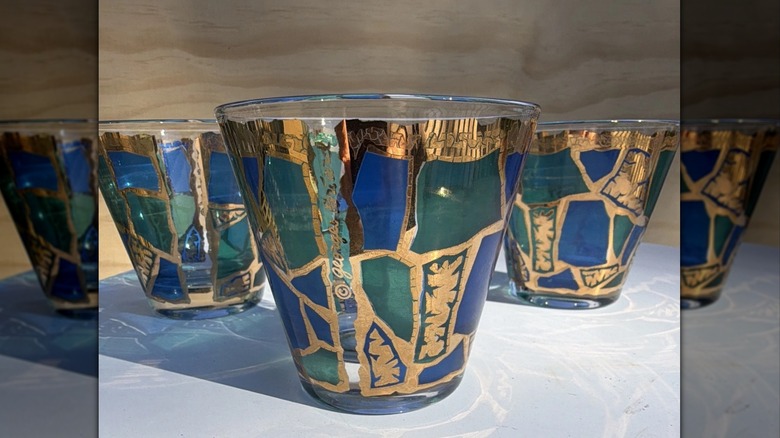
One notable designer of this glassware was Georges Briard, an American designer active from the 1950s to the 1970s. Gold leaf (or silver) was the dominant feature on many Briard designs, others used it in a supporting role, and on some, gold was not used at all. Many sets can be found online or in thrift stores, at prices roughly between $50 and $350. But antique dealers can ask thousands for the largest, rarest, and most intricate sets.
While there are many defunct brands that made these glasses, some are still around. Culver is a well-known brand of designer glassware with frequent collaborations, like a current Frank Lloyd Wright product line. But Culver has been around long enough to have also created gilded midcentury glassware during the actual mid-century. Full sets of these are often sold at around $100 or less, including some considerably ornate designs.
But one gilded glass maker almost any home goods shopper has heard of is Libbey, a 200 year-old kitchenware brand to look out for at thrift stores. New Libbey products are everywhere, but a range of striking vintage sets can be found for $200 or less at thrift stores or online auction sites like eBay.
Can you use gilded midcentury glassware?
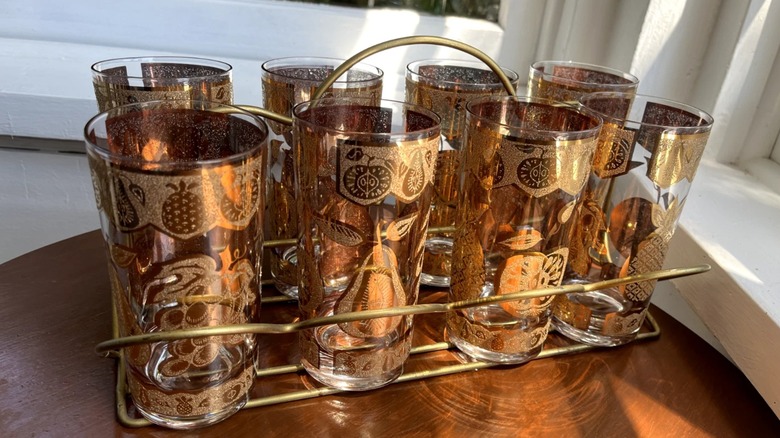
Unfortunately, drinkware like this often isn't the safest to use. Gilded midcentury glassware was often made of leaded crystal, a type of glass with lead added for extra strength and weight. And it's not just the glass: the gilding itself typically contains lead too, initially added to brighten colors and make the gold alloy easier to work with.
The likely presence of lead is also one of the downsides of using vintage china, and vintage dishware in general. Young children, pregnant people, and the immunocompromised are particularly at risk for lead-related health problems. Some may still use glassware like this occasionally, but studies have shown that even limited lead exposure can add up to serious consequences later.
Whether or not you choose to use them, gilded midcentury glassware can still make the perfect accessory for a bar cart. The cart is one of the 60s kitchen trends that deserve a comeback, and what's a flashy bar cart without flashy drinkware? Some vintage designs even came with matching glasses. Just don't make a habit of drinking from them — you probably won't want to hand wash the delicate decorations that often anyway.