

The Difference Between Breville And De'Longhi Espresso Machines
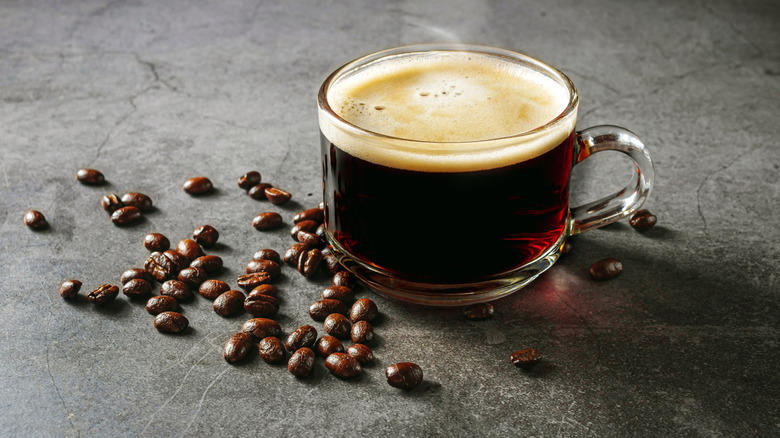
Long ago, a demitasse of espresso was an indulgence reserved for sipping in European cafés. Today, machines almost magically prepare the potable daily ritual right from your countertop. Grinding, tamping, brewing, and even frothing is all done by a single appliance. An enormous array of machines in myriad price points with a variety of capabilities are available today, but which are the best for espresso aficionados? The best espresso machines to use for your morning coffee depend a lot on your dedication to the beverage and craft.
Two consistently top the ranks, but differ in several ways. Both DeLonghi and Breville rival each other in functionality and price but also have many distinctions such as size, ease of use, and, for some, quality in the cup. To start, DeLonghi is an Italian company, and Italy happens to be the birthplace of the espresso machine. Breville was founded in Australia, which has a coffee culture all its own often centered around espresso, but lacks the acclaim of birthing the globally beloved beverage. Breville does, however, boast about improving the at-home process.
Breville's base espresso machine, the Bambino, is around $300 while DeLonghi's base model, the Classic Matte Black, is $150. The highest-end model from Breville, the Oracle Dual Boiler, comes in at $3,000 while DeLonghi's top-tier machine, the PrimaDonna Aromatic, will cost you $2,500 but less counter space. More compact also means less capacity for water and beans, however, which may make a difference for people who make espresso frequently.
Breville espresso machines
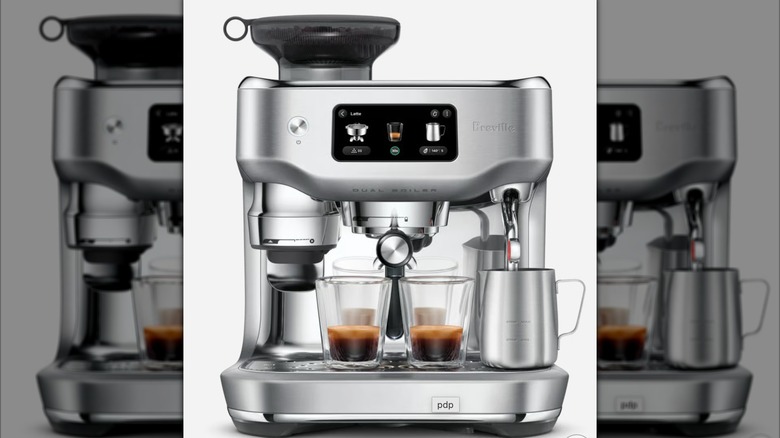
Breville coffee makers have evolved over the years since it came out with the Dual Boiler espresso machine in 2011. The company developed a proprietary "four keys formula" for its machines, which begins with grinding a precise, consistent dose of 18 to 22 grams of beans into your portafilter. After tamping, it's about proper pressure pushing through the grounds, and Breville machines mimic those in cafés used by professional baristas. Digital controls maintain ideal temperatures for coffee extraction and steam, along with pressure when creating microfoam.
Food & Wine selected Breville models as the "Best Overall," "Best Splurge," and "Best Small" espresso machines after testing more than 50 and ranking the top 10. It cites the Barista Express's flexibility between manual and automatic controls, precision burr grinder, and integration of many handy features including tamper and milk frother as why it came in as number one.
Meanwhile, at $2,000, the Oracle Jet is practically brainless, operation-wise, with minor exceptions like moving the portafilter from the grinder to the brewing head and pouring frothed milk into the coffee — gasp — yourself. However, it does make cold brew and even cold espresso, plus it has optimized, variable milk-frothing capabilities for non-dairy lovers. Juxtaposing the Jet model is the ultra-ease and affordability of Breville's Nespresso Vertuo line, which starts at around $100 and requires the simple pop of a pod into the top plus some water.
DeLonghi espresso machines
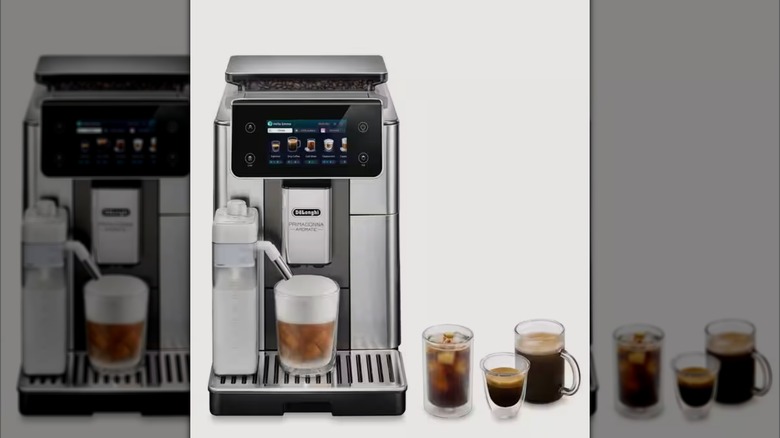
DeLonghi is often found on lists such as the "Best Coffee Makers To Fit Any Budget" or ranked as a "Best Value," as with Food & Wine's top 10. That's not to say it doesn't make a solid espresso, however. From the home of the espresso machine, DeLonghi simply seems to prioritize getting an espresso to your lips over lengthy or high-tech processes and making too many decisions about your milk's microfoam. Which, for many coffee lovers, is ideal.
On DeLonghi's website, even its simplest, lowest priced machine is recommended by purchasers and has a 4.6 rating with hundreds of 5-star reviews at the time of writing. On the opposite end of the price spectrum, its PrimaDonna model makes 38 different iced and hot drinks and automatically adjusts everything from the grind and temperature to the extraction method and milk texture based on what drink you choose. It also is highly rated, at 4.8 stars currently. One verified purchaser wrote, "The Prima Donna has changed my mornings. This is the best coffee I've ever had. Because it is so automatic I don't have a chance to mess it up and the upkeep is easy. The machine tells me exactly what and when to do things. I love it!"
If pod popping is preferred, DeLonghi also sells Nespresso machines. They're identical functionally to Breville's, with colors being the only difference. Nespresso claims that its capsules are made of 80% recycled aluminum now, but you can help offset any environmental impacts of using pods by purchasing a Vertuosa Pop+, made from 35% recycled plastic, or a Vertuosa Next, which is made from 54% recycled plastic.