

The Classic Candy Adults Love That Kids Don't
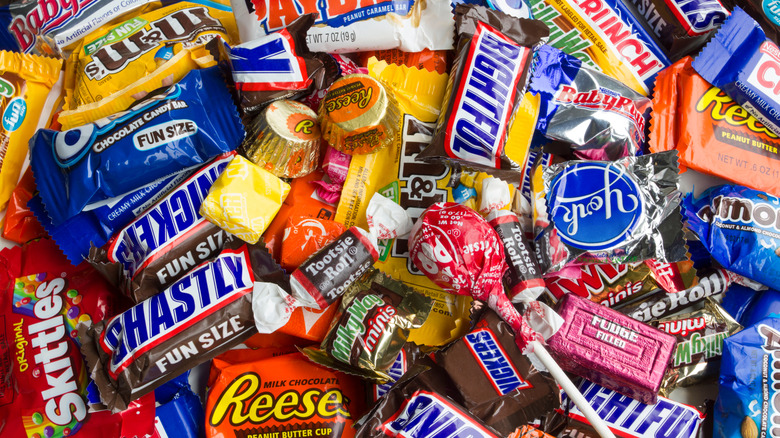
Every Halloween, there are certain candies that mysteriously disappear from the kids' candy haul. Then again, there's a specific kind of candy that has been the bane of trick-or-treating for generations, and kids are more than happy to hand it over as parent tax. Tootsie Rolls — the chewy, chocolate-flavored, taffy-like candies — may be nostalgic for adults who still wonder how many licks it takes to get to the center of a Tootsie Pop. But for kids, they're duds among all the Milky Ways, Snickers, and Reese's that they could be receiving instead.
There's actually some science behind the many candies that adults love way more than children do. A 2014 review published in The American Journal of Clinical Nutrition found that children naturally prefer higher levels of sweetness than adults and are more likely to reject bitter flavors. A separate 2022 review published in Critical Reviews in Food Science and Nutrition examined how children perceive and respond to food textures, finding that children's acceptance of more complex textures develops with age. Younger children are particularly sensitive to chewy, hard, and lumpy foods, which can make them less willing to eat them. This might help explain kids' indifference to the iconic candy that sits in the purgatory of the confectionery world; it's not quite chocolate, caramel, or taffy. Unfortunately, the chewy texture that has become a dealbreaker for some candy lovers was actually one of Tootsie Roll's biggest selling points when it was invented.
Why the Tootsie Roll is so unique
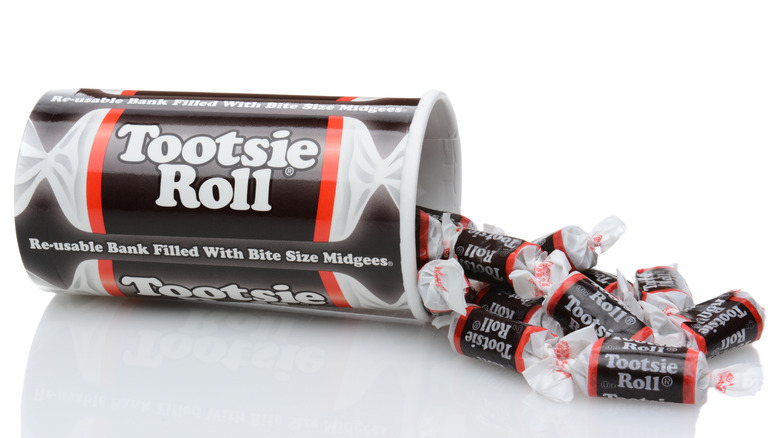
The firm, chewy consistency of Tootsie Rolls was intentionally developed to solve the problem of chocolate treats melting in the summer heat. One advertisement from 1910 promoted the candy with the slogan "They melt in the mouth, but NEVER in the case" (via Candy Professor). These treats also don't contain chocolate — so, what's the real flavor of Tootsie Rolls?
The recipe includes cocoa with sugar, corn syrup, palm oil, condensed skim milk, whey, and soy lecithin. The secret behind Tootsie Rolls' resistance to heat is the fact that the candy is baked at a low temperature for about two hours, which helps give the candy its firm texture and keeps it from turning into a sticky mess in warm weather. Tootsie Rolls were also the first penny candy to come individually wrapped in wax paper, making them easier to carry, store, and sell. Their texture proved particularly useful during World War II, when Tootsie Rolls were included in American military rations.
Today, Tootsie Rolls have managed to maintain their place on store shelves for generations, but that doesn't mean everyone is happy to find one in their bag after trick-or-treating. The candy regularly turns up in discussions about treats that people didn't like as kids. One Reddit user invited fellow candy lovers to share their feelings about Tootsie Rolls, admitting they had hated them as a child. "They're so hard to chew," recalled another commenter. "I used to get scared [that the Tootsie Roll would] stay in my mouth forever."